
The timely direction and dedication of the armed forces, local authorities and journalists have contributed to creating a warm picture of sharing and resilience of the people of Central Vietnam.
Urgent command in floods
From November 17 to 22, Khanh Hoa and many southern central provinces suffered prolonged heavy rains, causing serious flooding. River and stream water levels rose above historical levels; many places in Nha Trang and Dien Khanh were submerged in floodwaters. Heavy rain rushed in, plus unexpected factors, making people unable to react in time. Cries for help in the middle of the night continuously appeared on social networks, clearly reflecting the severity of the natural disaster.
In that situation, thousands of officers and soldiers of the police, army and social forces quickly got involved. The image of soldiers dam minh in rain and floods, rushing into the fast water to rescue people made many people unable to hide their emotions. The rushing of the armed forces became a solid support for people in moments of life and death.
Along with forces that are sticking to the area day and night, the Provincial Party Committee and the People's Committee of Khanh Hoa province immediately switched to the on-duty regime, handling hot issues arising. Decisions and directives were issued right at the scene, helping rescue and relief work and people's support to take place as quickly and effectively as possible.
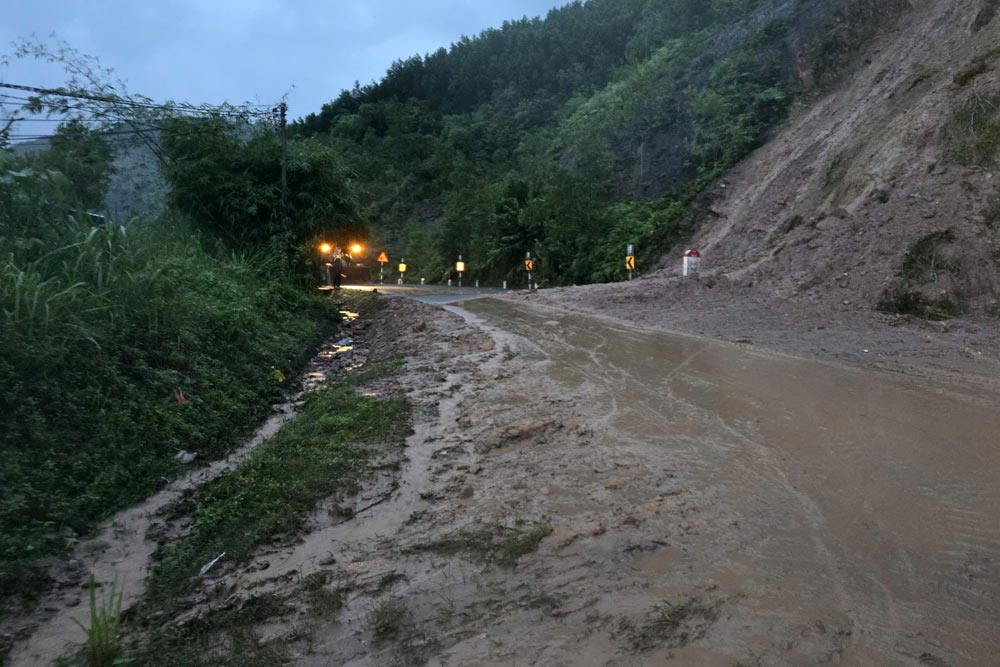
On the night of the 19th and early morning of November 20th, Secretary of Khanh Hoa Provincial Party Committee Nghiem Xuan Thanh and the working delegation were present at key points heavily damaged in Van Ninh, Dien Khanh and Nha Trang. The direct presence of the local leader in difficult times helped the armed forces grasp the spirit of close direction, thereby urgently deploying rescue and rescue of those still trapped.
Not only deep flooding, rain and floods also caused serious landslides on many key traffic routes, causing Khanh Hoa to be cut off from neighboring provinces. Notably, at Khanh Le Pass (National Highway 27C connecting Nha Trang - Da Lat), many consecutive landslides occurred, some cases buried passenger cars with soil and rocks.
Faced with the alarming situation, Deputy Prime Minister Ho Quoc Dung directly went to the South Central Coast, including Khanh Hoa, to inspect and direct the remediation of the consequences. His request was to conduct a field inspection at the serious landslide point on Khanh Le Pass - where the incident that crushed a passenger car just happened.
To ensure absolute safety for the working delegation, Mr. Nguyen Thanh Phu - Director of the Department of Construction of Khanh Hoa province - went to the forefront, surveying each location to determine the safest location but still accurately reflect the danger level of landslides.
After choosing a suitable location, the Government's working delegation together with leaders of ministries, branches and localities moved across the white rainy pass. "Surely at that time, everyone was worried about their own safety. However, everyone understood their responsibility for the safety of the people, so everyone committed themselves" - Mr. Nguyen Thanh Phu recalled.
Reporters overcome floods to update hot news about rain and floods
Throughout the days of rain and floods, besides the government and rescue forces, the team of journalists also became a shock force. They are present at deep flooded points, vulnerable locations or divided areas to quickly and accurately convey news to readers nationwide.
Few people know that, while working in harsh conditions, many journalists are victims of floods. They both run from floods to save their families and try to maintain information.
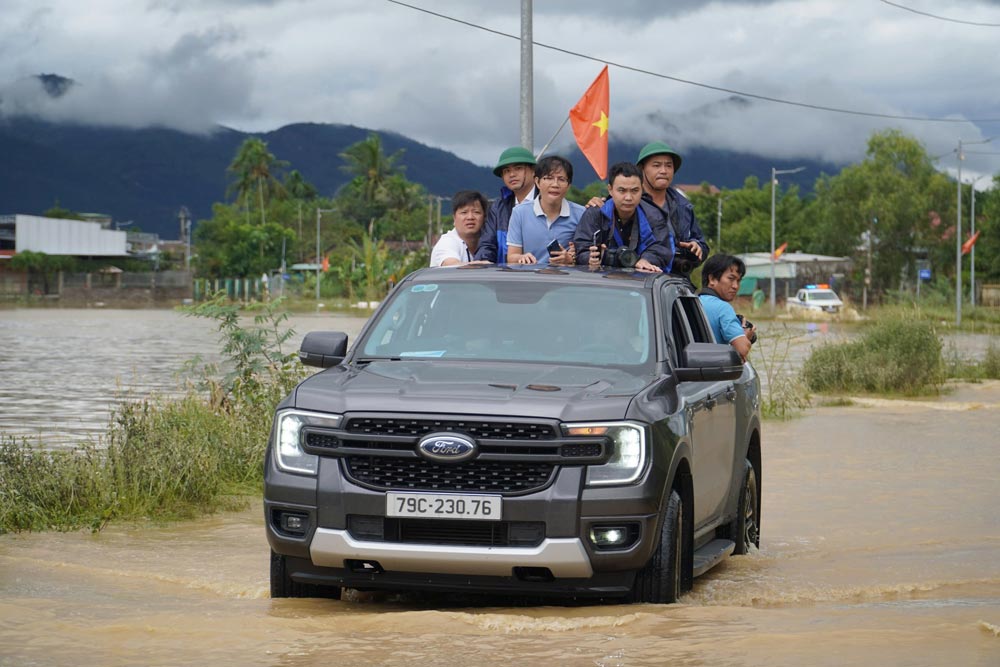
Some reporters such as Ky Nam (Nguoi Lao Dong Newspaper), Xuan Hot (Phap Luat Newspaper HCMC), Van Ngoc (Thanh Nien Newspaper) were surrounded by floodwaters, some lost contact for many days. Some were forced to break doors and swim out to save themselves and their loved ones.
After the water receded, their property in the house was almost completely lost. However, no one allowed them to rest. They immediately returned to work, even working at a much higher intensity than before the flood. Because more than anyone else, they are insiders - people who have experienced despair when losing contact, when witnessing property being swept away. This helps them to be more empathetic to people's circumstances and understand the necessity of timely information.
Not only reporting, the Khanh Hoa journalist team also accompanies charity groups, mobilizes and directly delivers necessities to people in flood-affected areas. In many relief teams, people see images of reporters whose houses are still flooded, still haven't had time to clean up, but have gone to help people who are more disadvantaged than themselves.
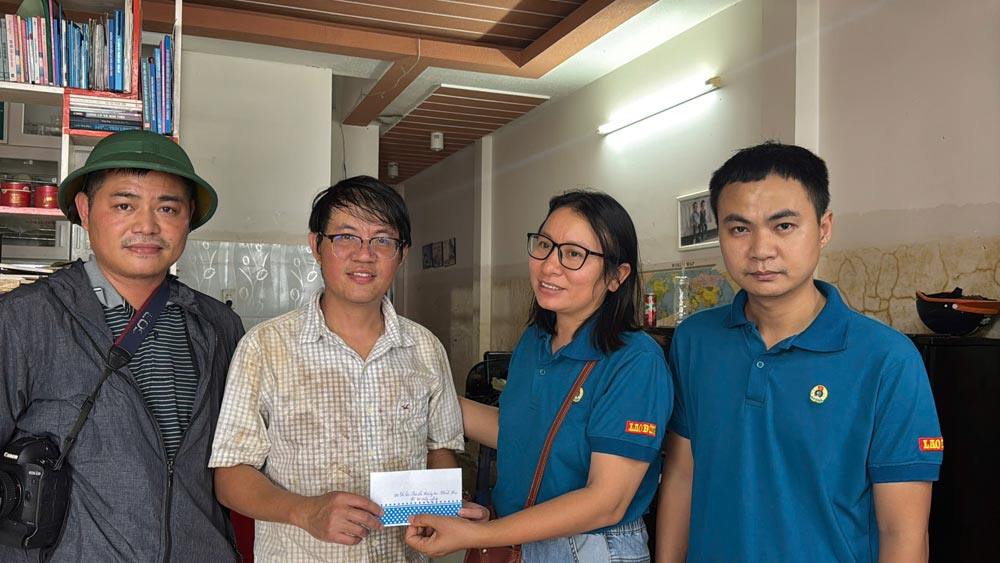
The historic recent floods, although causing heavy damage, also left many beautiful images: Police and military soldiers bravely rescuing people; local leaders directly sticking to the scene at night; journalists overcoming floods to report and join hands in relief; people in mountainous and low-lying areas are ready to open their doors for each other to take shelter.
Natural disasters have challenged Khanh Hoa and the central provinces, but humanity has helped everyone stand firm. Through the flood, each person understands more about the value of solidarity, sharing and the spirit of "healthy leaves protect torn leaves" which has been a rope connecting the Vietnamese community for generations.


