
On February 6th, the Ho Chi Minh City Department of Agriculture and Environment issued a document reporting to the Ho Chi Minh City People's Committee on solutions to prevent water hyacinth and ocean waste from drifting into beaches in the city, with a focus on the Vung Tau sea area.
According to the Ho Chi Minh City Department of Agriculture and Environment, every year the Vung Tau area (formerly belonging to Ba Ria - Vung Tau province) often experiences two seasons of water hyacinth drifting ashore, mainly concentrated in Bai Truoc.
From the end of May to mid-July, most water hyacinths originate from the Saigon and Vam Co river systems, flowing into the sea through the Nha Be River. In the period from the end of August to the end of October, water hyacinths mainly originate from the Tien and Hau river systems.
Meanwhile, survey results show that floating waste is concentrated in river mouths, storm shelter anchorage areas and some coastal sections.
The main components of waste are plastic waste such as nylon bags, bottles, plastic cups, straws, food packaging... arising from people's activities, tourism activities, coastal camping and fishing boats anchored at river mouths. Under the impact of waves, wind and tides, this amount of waste is pushed ashore in Vung Tau.
In 2025, the total amount of waste collected and treated is about 5,392 tons, with an estimated cost of nearly 586 million VND.
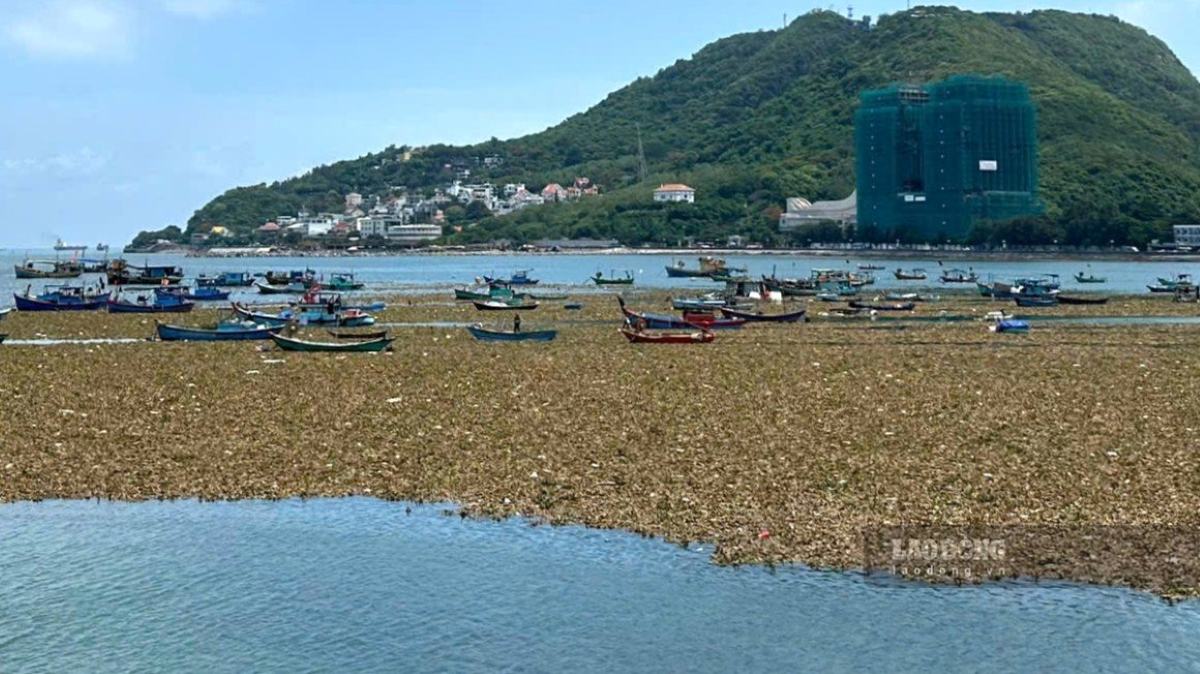
Faced with the above situation, in phase 2 of the topic "Research, assessment and piloting a garbage collection system drifting to the coast of Vung Tau city", a pilot system of buoys and garbage collection at sea will be installed in Bai Truoc area (expected to be implemented in May - June 2026).
The goal is to block garbage and water hyacinth right from offshore, not to let them drift ashore causing pollution and affecting tourism.
The Ho Chi Minh City Department of Agriculture and Environment proposed that the Ho Chi Minh City People's Committee assign the Department of Science and Technology to coordinate with the Branch of the University of Water Resources in Binh Duong to soon deploy a pilot model. In case the solution is effective, the city will consider replicating it at tourist beaches that are frequently invaded by garbage and water hyacinth.
In addition, assigning the Ho Chi Minh City Department of Agriculture and Environment to direct specialized agencies to strengthen the management of fishing vessels and coastal aquaculture households; requiring the collection of all waste generated during exploitation and living, strictly prohibiting the act of littering waste and damaged fishing gear into the sea. Fishing ports must arrange waste reception areas, organize collection and treatment in accordance with regulations.
The authorities of Vung Tau, Tam Thang, Rach Dua wards and coastal localities proactively develop annual plans to organize the collection of garbage and water hyacinth drifting ashore, and at the same time strengthen inspection and strictly handle acts of illegal discharge into the sea.


