
On September 14, the Ho Chi Minh City Department of Construction said that the joint venture of investors is preparing a pre-feasibility study report for the coastal road project in the city. The project is expected to be submitted to competent authorities for consideration and approval of investment policy at the end of 2026.
This is one of 98 key traffic and technical infrastructure projects and works implemented by Ho Chi Minh City in the period 2026 - 2030.
According to the proposal, the coastal road is about 42.7km long, invested on a scale of 6 lanes, with a cross-section of about 35m in phase 1.
The route is divided into 3 sections, forming a connecting axis from the Dong Thap area through Ho Chi Minh City to the Eastern seaport system.
In which, section 1 connects from Dong Thap province (formerly Tien Giang province) to Rung Sac road (17.5km); section 2 connects the Rung Sac area with Cai Mep port (14km); section 3 continues to connect the Cai Mep port area with Phuoc An port belonging to Dong Nai City (11.2km).
The preliminary total investment capital of the project is about 28,520 billion VND, implemented according to the public-private partnership (PPP) method.
Of which, Ho Chi Minh City's budget capital is expected to be about 7,960 billion VND, and capital mobilized by investors is about 20,560 billion VND.
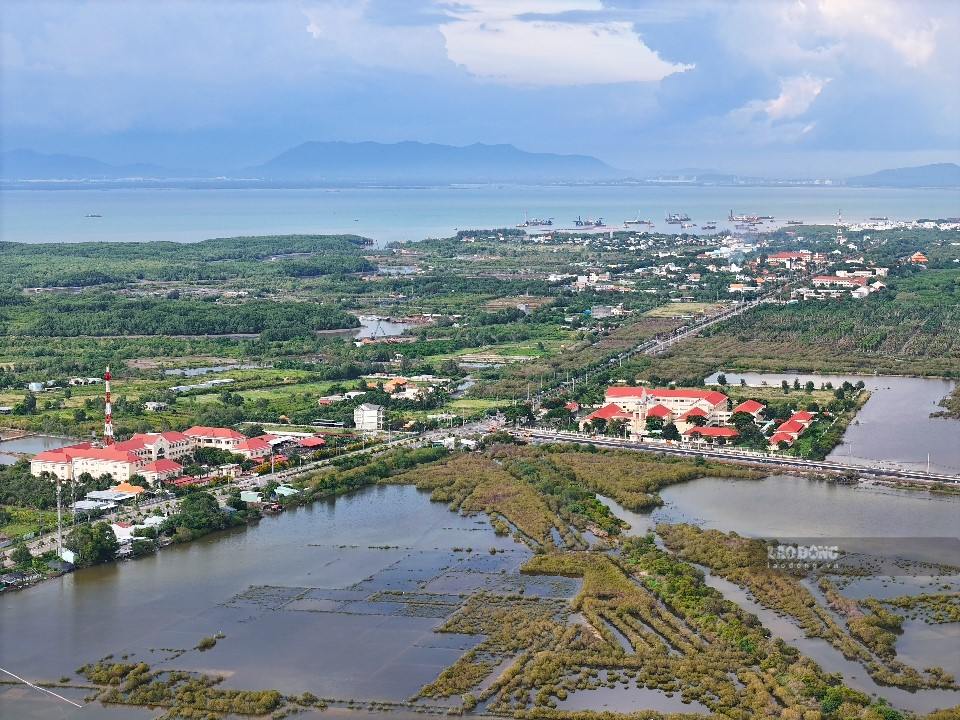
According to the Ho Chi Minh City Department of Construction, the coastal road is one of the sections belonging to the coastal traffic axis that has been planned with a total length of 941km, passing through 9 provinces and cities before the merger including: Ba Ria - Vung Tau, Ho Chi Minh City, Tien Giang, Ben Tre, Tra Vinh, Soc Trang, Bac Lieu, Ca Mau and Kien Giang.
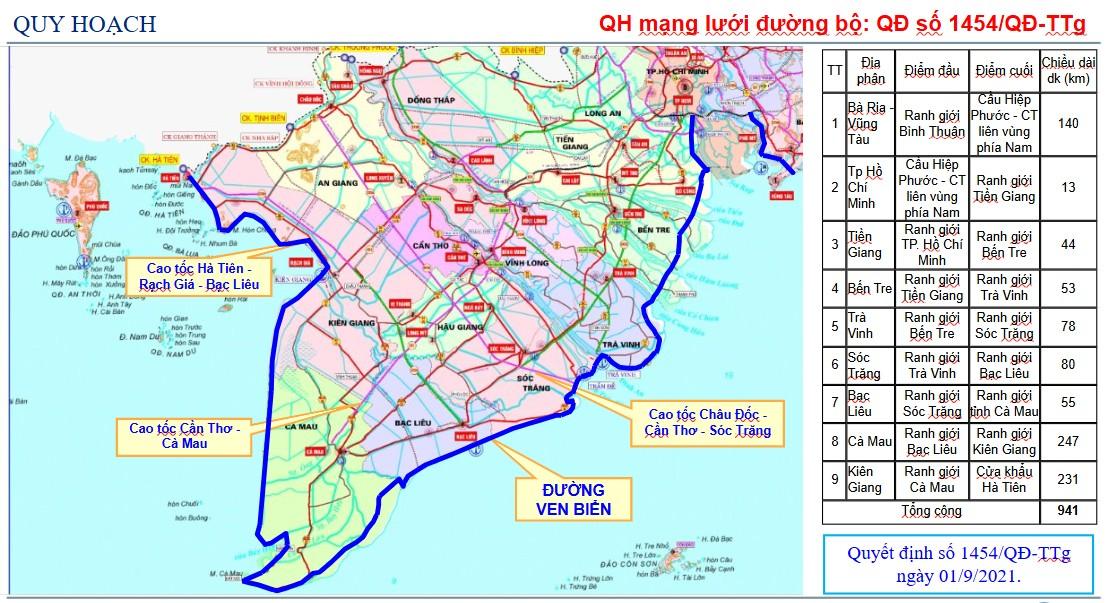
Investing in a coastal road through Ho Chi Minh City not only opens an additional inter-regional connection route but can also form a new transport corridor between the Mekong Delta and the large seaport system of Ho Chi Minh City and Dong Nai.
The route will create more traffic flow for goods, especially agricultural products from the Mekong Delta to Cai Mep and Phuoc An ports, thereby contributing to shortening transportation time, reducing pressure on existing routes and improving the logistics capacity of the region.
In the long term, if synchronously connected with expressways, beltways, routes towards the Mekong Delta and the port entrance system, this coastal route can become an important traffic axis to promote regional linkages, develop logistics and effectively exploit the seaport advantages of the new Ho Chi Minh City.


