
The Ho Chi Minh City People's Committee has just submitted 2 documents to the Ho Chi Minh City People's Council on the decision on the investment policy for the Can Gio Bridge and Phu My 2 Bridge projects.
Can Gio Bridge over VND13,200 billion
The Can Gio bridge project has a total length of about 6.3 km, of which the Soai Rap river overpass is nearly 3 km long, the rest is the approach road and bridges on the route. The project is designed with 6 lanes (4 motor lanes, 2 mixed lanes), designed speed of 80 km/h.
The project passes through Nha Be and Binh Khanh communes, with a land use demand of about 28.85 hectares. The expected implementation period is from 2025 - 2029, of which the construction phase is from 2026 - 2029.
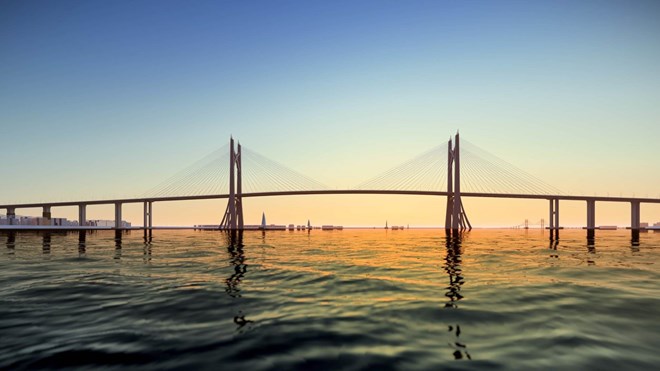
The total preliminary investment of the project is about 13,201 billion VND (including interest). The project is divided into two components:
Component project 1: Compensation, support and resettlement, using 100% of Ho Chi Minh City's budget capital, with a total capital of about 2,533 billion VND.
Component project 2: Construction of Can Gio bridge under the form of public-private partnership (PPP), construction - transfer (BT) contract, total investment of about VND 10,668 billion, of which investor capital accounts for about 92%, the rest is the city budget capital participating in the construction of some bridge and approach road items.
Can Gio Bridge will replace Binh Khanh ferry, directly connecting Can Gio area with the center of Ho Chi Minh City and neighboring areas.
The project also contributes to the formation of a new traffic route in the South of the city, completing the infrastructure network according to the plan, meeting the travel needs of people, attracting investment and tourism.
Phu My 2 Bridge worth over VND23,000 billion
Phu My 2 Bridge has a starting point intersecting with Nguyen Huu Tho Street (HCMC) and an ending point intersecting with Lien Dong Nai Street (Dong Nai). The total length of the route is about 6.3 km, of which the section through Ho Chi Minh City is about 4.6 km long, the section through Dong Nai is about 1.7 km.
The project is invested with 8 lanes, including 6 car lanes and 2 mixed lanes; the approach roads at both ends of the bridge also have a minimum scale of 8 lanes, synchronous technical infrastructure.
The project passes through Phu Thuan ward, Tan My ward, Nha Be commune (HCMC) and Dai Phuoc commune (Dong Nai). The expected implementation period is from 2025 - 2029, construction in the period of 2026 - 2029.
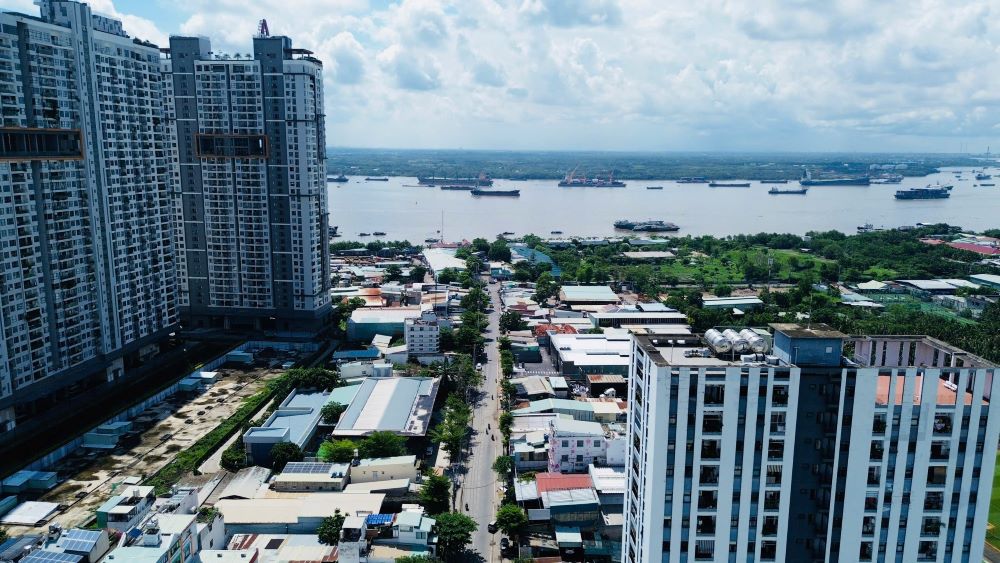
The total preliminary investment of Phu My 2 Bridge is about VND 23,185 billion, of which: Land clearance, compensation, and resettlement costs VND 4,365 billion; construction and equipment costs VND 12,336 billion; management, consulting and other costs over VND 1,480; contingency costs VND 2,708 billion; interest and investor profit costs VND 2,294 billion.
The cost of site clearance for Dong Nai province alone is about 270 billion VND.
The project is invested under a BT contract, combined with payment by land fund and Ho Chi Minh City budget. Of which, the value of payment by land fund is about VND 15,083 billion, the remaining VND is about VND 5,80 billion paid from the city budget, expected to be implemented within 3 years after the project is completed and handed over.
Phu My 2 Bridge will form a new traffic axis connecting the South of Ho Chi Minh City with the southern area of Dong Nai province (formerly Nhon Trach district) and Long Thanh International Airport.
Phu My 2 Bridge also helps to effectively divert traffic, reduce pressure on the existing Phu My Bridge, National Highway 1, National Highway 51 and Ho Chi Minh City - Long Thanh Expressway, shorten travel time, reduce transportation costs and create momentum for the development of the South Saigon and Nhon Trach areas.


