
Improving specific and superior institutions
On the morning of March 20, Tien Phong Newspaper coordinated with the Hanoi People's Committee to organize a seminar with the theme "Capital Law (amended): Hanoi before historical opportunities", to comprehensively recognize the issues raised in the development process of the Capital, as well as discuss the necessary breakthrough specific mechanisms and policies in the coming period.
According to Mr. Nguyen Tien Thiet - Chief of Office of Hanoi People's Committee, the amendment of the Capital Law this time takes place in a context of particularly important significance, when the Politburo has just issued Resolution No. 02, dated March 17, 2026 on building and developing Hanoi Capital in the new era. This is an important political basis, and at the same time poses an urgent requirement to amend the Capital Law in a comprehensive, synchronous and breakthrough direction, in order to fully institutionalize the viewpoints, goals and major orientations that the Resolution has set out.

The development practice of Hanoi in recent times shows that, besides the achieved results, the Capital is facing many major challenges, especially in urban management and development. Pressure on infrastructure, transportation, environment, planning and quality of life is increasing, while some current mechanisms and policies have not really kept up with the development requirements of a special city.
To fundamentally solve these problems and at the same time open up new development spaces, the city is synchronously implementing many major programs and projects; in which, the amendment of the Capital Law is identified as a fundamental task, aimed at perfecting a specific, superior, stable institution with a long-term vision, making the law on the Capital a competitive advantage and a driving force to promote rapid and sustainable development" - Chief of Office of the Hanoi People's Committee emphasized.
Concretizing orientations on field maps
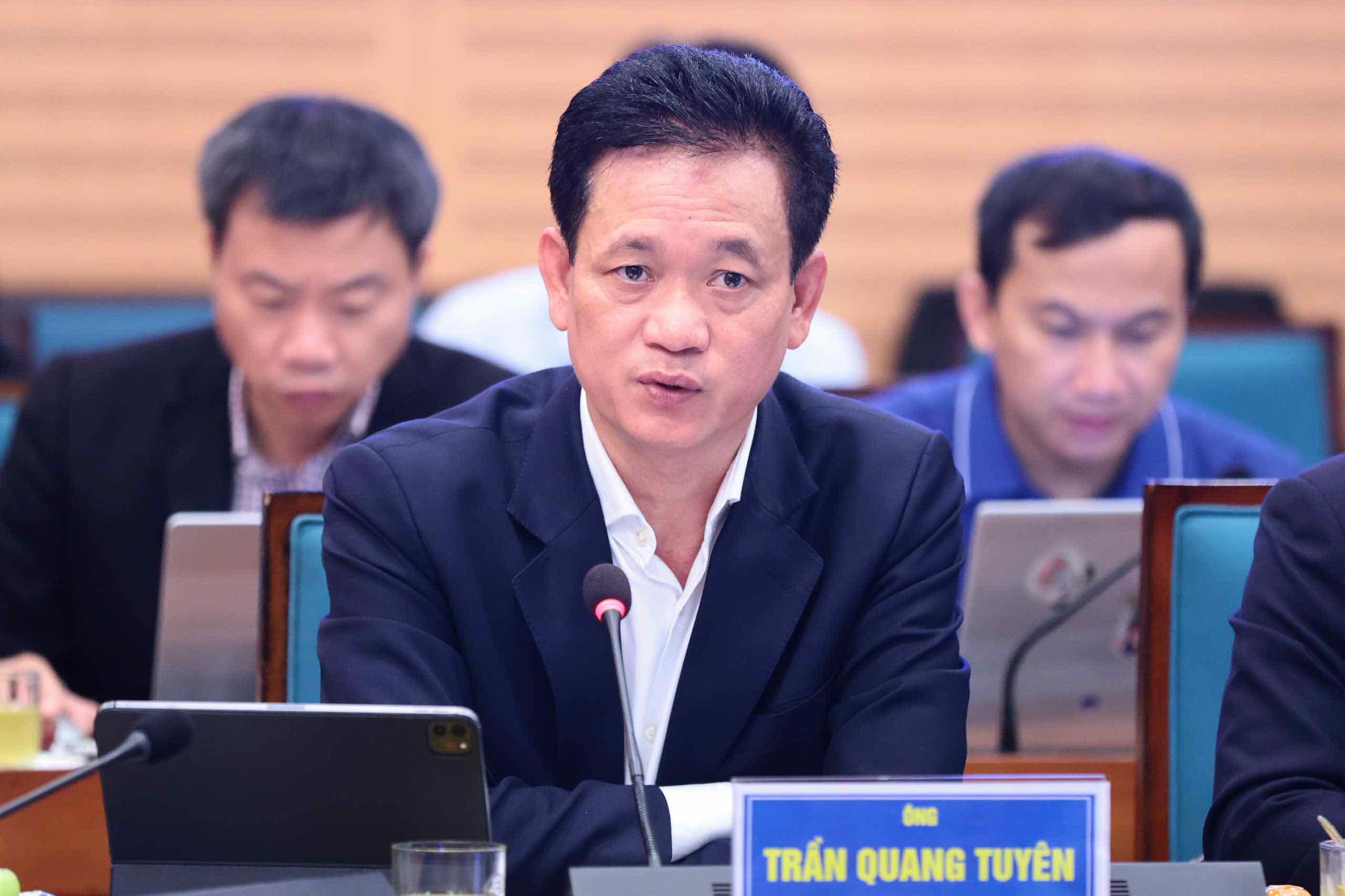
Speaking at the seminar, Mr. Tran Quang Tuyen - Deputy Director of Hanoi Department of Planning and Architecture affirmed that the revised Capital Law and the 100-year master plan vision are of great significance, a breakthrough step. If it is recognized that the 100-year master plan plays a strategic role and establishes a long-term orientation, then the revised Capital Law is the most important legal foundation, ensuring resources and a basis for implementation.
Mr. Tuyen emphasized that the absolute compatibility of the three-legged tripod including the Politburo's Resolution, the Capital Law and the Space Planning is a launching pad to concretize orientations on the field map.
According to Mr. Luyen Van Phuong - Deputy Director of Hanoi Department of Construction, this revised Capital Law has given Hanoi the opportunity to proactively develop its own policies to meet rapid development speeds.
According to Mr. Phuong, the current urban and housing situation in Hanoi faces many major inadequacies such as the renovation of old apartment buildings - the implementation progress is very slow, social housing, and the supply is extremely limited while people's demand is very high.
Meanwhile, commercial housing and market prices have exceeded the affordability of the majority of people. As for resettlement housing, it has revealed many weaknesses in quality, failing to meet the requirements of modern urban reconstruction.
According to Mr. Phuong, the main reason lies in the inadequacy of current policies. Therefore, giving Hanoi the initiative is extremely important.

Hanoi strives to achieve 120,000 social housing units in the period 2026-2030 (higher than the target of 100,000 units assigned by the Government). "If the mechanisms and policies are removed, this number can completely exceed expectations" - Deputy Director of Hanoi Department of Construction assessed.
Or with the renovation of old apartment buildings, Mr. Phuong emphasized that Hanoi currently has about 2,160 old apartment buildings. The goal by 2035 is to renovate the entire system. This is only feasible if there are special mechanisms from the Capital Law to handle bottlenecks arising in practice.


