
On January 22, the Standing Committee of the Vietnam Fatherland Front Committee of Lam Dong province announced that it had just issued a plan to organize visits and give gifts to poor households, near-poor households, and households in difficult circumstances on the occasion of the 2026 Binh Ngo Lunar New Year.
According to the plan, the beneficiaries of visits and gifts include poor households, near-poor households, households in difficult circumstances, policy households, and people with meritorious services to the revolution in the entire province.
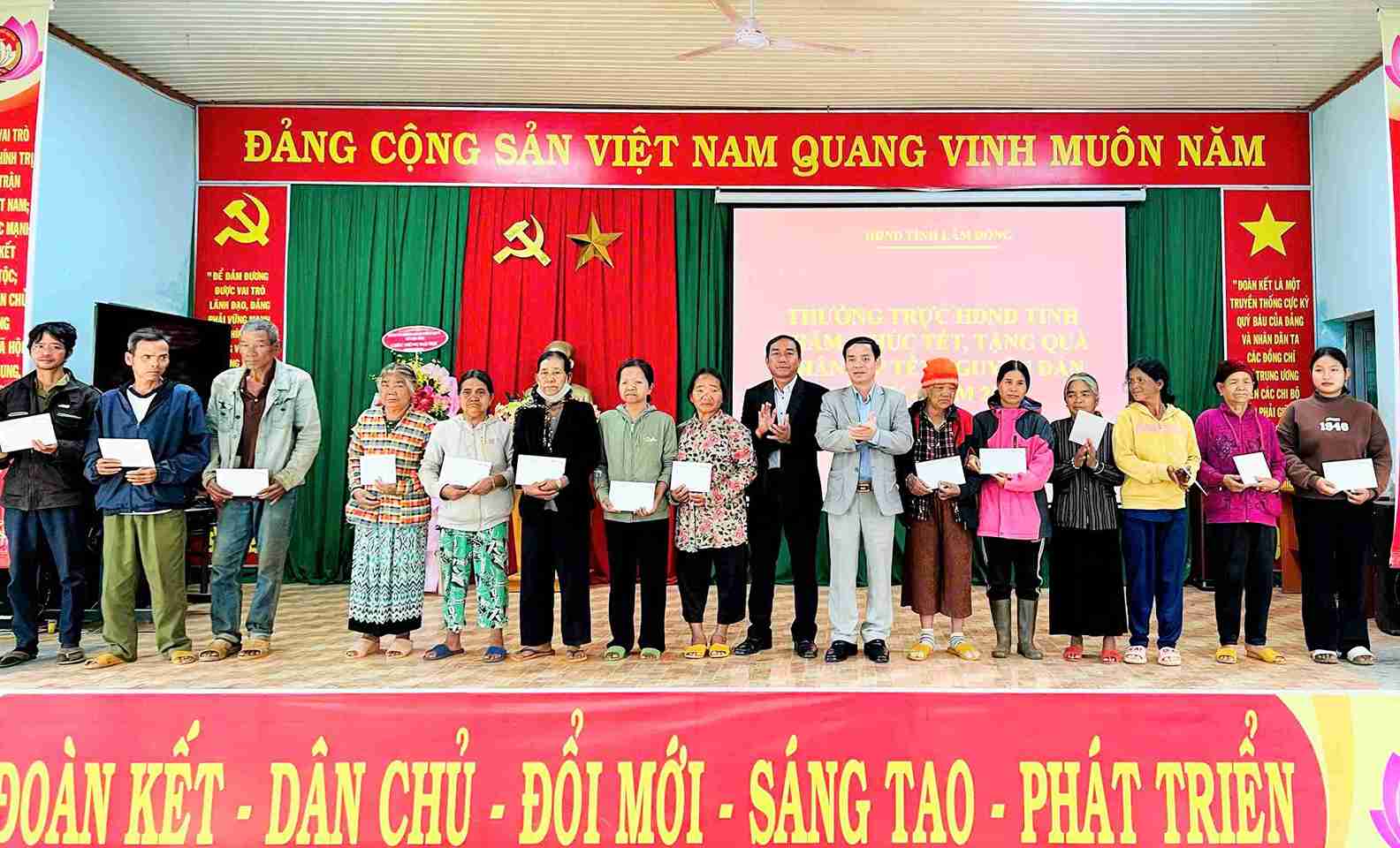
In which, priority is given to remote and isolated areas, ethnic minority areas, localities affected by natural disasters; workers and laborers facing difficulties and job losses.
The funding for implementation is mobilized from the allocation of the Standing Committee of the Central Committee of the Vietnam Fatherland Front, the Provincial "For the Poor" Fund and legal socialization mobilization sources.
Specifically, from the support of the Central Committee of the Vietnam Fatherland Front, Lam Dong province will present 300 gifts, each worth 1.3 million VND (including 1 million VND in cash and gift bags worth 300,000 VND).
From the provincial "For the Poor" Fund and other mobilized sources, it is expected to give about 35,000 gifts to poor households, near-poor households and households in difficult circumstances, with an average of 1.2 million VND/gift (including 1 million VND in cash and gifts worth 200,000 VND).
The time for organizing visits and gifts is expected from January 26 to February 13, 2026 (ie from the 8th to the 25th day of the twelfth lunar month), in communes, wards, and special zones in the province. The organization will be deployed in clusters of areas to ensure convenience and efficiency.
The Standing Committee of the Vietnam Fatherland Front Committee of Lam Dong province requests that the work of visiting and giving gifts must be carried out for the right subjects, promptly and practically, avoiding duplication or omissions.
Thereby, ensuring the use of funds in accordance with regulations, public, transparent and effective. The responsibilities of heads of agencies, units, and localities are clearly defined in the process of coordination and implementation.


