
This is one of the solutions proposed by the Ho Chi Minh City Department of Construction to reduce traffic congestion and accidents in 2026.
According to the Department of Construction, to support the development of public transport and reduce dependence on private cars, the city will strengthen utilities for pedestrians, helping people access public transport more conveniently.
Ho Chi Minh City will expand the bicycle station system connecting to metro stations, bus stops, and bus stations; and at the same time, study building dedicated lanes for bicycles.
Notably, Ho Chi Minh City will deploy pedestrian streets in the central area such as Dong Khoi, Le Loi, Bach Dang wharf,... to limit private cars entering the inner city.
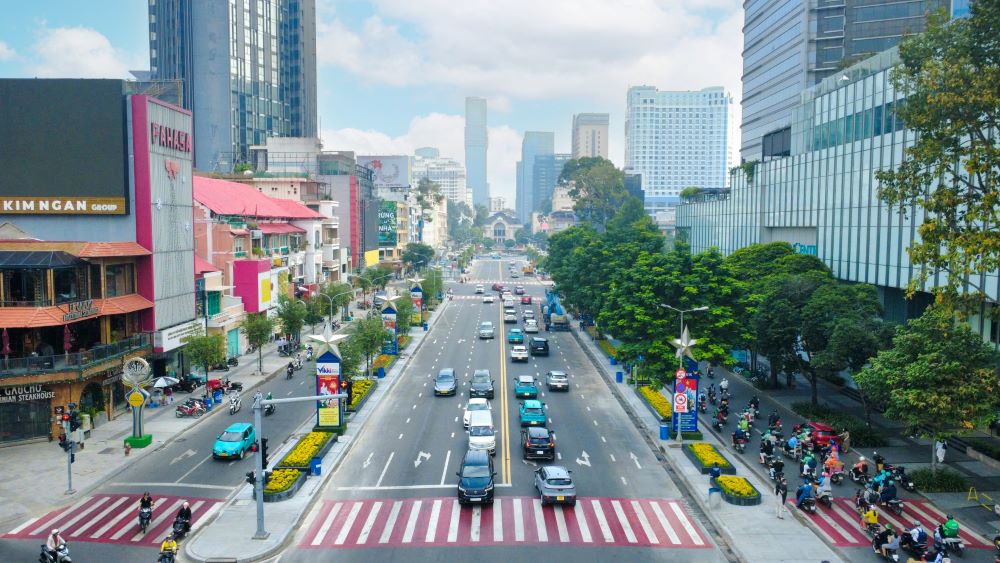
The Department of Construction also proposed solutions to control personal vehicles such as developing plans to convert vehicles to using electricity and green energy; deploying low-emission zones (LEZs); researching and limiting the circulation of some types of vehicles on some routes according to a certain time frame.
In addition, Ho Chi Minh City will build parking lots in the gateway area and key stations for people to park their cars, and then switch to using public transport when entering the center.
The expansion of pedestrian streets is also mentioned in the recent directive of the Ho Chi Minh City Party Committee on strengthening urban order management.
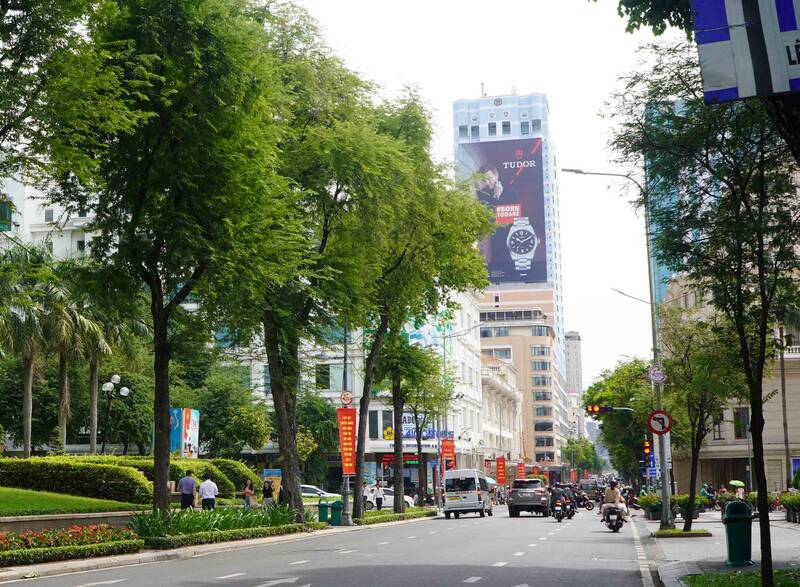
The Ho Chi Minh City Party Committee has assigned the Party Committee and People's Committee of Ho Chi Minh City to direct the construction of more pedestrian streets in the central area, in order to form common living spaces for people.
Currently, Ho Chi Minh City has two city-level pedestrian streets, Nguyen Hue and Bui Vien.
Nguyen Hue pedestrian street has been operating since 2015, more than 670 m long, stretching from the Ho Chi Minh City People's Committee headquarters to Ton Duc Thang street, is a large public space, where cultural and festival activities regularly take place.
Bui Vien pedestrian street has been in operation since 2017, and has long been considered a "Western street" with many nighttime entertainment activities, attracting a large number of international tourists.
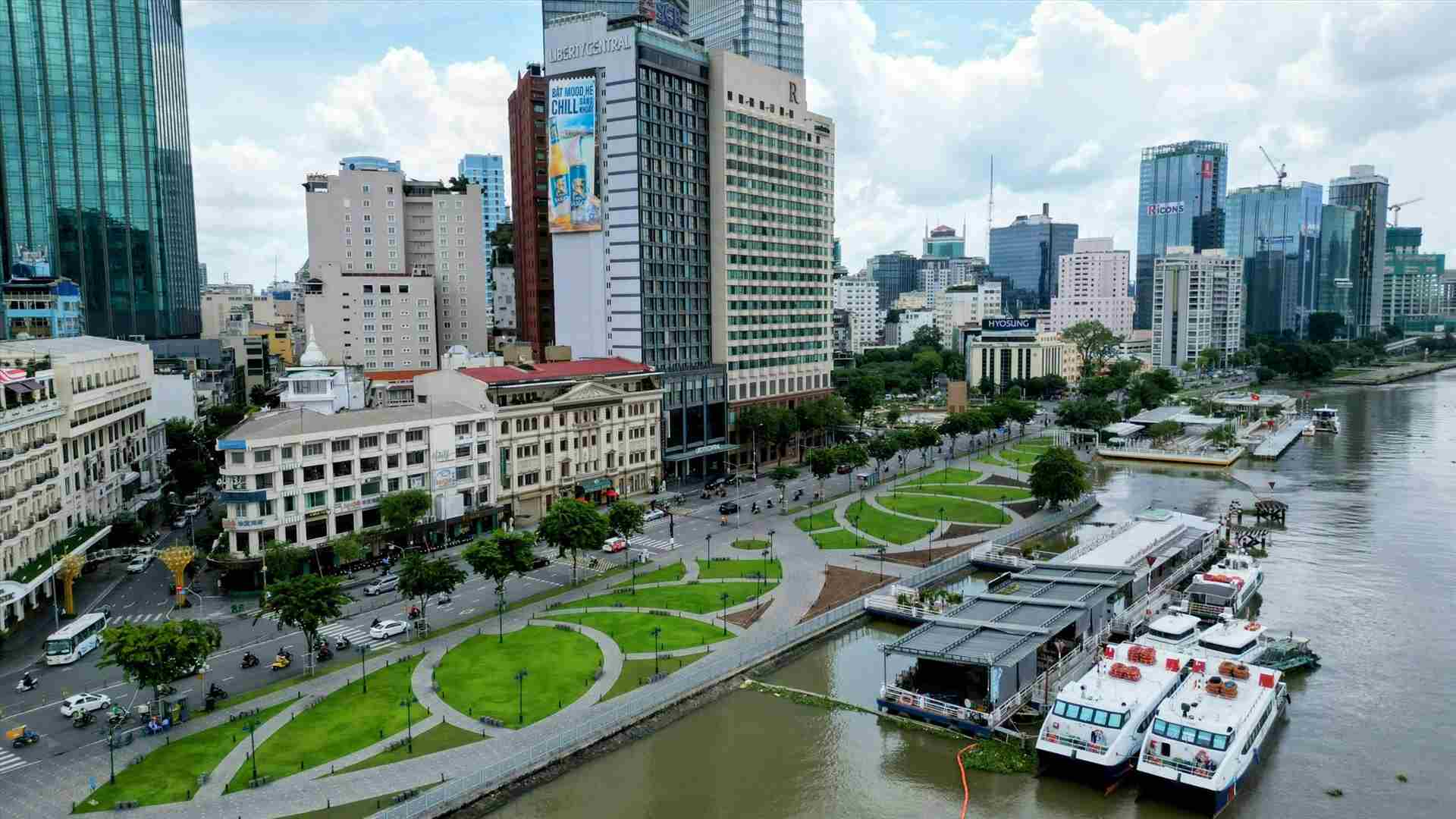
Previously, in 2022, the Ho Chi Minh City Department of Transport (now the Ho Chi Minh City Department of Construction) developed a project to organize pedestrian paths in the central area.
The first phase is expected to be implemented in the International Square area and routes such as Pham Ngoc Thach, Cong Xa Paris (section from Le Duan to Nguyen Du), Le Loi (from Nguyen Hue to Quach Thi Trang roundabout), Dong Khoi (from Nguyen Du to Le Loi), Phan Chu Trinh, Phan Boi Chau.
In the next phase, the network will expand to the Lam Son Square area and Nguyen Thiep, Mac Thi Buoi, Ngo Duc Ke streets (section from Nguyen Hue to Dong Khoi).
According to the project, by 2025, the central area may add a pedestrian street on Ham Nghi street (from Ton Duc Thang to Quach Thi Trang roundabout). The routes Ton That Dam (from Ham Nghi to Huynh Thuc Khang), Thai Van Lung, Thi Sach will also be restricted for motorized vehicles, prioritizing pedestrian space.
However, although it has been submitted to the Ho Chi Minh City People's Committee for consideration, this project has not yet been implemented.


