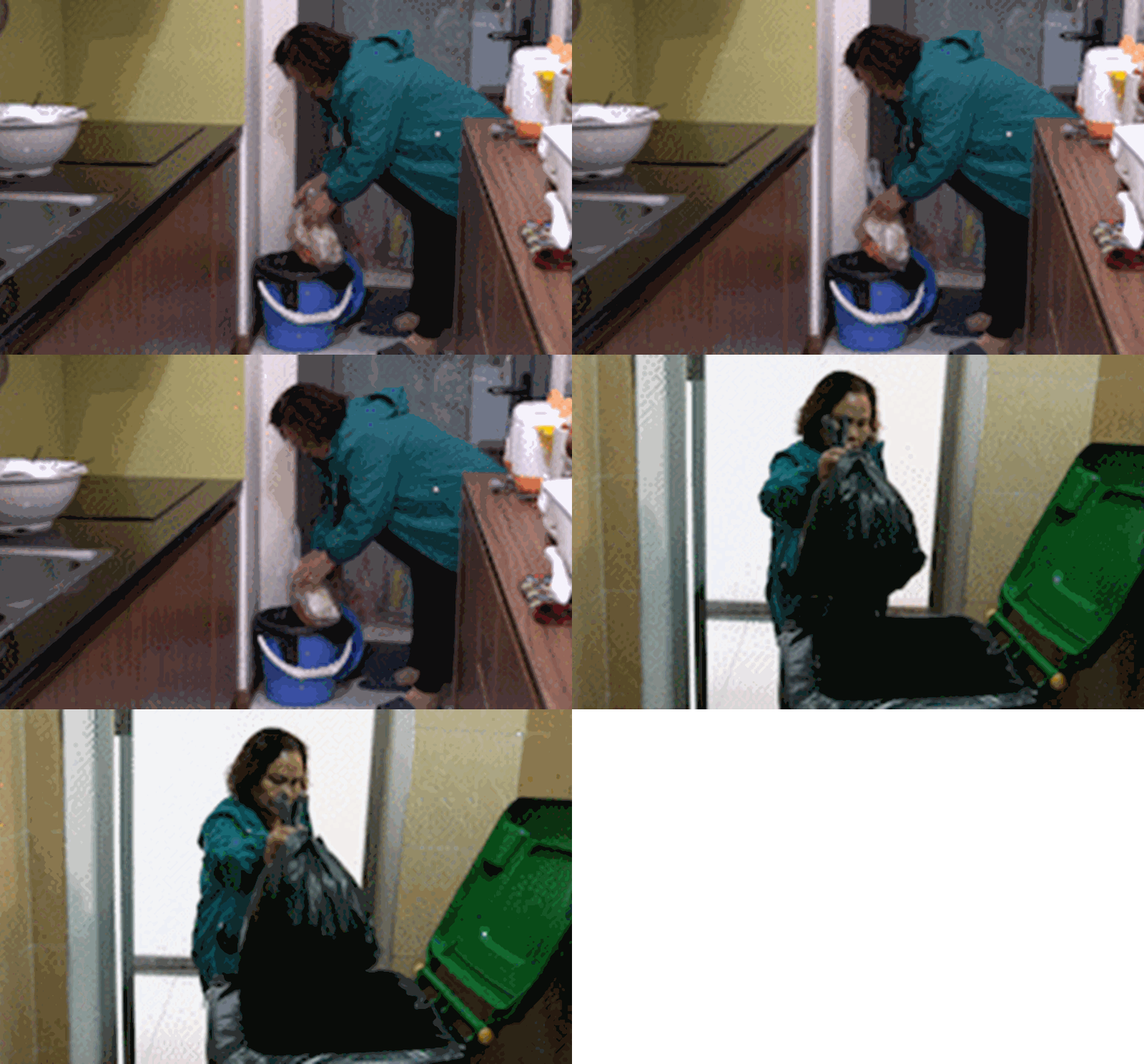
Vice Chairman of Hanoi People's Committee Nguyen Manh Quyen has signed and issued Decision No. 87 on regulations on the management of domestic solid waste of households and individuals in the city. This regulation takes effect from January 8.
According to the decision, domestic waste generated from households and individuals is classified at source into 3 groups: Group of solid waste capable of re-use and recycling (waste paper, plastic waste, metal waste, glass waste, fabric, leather goods, wooden furniture, rubber, electrical equipment, electronic waste); group of food waste (excess food, expired food, vegetables, tubers, fruits, fruits...); group of other solid domestic waste (compressed waste, hazardous waste generated in domestic activities...).
Hanoi stipulates that packaging containing the group of food waste has an overall green color but is still easy to recognize the type of waste contained inside, ensuring to avoid water leakage and odor spread; encouraging packaging produced from easily decomposing materials and easy to recognize the type of waste contained inside. Packaging containing other groups of waste has an overall gray color but is still easy to recognize the type of waste contained inside, encouraging packaging produced from easily decomposing materials. Dangerous waste groups arising in daily life are stored in packaging (except for packaging in green and gray colors), which are corrosion-resistant, waterproof, and do not leak into the environment.
Households and individuals must equip themselves with household waste packaging to store and transfer according to the plan corresponding to each type of domestic waste.
The regulation also attaches responsibility to the commune-level People's Committee in managing waste sorting at source.
Accordingly, the commune-level People's Committee is responsible for classifying, collecting, transporting and managing domestic solid waste, public sanitation, maintaining and ensuring environmental sanitation in the area according to decentralization and according to the provisions of law; proactively allocating commune-level budget capital and other legally mobilized capital sources to organize implementation according to decentralization and according to the provisions of law.
Promulgate a plan to manage domestic solid waste in the area in accordance with the situation of generation and collection, transportation, and treatment of domestic solid waste in the locality.
Propagate and disseminate to people to litter on time and in the right places. Inspect and sanction acts of littering domestic solid waste on time and in the right places according to their authority and request violating organizations and individuals to be forced to restore the original state. In case the commune-level People's Committee does not promptly detect it, it must be responsible for restoring the original state.
At the same time, direct the implementation of allocating funds to invest in household solid waste collection and storage equipment in public areas and collection points, transshipment stations, and household solid waste transfer points in the area synchronously with specialized household solid waste transport vehicles.
Applying information technology, using specialized software, cameras in monitoring and strictly managing the classification, collection, transportation and treatment of domestic solid waste in the locality. Organizing inspections of the implementation of regulations on domestic solid waste management according to decentralization; handling administrative violations according to authority.
Widely announce the local environmental hotline number so that people can know and reflect on environmental issues; receive and resolve disputes, complaints, denunciations and requests and petitions about domestic solid waste within their authority or transfer them to competent state agencies for settlement...