
Going far to accumulate, returning to get rich...
Late afternoon in Son Linh commune, clouds and boards drifted along the mountainside. In the spacious house, Mr. Dinh Van Hoi slowly poured a cup of sweet soup to invite us, his eyes could not hide his joy. Just over four months ago, his son left the village to work in Japan. From that day on, the small house in the mountainous areas of Quang Ngai not only had more laughter, but also had a clearer belief in a full future.
"The state has supported loans, my children work there stably and have a good income. Sending money back regularly every month, the family is very excited, Mr. Hoi confided.
The money sent by his son not only helps Mr. Hoi's family cover their living expenses, but also opens up a long-term investment and production plan. For mountainous households, where livelihoods were once closely linked to precarious farming, labor export is becoming a new door to escape poverty in a fundamental and sustainable way.
Quang Ngai is a province with many mountainous communes, remote areas; the population is mainly ethnic minorities. People's lives are still difficult, lacking stable jobs, and low income. Recognizing this situation, in recent years, the province has synchronously implemented job connection programs and policies to support loans to solve employment for poor, near-poor households and ethnic minorities.
Not only stopping at financial support, functional sectors also focus on consulting, orienting careers, connecting businesses, helping workers access the foreign job market safely and legally.
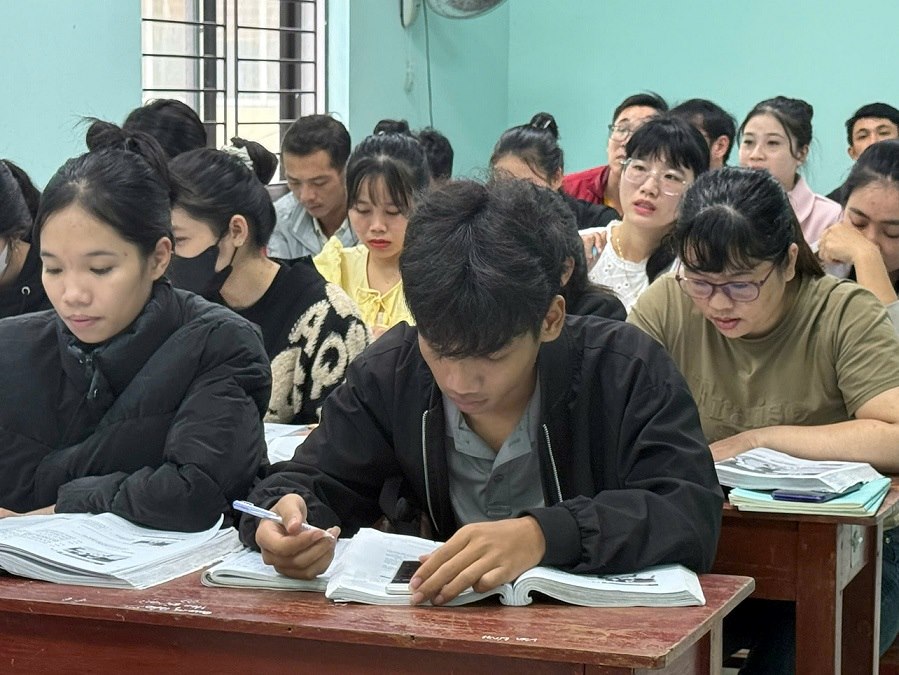
Recorded at the Quang Ngai Provincial Employment Service Center, the atmosphere of learning foreign languages is always bustling. Dozens of young workers are tirelessly learning Korean and Japanese, practicing life skills, getting used to the industrial style and necessary luggage before the departure date.
Among them was Ms. Dinh Thi Linh, a H're, in Lang Trang village, Son Linh commune. Previously, Ms. Linh worked as a garment worker, with an unstable income and a difficult life.
I decided to register to work abroad because I wanted a more stable future. I was supported with study costs and preferential loans to deposit. With this policy, poor people like me dare to think about going far, Ms. Linh shared.
The decision to work abroad of many people in mountainous areas is no longer a temporary choice. Behind that are real life-changing stories. Mr. Pham Ngoc Huy, village 6, Tra Bong commune, has just returned after six years of working in the agricultural sector in Korea. The day he left his hometown, Mr. Huy was almost penniless. The day he returned, he brought with him capital, experience and a new business mindset.
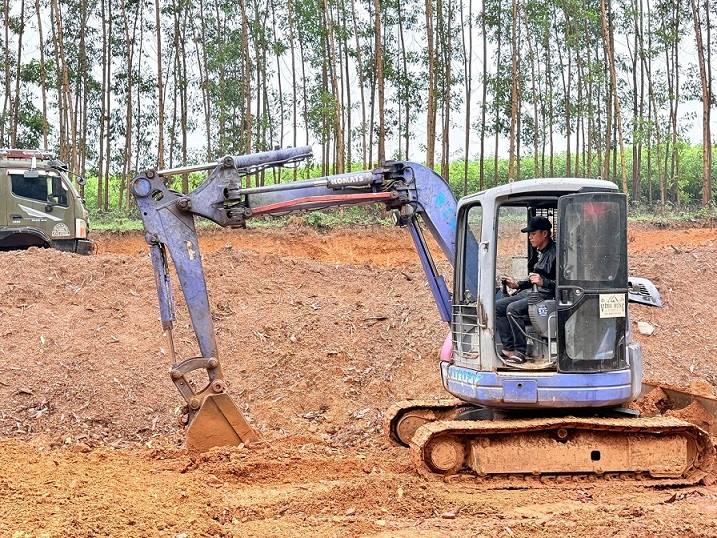
Thanks to the accumulated money, Mr. Huy boldly invested in two excavators and two trucks to develop the local economy. A stable job and a good income helped his family's life quickly improve.
Going abroad is not just to make money. More importantly, learn how to work scientifically, discipline, and know how to apply technology to production. To have a high income, you have to work hard and be willing to work overtime, Mr. Huy expressed.
Mr. Huy's story is not the only one. In reality, many workers have returned to their hometowns after completing their contracts, becoming a skilled and capital-rich workforce, contributing to the development of the local economy.
For the labor export route to be truly sustainable, the role of local authorities and businesses is a key factor. Ms. Y Giang Ly - Vice Chairman of Ia Toi Commune People's Committee said that the locality always closely coordinates with businesses in vocational training and job orientation for people.
We combine both creating on-site jobs through agricultural - forestry and service models, promoting vocational training, linking businesses, encouraging workers to work far away, and exporting labor to increase legitimate income, Ms. Ly emphasized.
On the business side, improving the quality of human resources is a top priority. Workers not only learn foreign languages but are also equipped with cultural knowledge, behavioral skills, and labor discipline suitable for each market.
Ms. Duong Thi Thanh Tuyen, representative of TQC International Human Resources Supply Joint Stock Company, said: The company has many suitable orders, especially for female workers working at supermarkets. After deducting the cost of accommodation, each month, workers can have about 2527 million VND left to send to their families.
Creating a launching pad to bring workers to the international market
One of the biggest barriers for poor workers when wanting to work abroad is the initial cost. Preferential credit policies have become an important lever to help people overcome this barrier.
Mr. Le Thinh - Deputy Director of the Social Policy Bank Transaction Office Ia H'Drai said that the borrowers are poor, near-poor households, and ethnic minorities according to Decree 74. The loan level is based on the demand for labor export costs. If the loan is over 100 million VND, there must be collateral; the interest rate is applied at the same rate as the interest rate for poor households, said Mr. Thinh.
Thanks to preferential capital, thousands of Quang Ngai workers have had the opportunity to reach the international market, creating a stable and long-term source of income.
Currently, Quang Ngai is sending workers to work in markets such as Japan, Korea, Saudi Arabia... On average, each worker sends from 2040 million VND per month, depending on the market and industry.
That cash flow not only helps many families escape poverty, but also creates resources to invest in production, build houses, and let their children study well.
Mr. Vo Duy Yen - Acting Director of the Quang Ngai Provincial Employment Service Center said: "We maintain connections between workers, families and localities throughout their working time abroad so that they can feel secure. When returning home, they continue to be consulted and introduced to suitable jobs".
According to Mr. Yen, in the coming time, the Center will continue to provide vocational training and foreign languages close to market demand; coordinate with training institutions to prepare quality labor resources; at the same time, strengthen inspection, supervision and full implementation of support policies.
"The goal is to maintain prestige with received markets and ensure the rights of workers, so that the program becomes more and more effective" - Mr. Yen emphasized.
In 2025, Quang Ngai sent more than 1,000 workers to work abroad under contracts, reaching over 93% of the plan. Poverty reduction work has achieved clear results: the poverty rate of the whole province decreased by an average of 2.17%/year; in mountainous areas alone, it decreased by 4.64%/year.
According to Ms. Dinh Thi Tra - Deputy Director of the Department of Home Affairs of Quang Ngai province, propaganda and mobilization of workers to work abroad not only increases income, but also helps change thinking.
After 2-3 years of working, workers will have resources to develop their family economy, have a good job, and industrial style. This is the foundation for them to do better things when returning, Ms. Tra emphasized.
From the villages of the poor to modern factories in the land of the people, the labor export journey is quietly changing the face of the countryside and mountainous areas of Quang Ngai. Going to accumulate, to learn, and to return - that is the path to sustainable poverty that many people are choosing.


