
Strive to resolve it definitively before June 30.
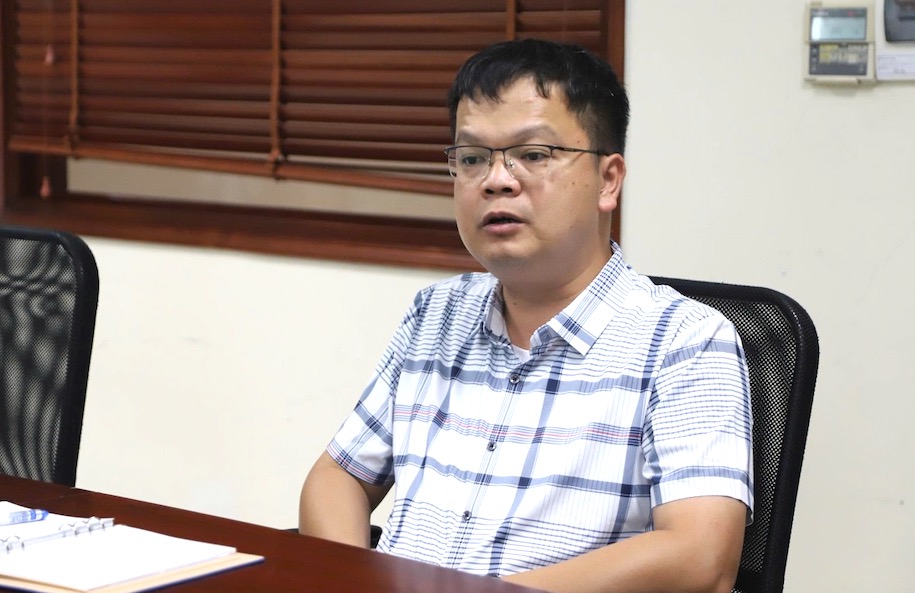
Talking to Lao Dong Newspaper, Mr. Tran Sy Luong - Deputy Director of Branch 1, Center for Inspection of Waterway Vehicles and Marine Works, Vietnam Register - said that the current obstacle is not in the inspection stage but mainly because vehicles do not meet technical requirements, do not have design documents or vehicle owners have not completed the necessary procedures to be inspected.
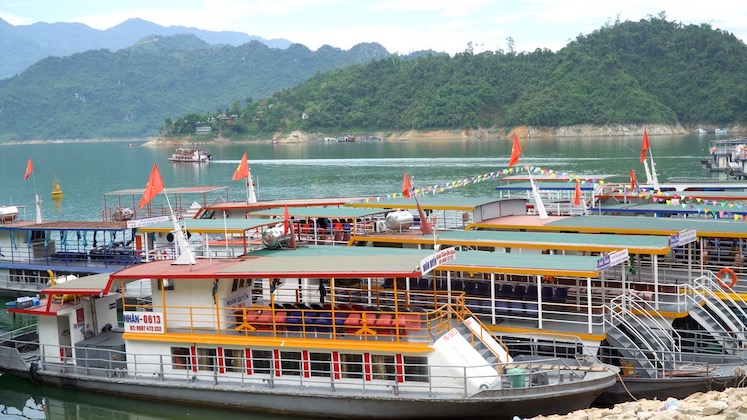
The situation of nearly 200 uninspected ships has very different origins. Some ships have been converted from cargo and corn vehicles to tourist vehicles; some ships are built by people themselves but have not registered and inspected according to regulations; some vehicles have been transferred from other localities to operate on the lakebed.
After Hoa Binh province merged into Phu Tho province, the management of inland waterway vehicles has been tightened. Vehicles without registration and inspection are not allowed to operate.
The registration agency has coordinated with the Inland Waterway Port Authority, the Department of Construction, local authorities and related units to regularly inspect and review, and at the same time propagate to people to proactively carry out registration early. However, the Hoa Binh lake area has specific difficulties, in which currently only one facility is qualified to repair vehicles according to current standards," Mr. Luong said.
Hundreds of ships without design documents
To remove difficulties for people, in the past time, functional agencies have established a working group including representatives of the Phu Tho Provincial Department of Construction, the Inland Waterway Port Authority, the registration unit and local authorities to review the reality of each vehicle.
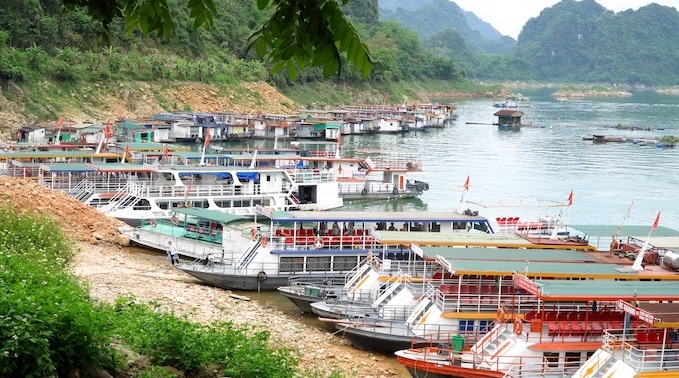
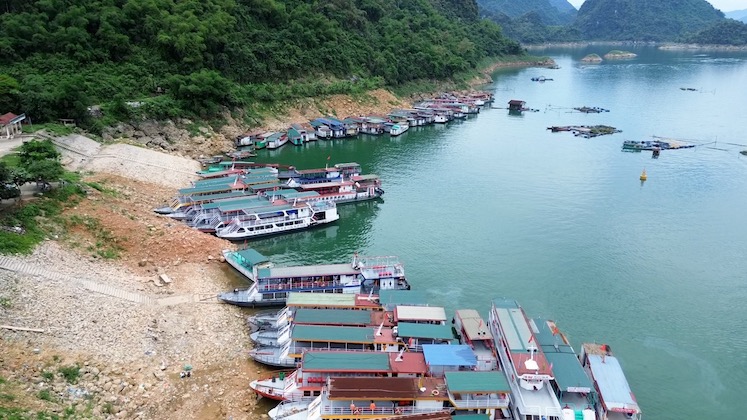
Through inspection, the vehicles were divided into two groups.
The first group includes 14 vehicles that have been considered for removal from previous years. Among these, only 10 vehicles have been designated. However, so far, no vehicle owners have officially submitted dossiers requesting registration.
According to Mr. Luong, after comparing between the design documents and the actual situation, many ship owners discovered that the vehicle still had many inappropriate items, so they had to continue to repair, replace the engine or supplement the origin documents of the equipment.
We can only conduct inspections when the vehicle owner officially requests registration," Mr. Luong said.
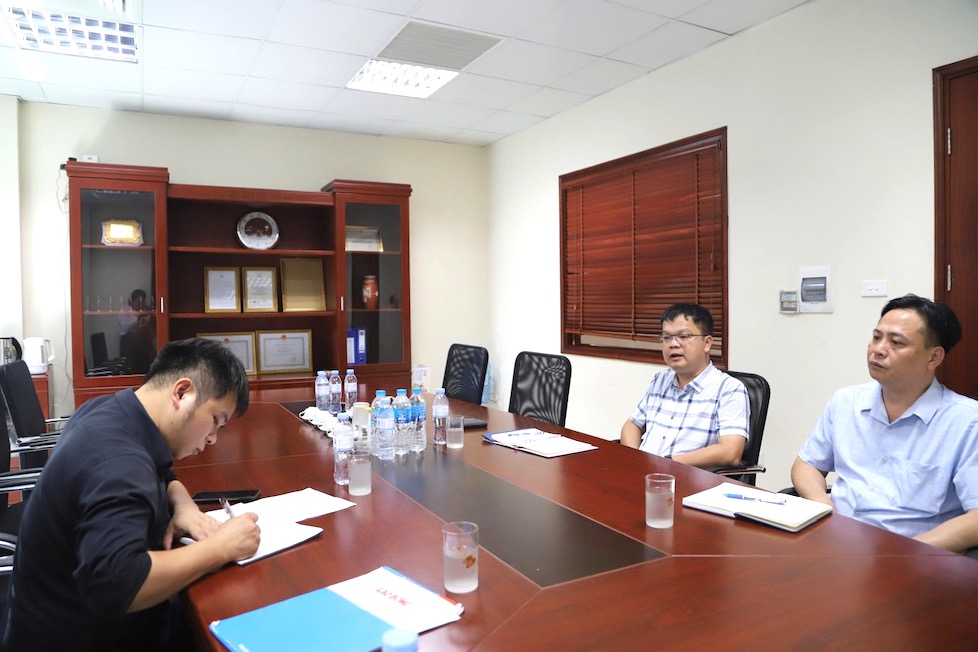
Notably, the second group includes about 185 vehicles that do not have design documents and are newly built without the supervision of the registration agency.
Functional agencies are still considering allowing vehicle owners to supplement design documents later. However, people must proactively hire consulting units to survey the current status, prepare technical documents, calculate repair plans, and then assess whether the vehicle meets technical standards or not.
There is no regulation prohibiting people from supplementing design documents. However, this is the responsibility and cost that vehicle owners must pay themselves," Mr. Luong said.
The biggest difficulty is funding.
According to a representative of Registration Branch No. 1, the two biggest difficulties currently are not being able to determine the year of registration of many vehicles and the cost of carrying out technical procedures is quite large.
People have to spend money to hire design units to survey and assess the current status of vehicles, and prepare technical records. Then, continue to hire units with repair functions to determine the cost of overcoming existing problems before registration.
Currently, the locality does not have a budget to support people to hire design units or repair vehicles. State agencies can only provide organizational support, guidance and coordination in implementation," Mr. Luong said.
Another issue of concern is the determination of the operating area of Hoa Binh reservoir. According to current technical regulations, if the area is recognized as the SIII zone, many technical requirements for vehicles will be reduced compared to the SII zone (SIII zone is a zone with a HS wave height of 0.4 m equal to 1/2 of the wave height of the SII zone).
However, to be recognized as SIII region, the locality must conduct surveys and collect scientific data on waves, winds and hydrological conditions according to regulations.
Up to now, we have not received official information about the completion of these procedures. When there is no official announcement, current standards must still be applied," Mr. Luong said.
Mr. Luong affirmed that functional agencies are reviewing each vehicle and strive to have specific answers for each case by the end of June 30, clearly identifying which ships are eligible to continue completing dossiers for registration, and which ships are not eligible so that localities can have appropriate management measures.
Research to support people financially
Previously, in Notice No. 63 signed by Deputy Director of the Vietnam Register Tran Anh Duong on March 6, the Vietnam Register requested the Phu Tho Provincial Department of Construction to preside over the establishment of a working group to review and assess the technical condition of vehicles without design documents. The locality coordinates with specialized agencies to survey and determine the SIII zone for freshwater lakes in the area to create a basis for applying more appropriate technical standards.
At the citizen reception in May, Chairman of Phu Tho Provincial People's Committee Tran Duy Dong also directed the Department of Construction to coordinate with the Vietnam Register to urgently resolve difficulties and obstacles related to registration and inspection of inland waterway vehicles operating in the Hoa Binh reservoir area.
From the perspective of supporting people, Dr. Ta Dinh Hoa - lecturer at the Academy of Finance - said that technical requirements related to vehicle safety must be strictly implemented according to regulations.
However, for costs incurred in the process of completing dossiers, repairing vehicles or registration, the State may study support mechanisms from national target programs on poverty reduction or development of ethnic minority areas.
In my opinion, this is a legitimate need of the people. If there is a suitable support mechanism, it will help harmonize the requirements of ensuring waterway traffic safety with maintaining livelihoods for hundreds of households in the lake area," Dr. Ta Dinh Hoa assessed.


