
People suffer because ships are ashore
Walking along the Thung Nai lake, Phu Tho these days, you can see hundreds of boats lying silently in the sun and rain.
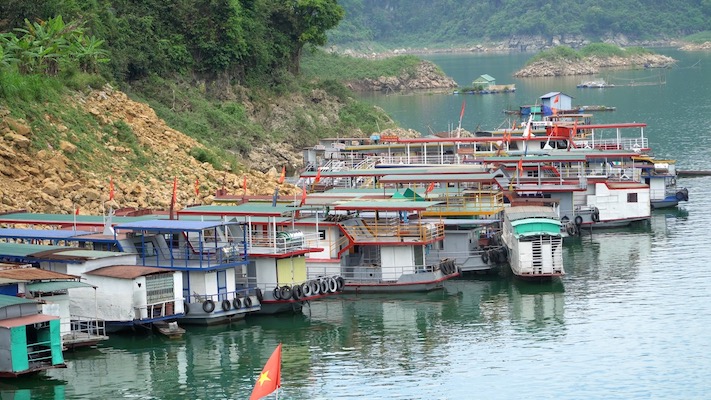
There are vehicles that are still brand new, invested with billions of VND but cannot be put into operation yet.
Behind the ashore ships is the hard life of hundreds of households, mostly ethnic minorities, who are finding ways to repay large bank loans every day.
People said that they borrowed almost the entire amount of money from the bank to build ships. However, due to lack of understanding of regulations, many ships built have not been registered for inspection.
Ms. Bui Thi Quy - a boat owner in Thung Nai - said that her family built a new tourist boat from 2023 with a total cost of more than 1.1 billion VND.
I built a new boat nearly 3 years ago but it has not been operating. Each month, my family has to pay about 5 million VND in interest. We only rely on the profession of transporting tourists on the lake. Now the boat cannot run, there is no income. The whole family only goes to catch shrimp and fish to make a living day by day, just enough to eat is lucky, and the money to pay interest is really very stressful," Ms. Quy shared.
Sharing the same situation, Mr. Nguyen Hoang Mai said that his family also invested in building a new tourist boat with a total cost of about 1.07 billion VND, but so far it has not been put into operation.
Many people in Thung Nai admit that due to limited legal knowledge, they used to build ships according to actual needs without fully anticipating the regulations on dossiers and procedures.
Now, what people want is to be specifically guided by functional agencies in case of needing to repair and supplement items. If registration cannot be carried out, it is also necessary to notify people to calculate the liquidation plan.
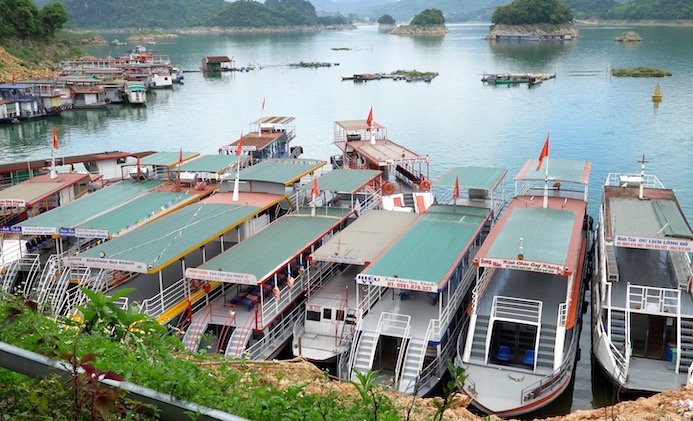
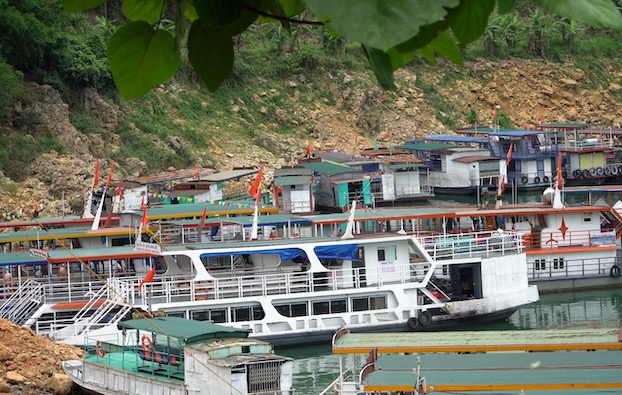
Ms. Tran Thi Hoan - Director of Bo Thung Nai Temple Tourism Cooperative - said that the cooperative currently has 34 ships. However, only 10 ships have sufficient papers and are allowed to operate, and the remaining 24 ships have to stay ashore.
We really hope that levels and sectors will pay attention to removing obstacles related to paperwork so that people can operate, have income to support their families and repay bank debts," Ms. Hoan said.
Most of the households with boats that do not have enough papers are ethnic minorities. Due to lack of understanding, in the past, seeing the tourism industry developing, they invested in building boats without clearly understanding the regulations. Each boat has a very large value, from 800 million VND to more than 1.5 billion VND," Ms. Hoan said.
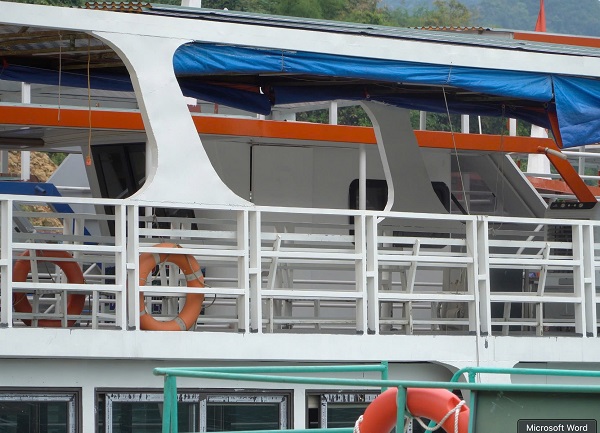
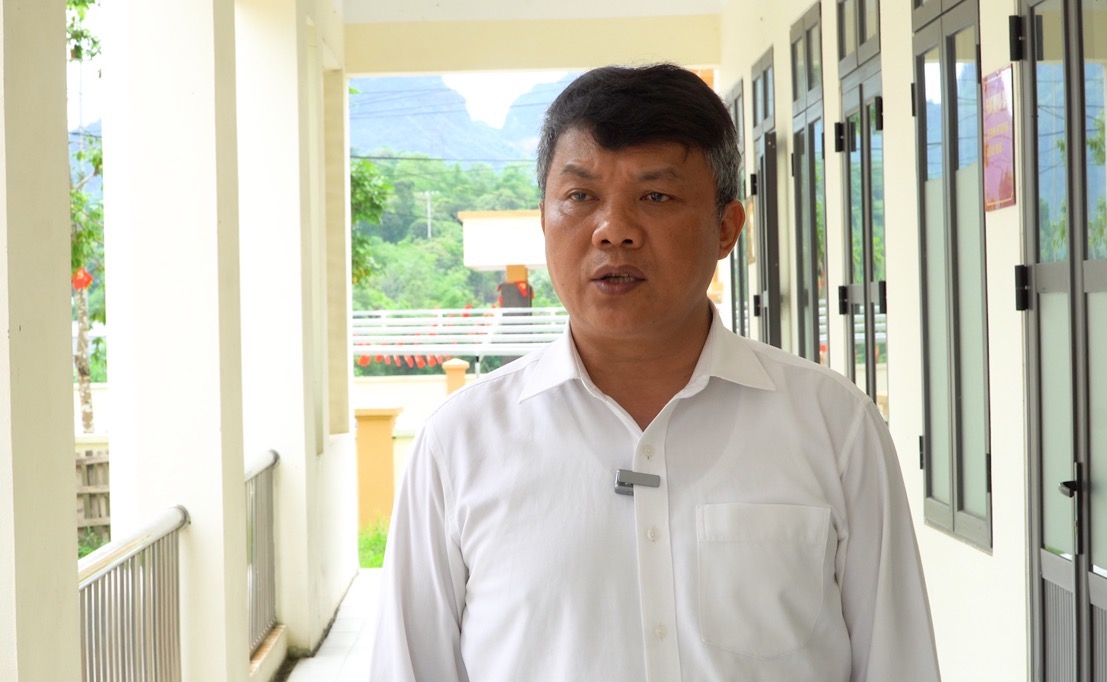
Informing Lao Dong Newspaper, Mr. Le Xuan Ha - Vice Chairman of Thung Nai Commune People's Committee, Phu Tho province - said that currently the Thung Nai port area has nearly 200 ships that have not been inspected and have not been allowed to operate. The reason stems from the fact that ship owners when building new or converting vehicles do not fully implement the design supervision process according to regulations. This leads to difficulties in carrying out registration and inspection procedures.
According to Mr. Ha, Thung Nai has long been likened to "Ha Long Bay on land", a famous tourist destination of the Hoa Binh lake area.
The locality has great potential for developing forest ecotourism and lake tourism. However, obstacles related to boats have significantly affected tourism activities.
The number of visitors to visit, sightsee, and worship at the Bo Temple area from 2025 to now has decreased compared to previous years. One of the reasons is that the number of ships allowed to operate is still small, causing difficulties in transporting tourists," Mr. Ha said.
Not only affecting the tourism industry, the fact that hundreds of boats have to stay ashore also causes huge waste.
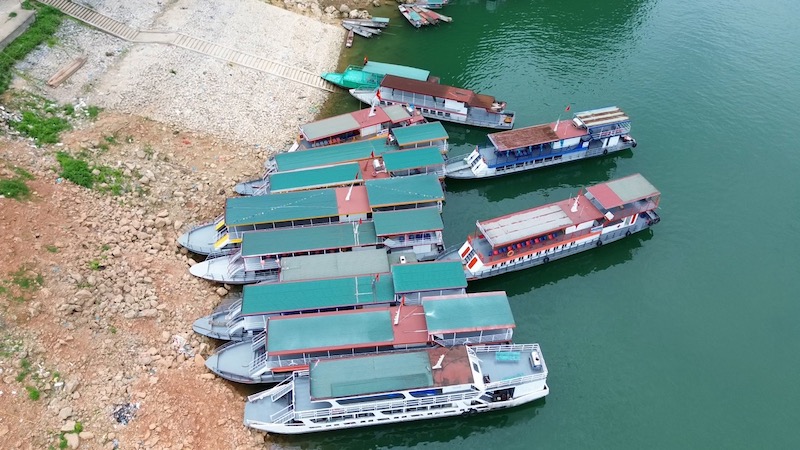
Vehicles that do not operate for a long time will degrade, be damaged, and incur maintenance and repair costs. People's assets worth hundreds of millions to billions of dong are facing the risk of depreciation over time.
Hope for an early solution
From the above reality, local authorities propose that functional agencies study appropriate mechanisms for inland waterway vehicles operating at hydropower reservoirs and freshwater reservoirs with special conditions.
According to Mr. Ha, currently, many technical standards applied to ships operating on Hoa Binh Lake are similar to vehicles operating in areas with large waves and long distances. Meanwhile, the conditions at the lake are relatively stable, the water surface has few waves and short voyages.
If it is possible to consider adjusting standards to be more suitable to the characteristics of the lake bed area, the registration and inspection of people will be much more convenient," Mr. Ha proposed.
Mr. Ha also hopes that functional agencies will soon intervene and answer thoroughly so that localities can conveniently manage and people can feel secure in production and business.


