
In the early morning of July 21, a sleeper bus traveling on National Highway 1, passing through Hung Thinh commune, Dong Nai city, had an accident and then caught fire, killing 7 people and injuring many others.
The incident once again raises the requirement to equip escape skills when vehicles catch fire, especially for long-distance passengers at night.
Observe the exit as soon as you get in the car
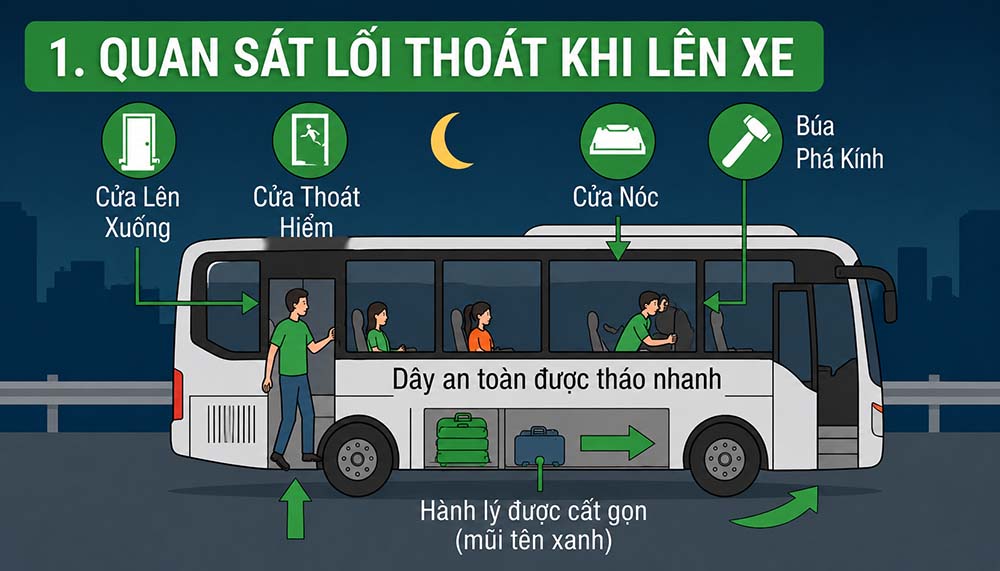
When getting on a passenger car, passengers should spend a few minutes determining the location of the doors, emergency exits, roof exits and window breakers.
At the same time, remember how to remove seat belts; do not leave luggage, shoes or personal belongings blocking the way. People traveling with young children and the elderly need to proactively choose support if an incident occurs.
Observing escape routes is especially necessary on sleeper buses, when most passengers may be sleeping at the time of the fire.
SHOUT immediately upon detecting smoke and fire
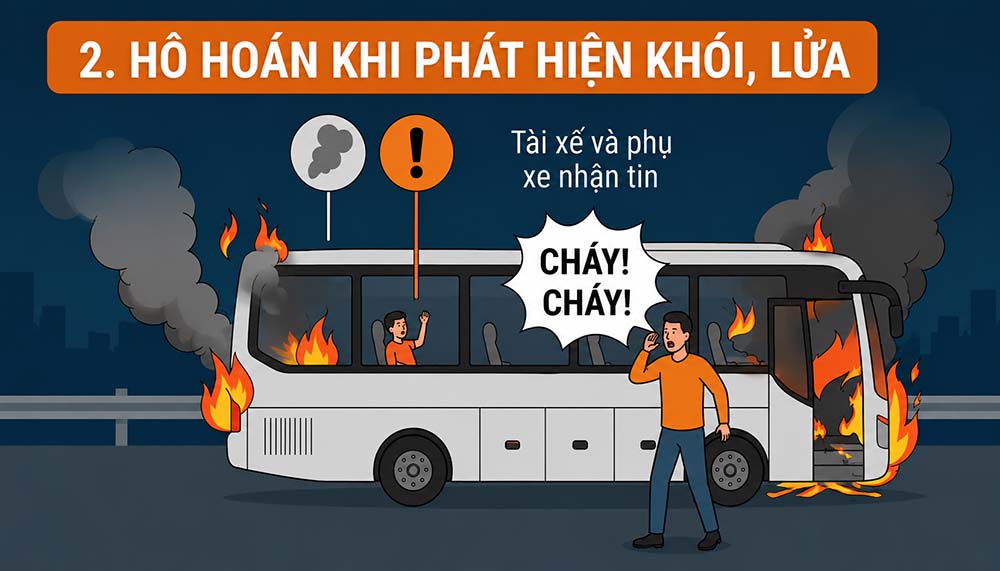
The smell of burning, smoke, abnormally rising temperatures, or a small explosion may be the initial signs of an incident.
When detecting unusual signs, passengers need to immediately notify the driver and assistant driver and shout for people around to know. Do not wait for the cause to be determined or wait for the fire to rise before trying to leave the car.
Drivers need to put their vehicles in a safe position and turn off the engine if conditions permit.
Leave the car, don't come back to pick up your luggage
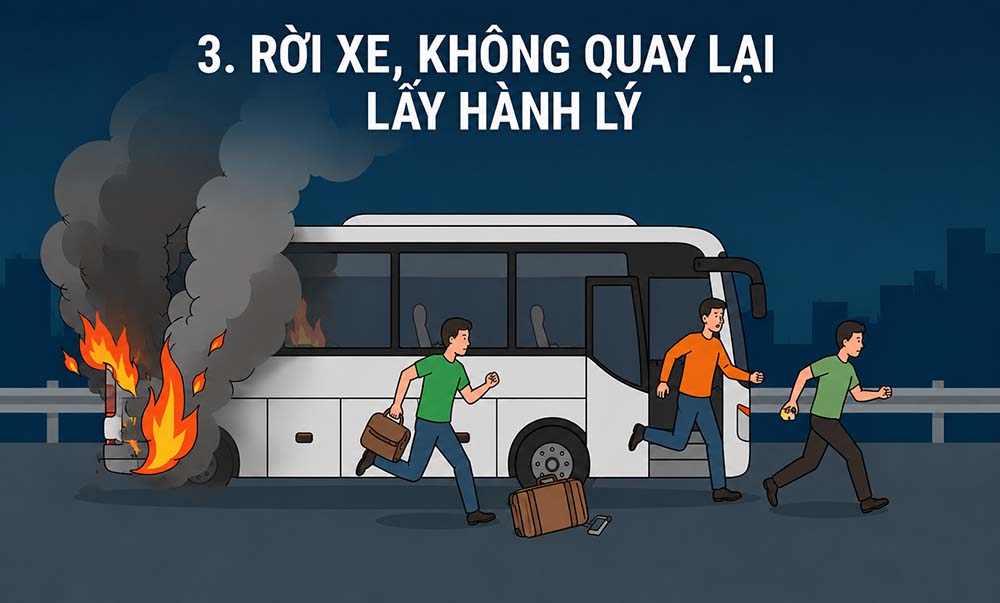
When there is a fire, the top priority is to get people out of the vehicle. Passengers should not waste time taking suitcases, phones or personal belongings.
If the main door is still open, it is necessary to quickly leave the car according to the instructions of the driver and assistant driver. Do not jostle, push, or gather all at one door if there is another exit in the car.
After escaping, absolutely do not return to pick up luggage. The Ministry of Public Security recommends that people do not try to carry property and do not return to the fire area after escaping safely.
Find emergency doors if the main door is not open
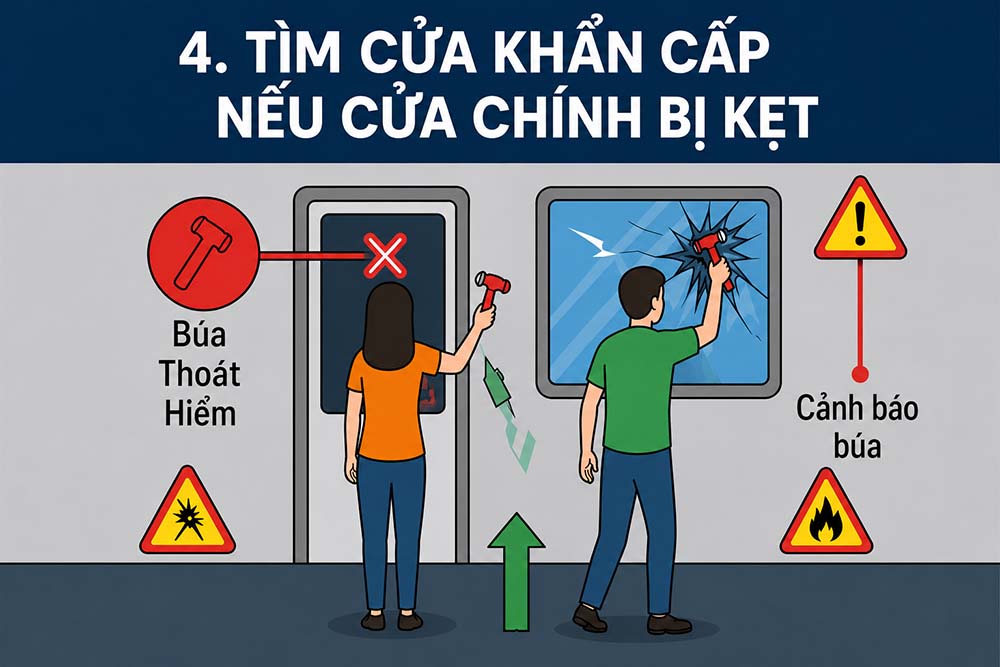
In case the main door is jammed or cannot be opened, passengers need to find emergency exits, rooftop doors, or windows marked as emergency exits.
You can use the escape hammer equipped on the car to break the escape window according to the manufacturer's instructions. After the glass breaks, it is necessary to warn people around, avoid the edges of the glass and support children, the elderly, and injured people to get out.
Do not push many people into one exit while other emergency exits can still be used.
Lower yourself when the car compartment has a lot of smoke
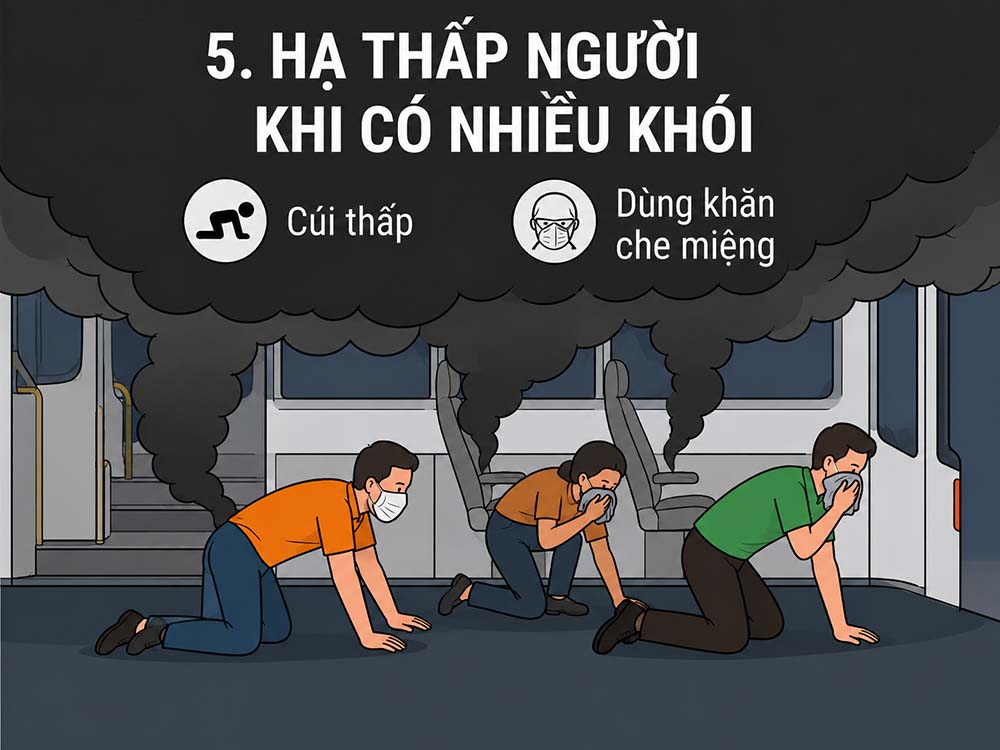
Smoke and toxic fumes can quickly cause trapped people to lose direction or mobility.
If the smoke has spread into the car compartment, passengers need to bend down or crawl close to the floor to find a way to escape. You can use a towel or available cloth to cover your nose and mouth to limit inhaling smoke but do not waste time looking for towels or water while the escape route is narrowing.
Do not rush through areas with fire or too thick smoke. If clothes catch fire, do not run but stop, lie down and roll over to put out the fire.
Only put out the fire when there is a safe way out
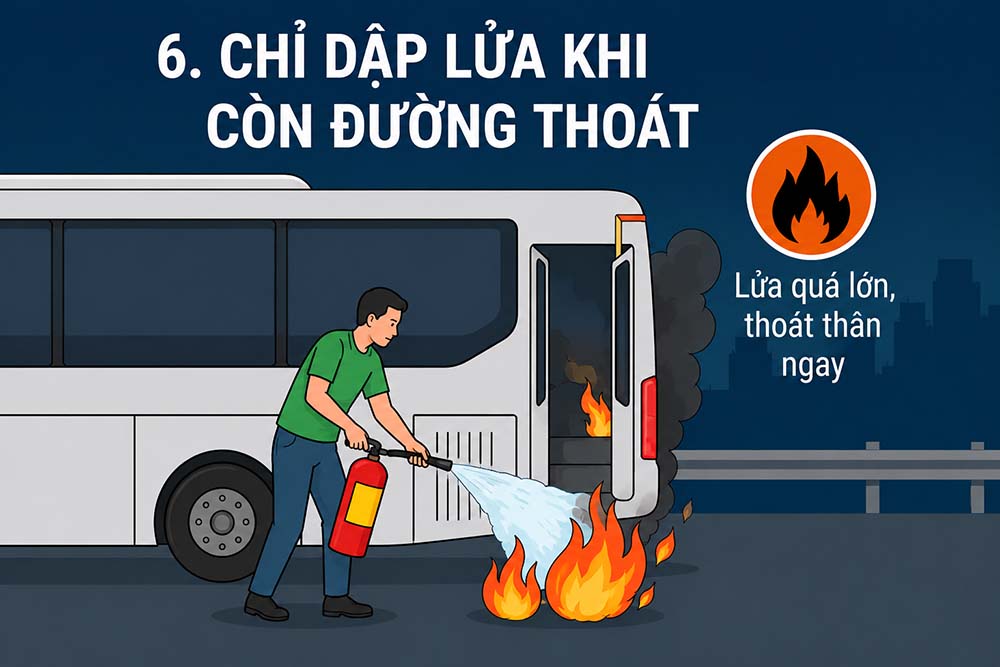
According to the Fire and Rescue Police Department, when the fire is not yet fierce, skilled people can use fire extinguishers or appropriate means to handle it.
However, fire should only be extinguished when a fire has just started, there is a suitable means and the performer still has a safe escape route behind.
When the fire has spread, the smoke is thick or uncontrollable, everyone must quickly leave the vehicle. Passengers should not stay to film, take photos or extinguish the fire themselves without knowing how to use fire extinguishers.
Call 114 and report the location
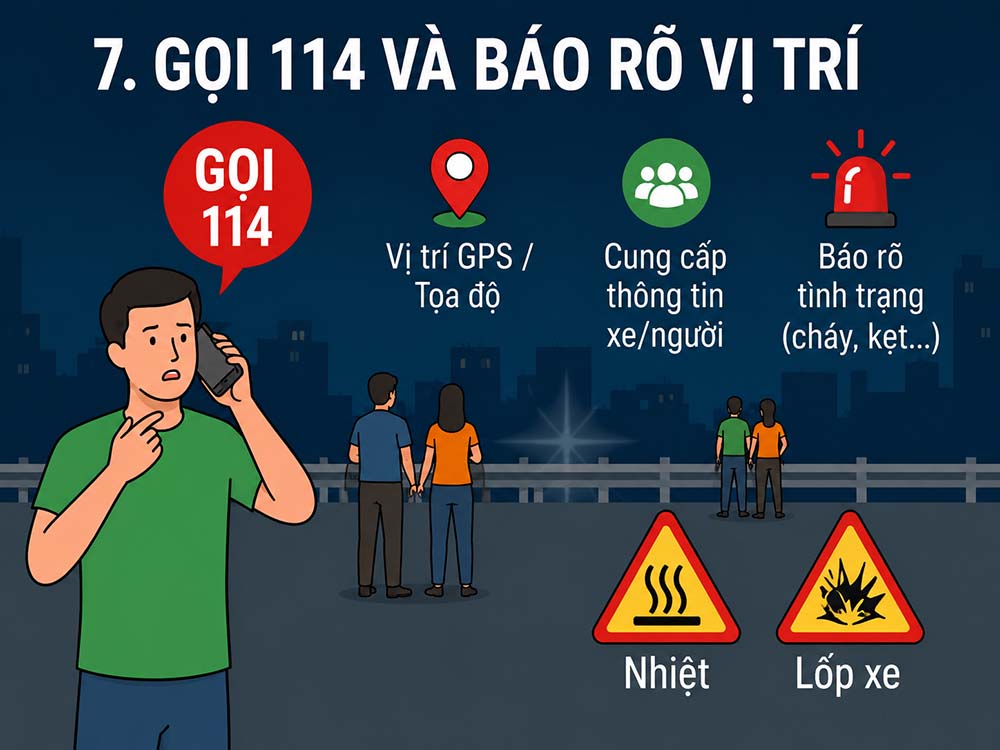
Immediately after detecting the fire, it is necessary to assign a person to call 114, and at the same time organize escape. Do not wait until all passengers have left the car to report to the functional forces.
The informant needs to provide the location of the fire, route, traffic direction, type of vehicle and number of people likely to be trapped.
Those who have escaped need to move away from vehicles, avoid areas with smoke, fuel flow, tires and parts that may explode when encountering high temperatures. If there are still people trapped, it is necessary to specifically notify the location to the rescue force, and do not voluntarily return to the vehicle.
The Fire and Rescue Police Department recommends that vehicle owners regularly check the electrical system, fuel, periodic vehicle maintenance and immediately handle any abnormal signs. Cars with 10 seats or more must be equipped with appropriate fire extinguishers according to regulations.


