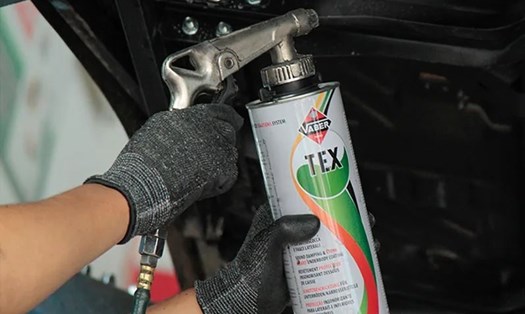
Immediately after buying a new car, many car owners are advised to cover the undercarriage to protect the car from environmental impacts. However, according to a technician at Ninety Eight Auto Motorcycle Repair, Maintenance and Care Center (Cat Lai ward, Ho Chi Minh City), this is not a mandatory item and whether to implement it or not should be based on actual usage needs.
The biggest benefit of undercarriage covering is to create an additional protective layer for metal details in the chassis, car floor, wheel crevices and fender (to prevent mud from wheel crevices). These are areas that are frequently exposed to water, mud, rocks and impurities on the road surface but are difficult to observe and clean thoroughly during use.
The coating creates an additional protective film, helping to limit water, salt, chemicals and corrosive agents from directly contacting the metal surface, thereby reducing the risk of rust after many years of operation, especially for vehicles frequently moving in rainy areas, flooded roads or near the sea.
However, the technician also noted that car owners should not expect the undercarriage cover to significantly reduce noise. Although many units advertise sound insulation and noise cancellation, the actual effectiveness is often not clear. The main function of the cover is still to protect the chassis from oxidation and corrosion, instead of improving sound insulation.
Regarding construction materials, some garages use roofing materials with high corrosion resistance, while many units use specialized products for automobiles such as rubber roots, polyurethane or bitumen. During construction, locations that have been treated by manufacturers to meet rust standards will not be covered further to avoid waste and ensure proper technique.
Besides the benefits, chassis coverage also has some limitations. For car owners who only use it for about one to two years and then resell it, this investment may not bring about clear efficiency because the anti-rust capacity usually develops after a long period of use.
If the construction process does not clean and dry the undercarriage surface before coating, moisture may be trapped under the material layer, increasing the risk of rust and corrosion of metal over time. In particular, some types of undercarriage material may emit a fairly strong chemical odor in the first few days after construction.
In addition, if you choose an unreliable construction facility or use poor quality materials, the coating may peel off, crack, or retain moisture, causing later treatment to take longer and more costly.
Therefore, before deciding to cover the undercarriage, vehicle owners should consider the conditions of use, vehicle ownership time and choose an experienced construction unit to ensure long-term efficiency.