
According to Nam Can Tho University Hospital, the patient was admitted to the hospital in a state of prolonged back pain. Through medical history exploitation, the patient had previously dilated kidney stones through the skin at a medical facility abroad but was unsuccessful, the stones still exist and continue to progress. The patient also wears a pre-placed JJ ureteral tube, and the vital signs are not stable.
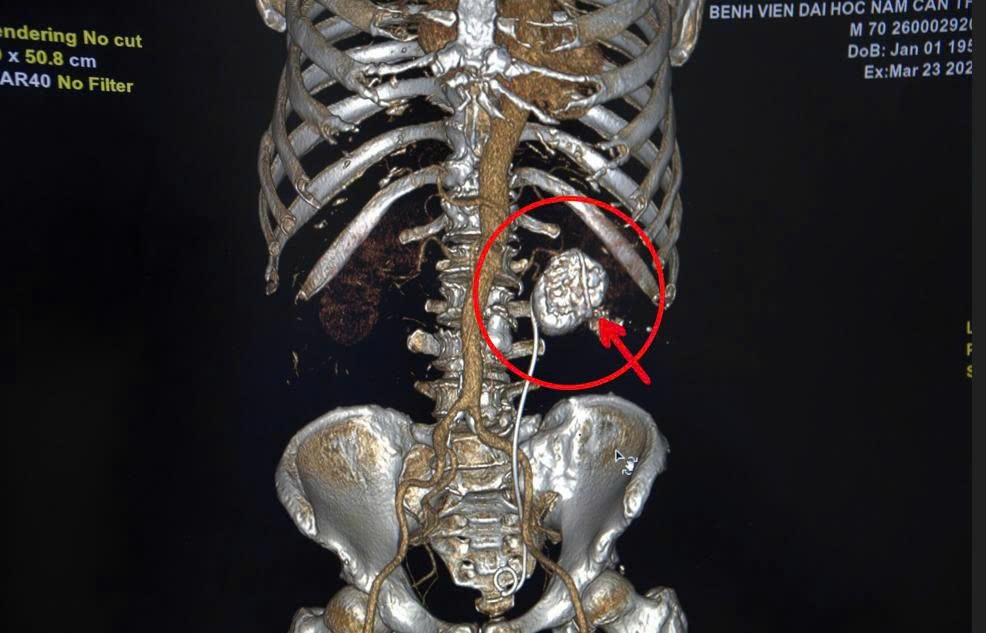
Assoc. Prof. Dr. Dam Van Cuong - Director of the Hospital coordinated with Dr. Pham Quang Thanh and the anesthesia and resuscitation team to perform surgery. The surgery process took place smoothly, taking the entire coral stone with a size of 5.64 cm x 5.80 cm, weighing 83.848 grams.
After surgery, the patient's condition stabilized, infection was controlled and kidney function was monitored, and he has now been discharged from the hospital and re-examined periodically as directed by the doctor.

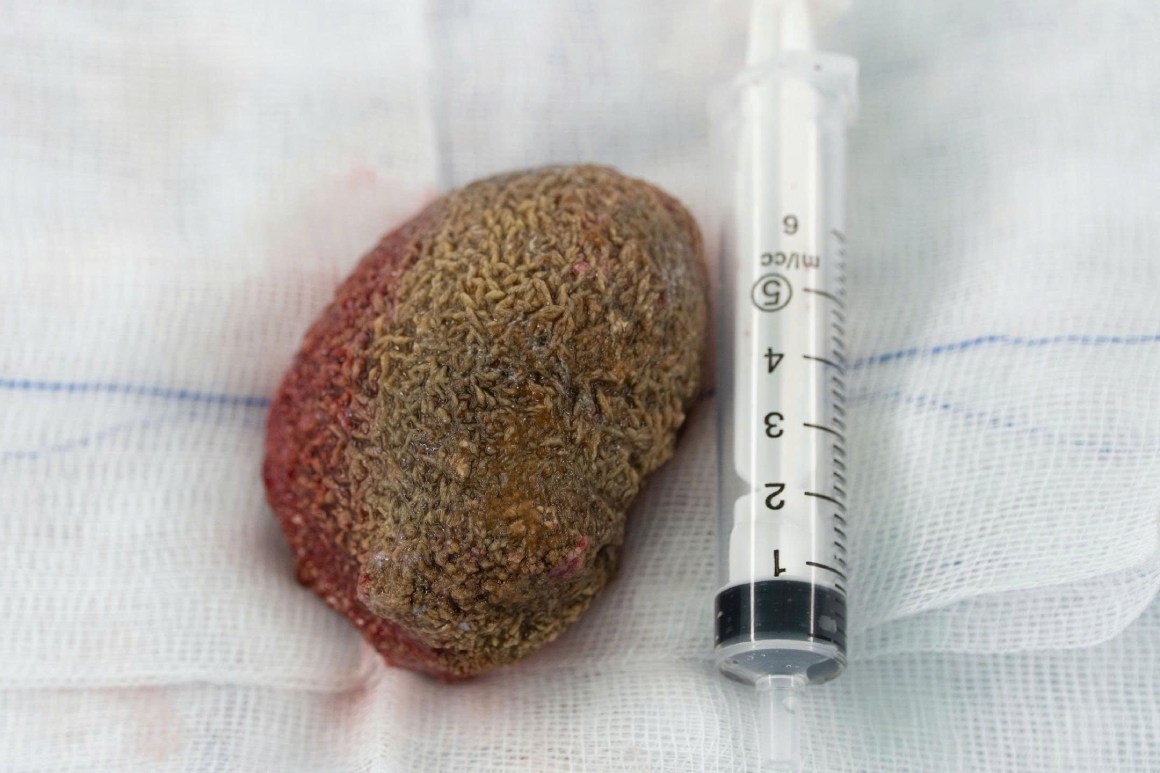
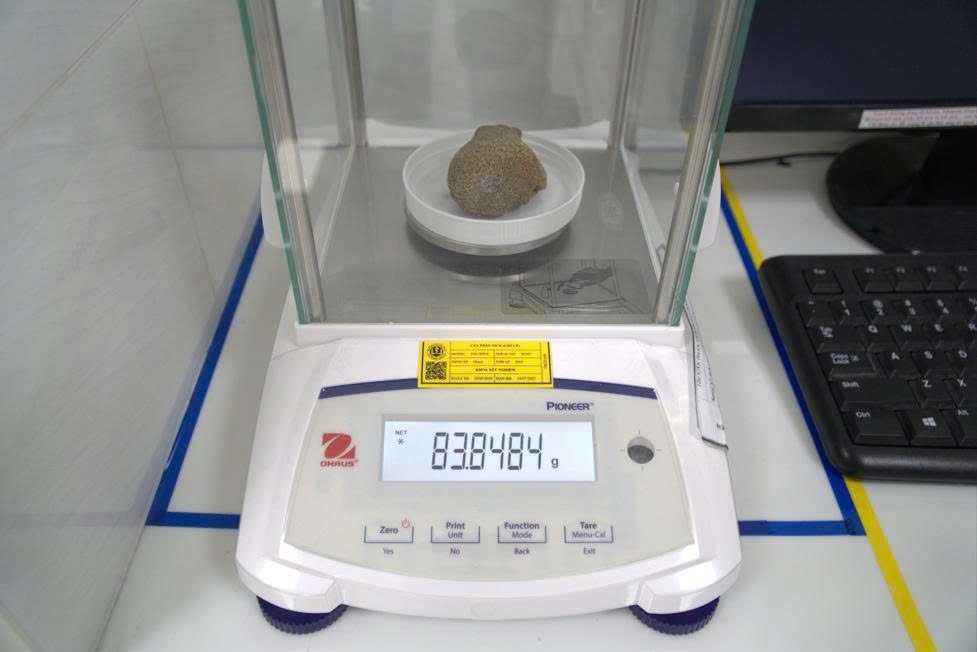
Assoc. Prof. Dr. Dam Van Cuong recommends that coral stones are kidney stones that develop silently, and can occupy almost the entire kidney basin system. If not treated thoroughly, patients can suffer from kidney failure, recurrent urinary tract infections, or sepsis.
In particular, people need to pay attention to going for examination early when stones relapse or have been treated in many places without recovery; have underlying diseases such as diabetes, high blood pressure; or signs of infection such as fever, back pain, painful urination, cloudy urine.
Examination at a specialized medical facility helps choose appropriate treatment methods, minimize complications and preserve kidney function.


