
These days, the weather in Hanoi has clear changes between day and night. According to the National Center for Hydro-Meteorological Forecasting, Hanoi often maintains a weather pattern with a difference of 8-10 degrees during the day, accompanied by high humidity.
This temperature difference makes it difficult for the body to adapt, increasing the risk of cardiovascular events such as high blood pressure, arrhythmia, even myocardial infarction and stroke.

According to recommendations from the Ministry of Health and records at many medical facilities, every time the weather turns cold or seasons change, the number of hospitalizations due to cardiovascular diseases usually increases.
At Nam Thang Long Hospital, Mr. Ninh Van Tien (76 years old) was just rescued after experiencing a sudden shock at home. He said that while having lunch, he stood up to hold his young grandchild and suddenly felt dizzy, seeing the sky darken. "At that time, I felt so dizzy that I lay down immediately. A moment later, my hands and feet trembled, I was paralyzed, and I didn't know anything," Mr. Tien recounted.
The family quickly took him to the hospital. Examination results showed that his blood pressure was up to 198 mmHg, a very high level and could be dangerous if not treated promptly. After emergency and treatment, his blood pressure gradually stabilized.
Dr. Ta Quang Thanh, Deputy Director of Nam Thang Long Hospital, said that in clinical practice, whenever the weather turns cold or changes suddenly, the rate of patients hospitalized due to cardiovascular events usually increases significantly.
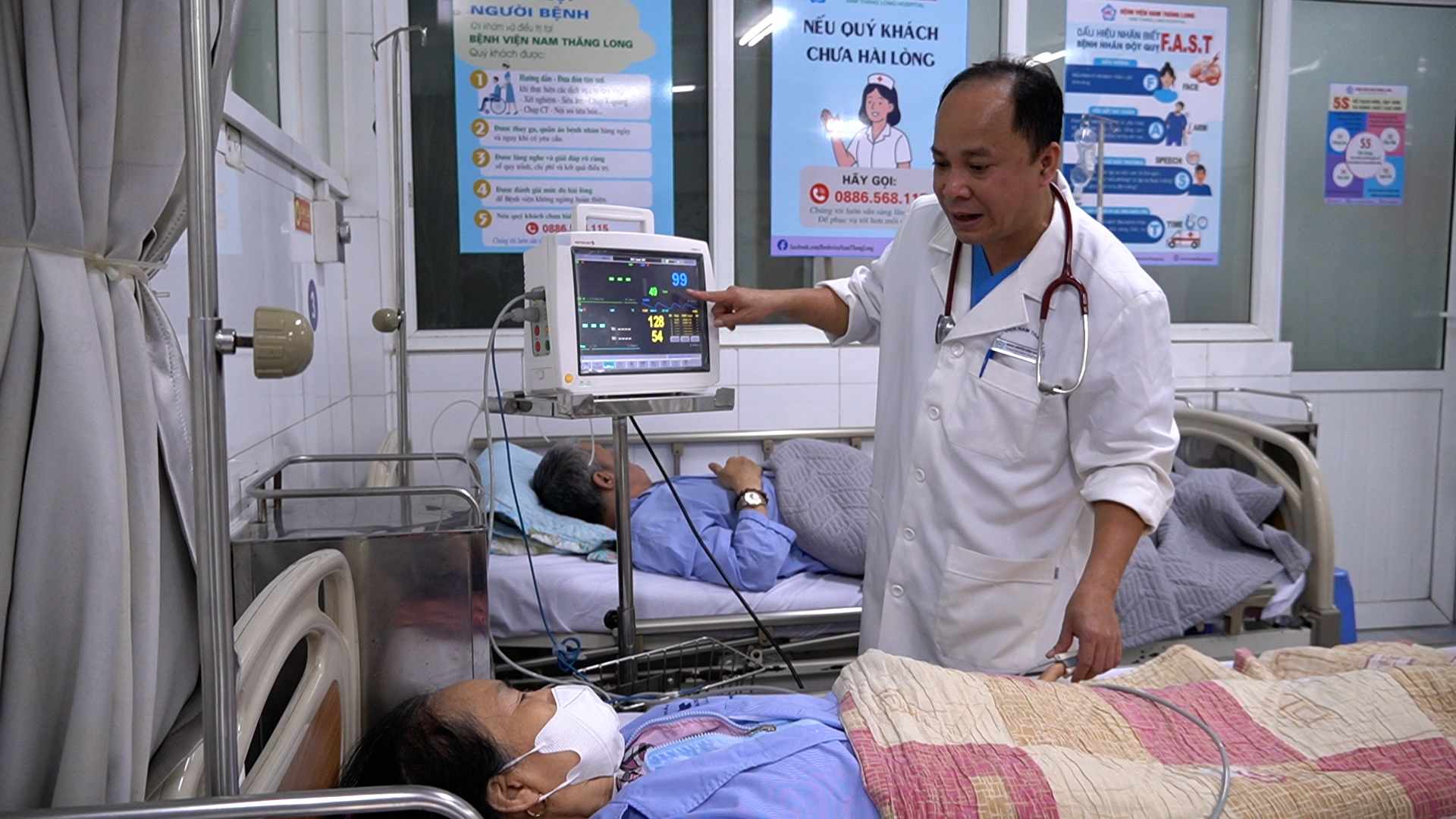
According to doctors, when the weather turns cold or changes suddenly, the body tends to contract the peripheral vessels to retain heat. This increases the resistance of blood vessels, causing blood pressure to rise and the heart to work harder, especially dangerous for people with cardiovascular disease.
In addition, cold weather can stimulate the sympathetic nervous system, causing faster heart rate, increased blood pressure and increased oxygen demand of the heart muscle. This condition easily causes angina or myocardial infarction.
Low temperatures can also make blood condensed and increase viscosity, increasing the risk of blood clots forming in brain blood vessels and coronary arteries, leading to stroke or myocardial infarction.
At the same time, many people tend to exercise less, eat more fatty foods or suffer from respiratory infections, thereby increasing the risk of cardiovascular events.
People need to pay special attention to early warning signs of cardiovascular events. Among them, common symptoms include chest pain that can spread to the shoulder, neck or left arm, sudden shortness of breath, palpitations, dizziness or abnormal fainting,...
In cardiology, the treatment time is very important for the heart muscle. As soon as dangerous signs appear, patients need to go to a medical facility as soon as possible," the doctor emphasized.


