
Khanh Hoa Provincial Inspectorate has just announced the conclusion of a thematic inspection on the management, licensing and exploitation of minerals, which pointed out many inadequacies in the application of laws by state management agencies.
Licensing even if the dossier components are not sufficient
According to the conclusion, there are 5 dossiers for mineral exploitation licenses without Investment Certificates or Investment Policy Decisions as required in the dossier component for licensing.
The enterprises include An Hung Mineral Joint Stock Company (2011), Peace Mineral Joint Stock Company (2017), Ponaga Joint Stock Company (2018), Vietnam Khanh Hoa Mineral Joint Stock Company (2017) and Quyet Thang Co., Ltd. (2016).
The Provincial Inspectorate identified this as an important component in the licensing dossier because when issuing an investment certificate, functional agencies will assess land use needs, environmental protection commitments, project conformity with planning and socio-economic efficiency.
Loose dossier management
According to the inspectorate, in the period 2020-2025, the Department of Agriculture and Environment has not fully implemented the information and reporting regime; the synthesis, monitoring, management and storage of reports related to mineral exploitation activities are still loose and lacking strictness.
This is one of the reasons why management agencies have not promptly detected, rectified and handled arising violations.
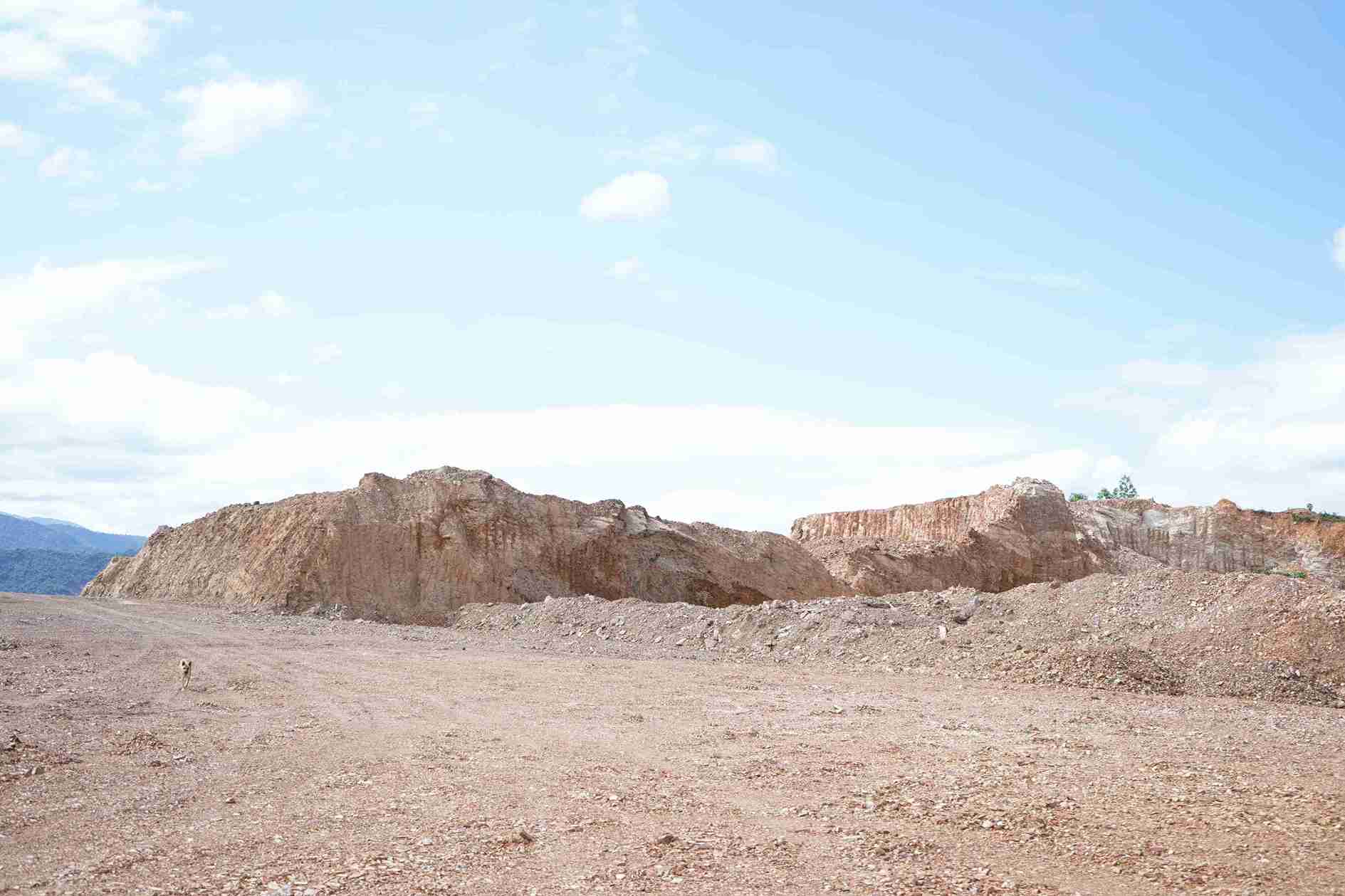
Notably, after being licensed to exploit minerals, some businesses have carried out procedures to apply for land lease and change land use purposes but have not been able to implement them.
This case occurred at Quyet Thang Co., Ltd., Peace Mineral Joint Stock Company and Khanh Hoa Vietnam Mineral Joint Stock Company.
In addition, enterprises including Manh Cuong Co., Ltd., Quyet Thang Co., Ltd., Cam Ranh Automobile Transport Service Joint Stock Company and Khoang Viet Khanh Hoa Joint Stock Company have been exploiting minerals since being licensed but have not been leased land by the Provincial People's Committee, not in accordance with the provisions of the 2010 Mineral Law and the mineral exploitation license that has been issued.
The inspection agency identified the cause as due to the lack of unified coordination between specialized units in the process of guiding the implementation of regulations on land allocation, land lease, and land use purpose conversion related to mineral activities, causing difficulties for businesses in the implementation process.
The Inspectorate proposed assigning the Department of Agriculture and Environment to preside over and coordinate with the Department of Finance to review, update, and supplement relevant areas to the adjusted planning of the province in accordance with regulations.
Regarding violations of mineral exploitation when land lease procedures have not been completed and the sale of the topsoil layer not in accordance with the permit, the inspection agency believes that it is necessary to apply the Central Government's guidelines.
In which, there is content, prioritizing the application of economic, civil, and administrative measures first; creating conditions for businesses to proactively overcome violations in the spirit of resolutions and conclusions of the Central Government and the National Assembly on private economic development.
The Inspectorate also proposed that the Provincial People's Committee consider directing relevant agencies to advise and propose specific mechanisms to remove difficulties and obstacles for mineral exploitation enterprises.
At the same time, re-determine land rent, fully collect financial obligations into the state budget, ensuring no budget loss.


