
On April 7, a field survey at central streets and large commercial centers in Ho Chi Minh City showed that the search and negotiation for renting premises is still bustling, especially in the culinary and fashion industry groups. Many premises, after being returned, quickly have new customers, but the contract finalization process becomes more cautious, with high requirements for location, rental price and operating efficiency.

Mr. Minh Phuc - a retail real estate salesman in the central area of Ho Chi Minh City - said that the number of customers asking to rent has not decreased, but now customers are much more selective.
F&B brands (types of culinary services) are still expanding, but they prioritize premises with a stable number of customers or located in complexes with good experiences. Fashion brands often return to their old locations to find more suitable premises for the new strategy" - Mr. Phuc said.
According to JLL Vietnam, the high-end retail market in Ho Chi Minh City in the first quarter of 2026 recorded a net negative absorption level of about 4,800 m2, mainly due to some tenants leaving the premises when contracts expired, in the context of no new supply joining.
However, actual records show that leasing activities are not "freezing" when new transactions still take place, concentrated in the restaurant and fashion industry groups. This reflects that demand is still present but is shifting towards a more selective direction, when businesses prioritize restructuring and optimizing site efficiency instead of massive expansion.
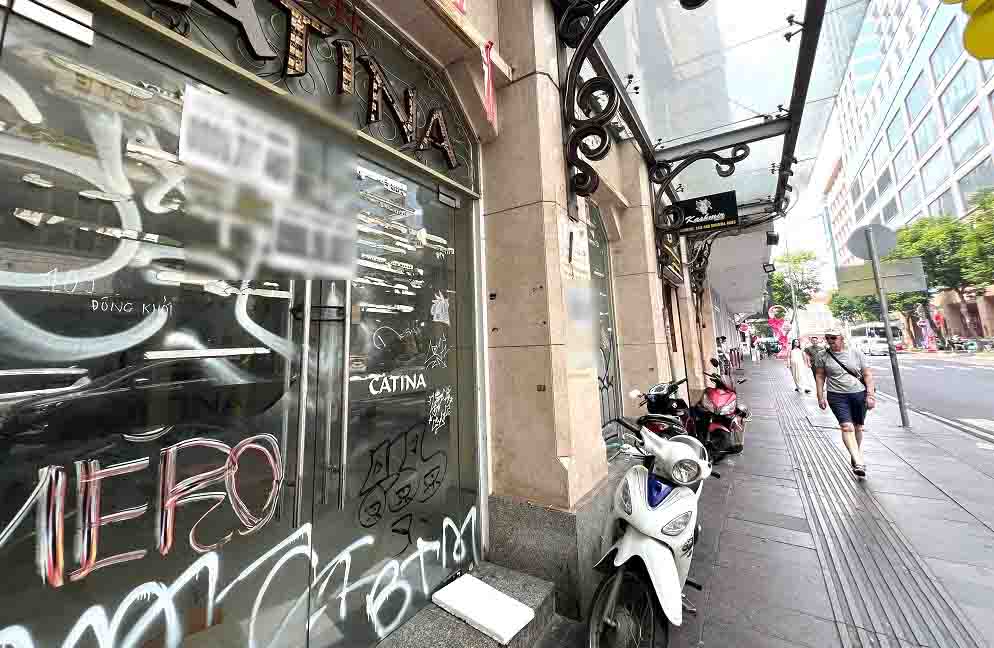
The negative absorption level in the quarter is cyclical, stemming from the expiration of many long-term contracts and tenants adjusting business strategies, rather than reflecting the weakening of the market. F&B chains continue to expand their networks, while many fashion brands actively seek more suitable locations to improve operational efficiency.
Commenting on this development, Ms. Le Thi Huyen Trang - General Director of JLL Vietnam - said that the net negative absorption level in the first quarter needs to be seen in the context of restructuring tenants. This is a natural fluctuation when the tenant structure changes during the survey period. According to her, the fact that the market still records new transactions shows that demand is still present, but focuses on tenants with good adaptability.
In the first quarter, the average gross asking rent at the ground floor increased slightly compared to the previous quarter. In the central area, the asking rent reached about 236.4 USD/m2/month, up 0.2%, while the outer area recorded an increase of 0.4%, to about 66.3 USD/m2/month.
JLL said that this modest increase shows that investors are prioritizing retaining tenants and stabilizing occupancy rates, instead of pushing up rental prices in the short term. Flexible incentive policies continue to be applied to support the business operations of tenants.
Assessing the prospects, Ms. Trang said that the high-end retail market in Ho Chi Minh City is entering a stage of adjustment and screening. In the coming quarters, growth will focus on segments associated with experience, cuisine and entertainment, along with brands with clear strategies.
Trade centers with good locations, efficient management and flexible adaptability will continue to maintain positive performance. Conversely, slow-innovating and less suitable for new consumption trends projects will face greater pressure.


