
Started in 2011, but when construction reached the 28th floor, the high-rise building in the "golden land" area of O Cho Dua ward (addresses 1A, 1C, 1D Lang Ha street) was forced to stop at the request of functional agencies to complete legal documents, and has been abandoned for many years, causing great waste of social resources.
The project is located in the center, where the value of land and the demand for commercial and office development are very high. However, the unfinished building block, exposed to rain and sun for a long time, has become an offensive image in urban space, clearly reflecting the waste of land, finance and infrastructure.
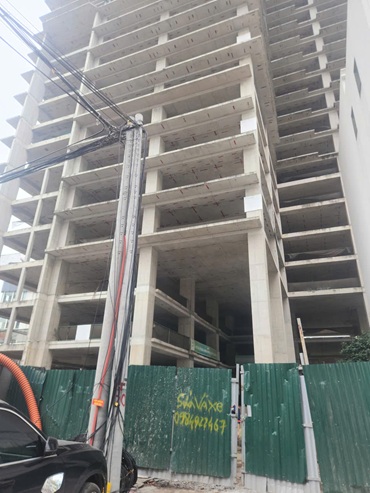
The commercial and office center project at 1A, 1C, 1D Lang Ha is invested by Lang Ha Investment Joint Stock Company. Previously, Hanoi City People's Committee leased 3,916m2 of land to implement the project according to decisions issued in 2007 and 2009. In March 2011, Hanoi Department of Construction issued a construction permit with a scale of 28 floors, 2 technical floors, 1 rooftop floor and 4 basements; in October 2011, the project officially started construction.
However, by July 2021, when the project had completed the rough construction to the 28th floor, the project had to stop construction as required by the functional agency of Ba Dinh district (old) to complete the design appraisal dossier on fire prevention and fighting according to new standards. According to this requirement, the entire exterior glass system must be replaced with fire-resistant tempered glass, with an estimated cost of about 200 billion VND. Due to the inability to allocate capital for implementation, the project fell into prolonged stagnation.
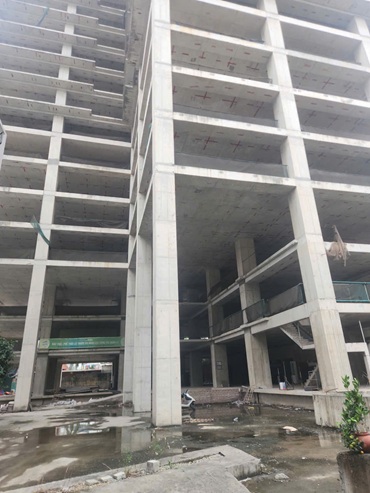
Not only technical problems, the project also undergoes a complex transfer process. Since its establishment in 2006, the investor has changed ownership many times, related to different businesses and credit institutions. Many large-value share purchase and sale and transfer deals have taken place, but the final result is still an unfinished project that cannot be put into operation and use.
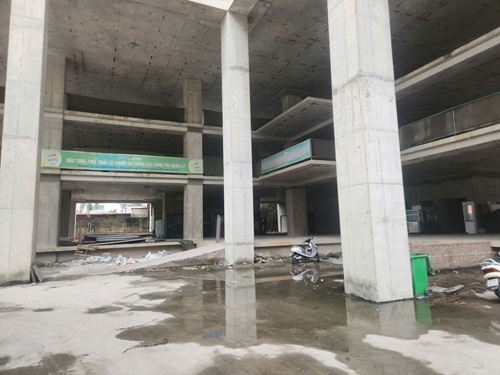
The consequences of slow project implementation are clearly shown in the waste of the "golden land" fund in the central area, affecting urban aesthetics, posing a potential risk of insecurity and causing public outrage. At the same time, this situation also reduces social confidence in the efficiency of land management and use and investment resources.
On February 28, in an exchange with a reporter from Lao Dong Newspaper, Mr. Nguyen Doan Thanh - Head of the Economic, Infrastructure and Urban Department of O Cho Dua ward - said that project 1A, 1C, 1D Lang Ha is one of the large projects, lasting for many years in the area, causing waste of resources and affecting urban order. Currently, the ward is putting this project on the list of reviewed non-budget projects that are behind schedule.
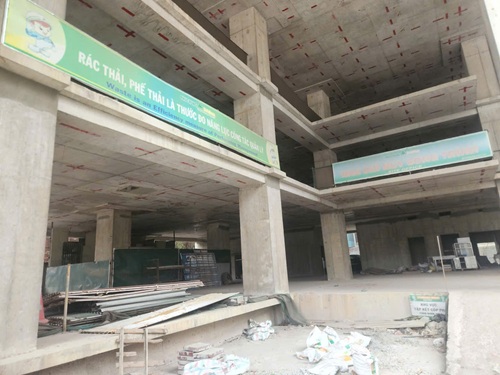
According to Mr. Thanh, the Ward People's Committee has been and is coordinating with functional agencies, and at the same time proactively contacting the investor to grasp the situation, requesting to soon have a plan to handle it thoroughly, avoiding the project from continuing to degrade and be wasteful.
From the above reality, many opinions suggest that it is necessary to soon comprehensively review the legal, financial and technical status of slow-progressing projects, clearly identify the responsibilities of investors. In case of insufficient capacity to continue implementation, it is necessary to resolutely apply measures according to regulations, including project revocation, in order to end prolonged waste and restore discipline in urban management and development.


