
People resettled near their old homes
According to the urban embellishment plan along canals and ditches by 2030, Ho Chi Minh City must relocate about 20,000 houses.
Only Chanh Hung, Binh Dong and Phu Dinh wards (formerly District 8) occupied nearly 15,000 houses, densely concentrated along rivers and canals such as: Kenh Doi, Xom Cui, Ba Lon, Ong Be, Ruot Ngua, Rach Nang, Rach Ba Luu...
According to the Ho Chi Minh City Department of Construction, in some previous projects such as the renovation of Xuyen Tam canal (formerly Binh Thanh and Go Vap districts) or the north bank of Doi canal (formerly District 8), due to lack of land funds, resettlement had to be arranged scattered in many different areas.
The Xuyen Tam canal project uses up to 16 resettlement areas in Binh Thanh, District 10, District 12 and Thu Duc City before.
The North bank of Doi canal project also has to arrange people to 8 resettlement areas in District 8, Binh Tan, Tan Phu and Binh Chanh district in the past.
This approach is assessed as not suitable for the needs and aspirations of the people, not in accordance with the principle of resettlement "near the old residence", causing no small difficulties in compensation, support and stabilizing life after relocation.
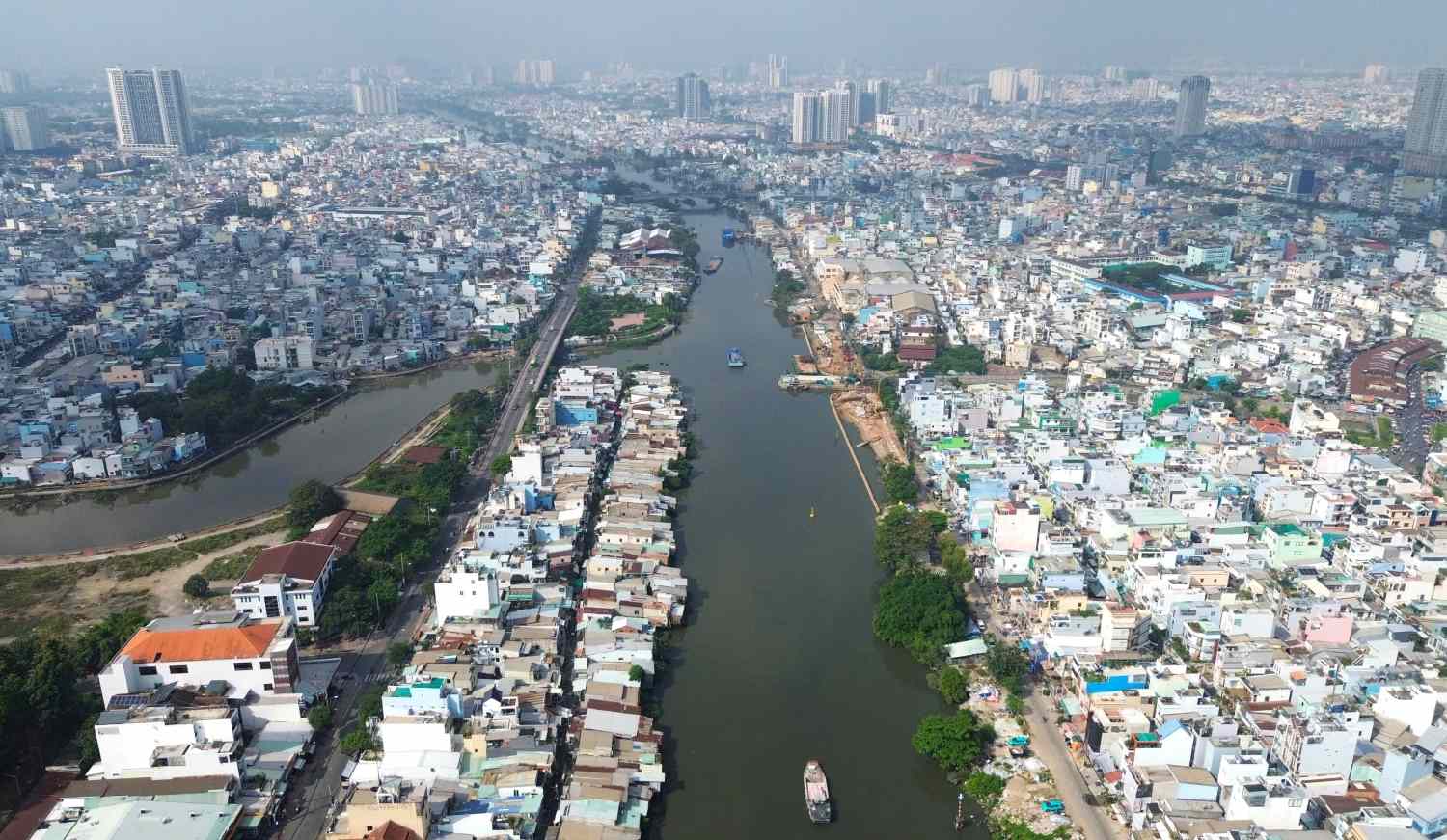
Learning from experience, this time Ho Chi Minh City advocates arranging concentrated resettlement right in the affected area.
The city will implement 9 resettlement housing and social housing projects, with a total scale of about 9,600 apartments in Chanh Hung and Phu Dinh wards.
In Phu Dinh ward, there are 6 projects, including: Phu Dinh river port resettlement housing area (716 units, capital of 1,008 billion VND); Resettlement housing area at No. 467 - 469 Ben Binh Dong (237 units, capital of 448 billion VND); Resettlement housing area No. 338 and 1387 Ben Binh Dong (1,293 units, capital of 1,594 billion VND); Resettlement housing area No. 1 Pham Duc Son street (3,776 units, capital of 5,977 billion VND); Resettlement housing area No. 2 Pham Duc Son street (336 units, capital of 756 billion VND); Social housing area No. 617 - 629 Ben Binh Dong (320 units, capital of 392 billion VND).
Chanh Hung ward has 3 projects, including: Resettlement housing area on Street No. 17 (1,057 units, capital of 2,099 billion VND); Resettlement housing area on Street No. 400 Nguyen Duy (1,492 units, capital of 1,898 billion VND); Social housing area on Street No. 314 Au Duong Lan street (354 units, capital of 467 billion VND).
The total investment capital of 9 projects is about 14,600 billion VND. The Department of Construction said that the projects will be implemented from and outside the budget, striving to be completed in the period 2026 - 2027 to soon arrange stable housing for people.
Not just a new place to live
According to the Ho Chi Minh City Department of Construction, resettlement areas not only meet housing needs but are also fully integrated with amenities such as schools, healthcare, green spaces, social infrastructure, and are associated with livelihood creation solutions, helping people stabilize their long-term lives.
Ho Chi Minh City's consistent view is: "After land is recovered, people must have a new place to live, ensuring a life equal to or better than the old place of residence".
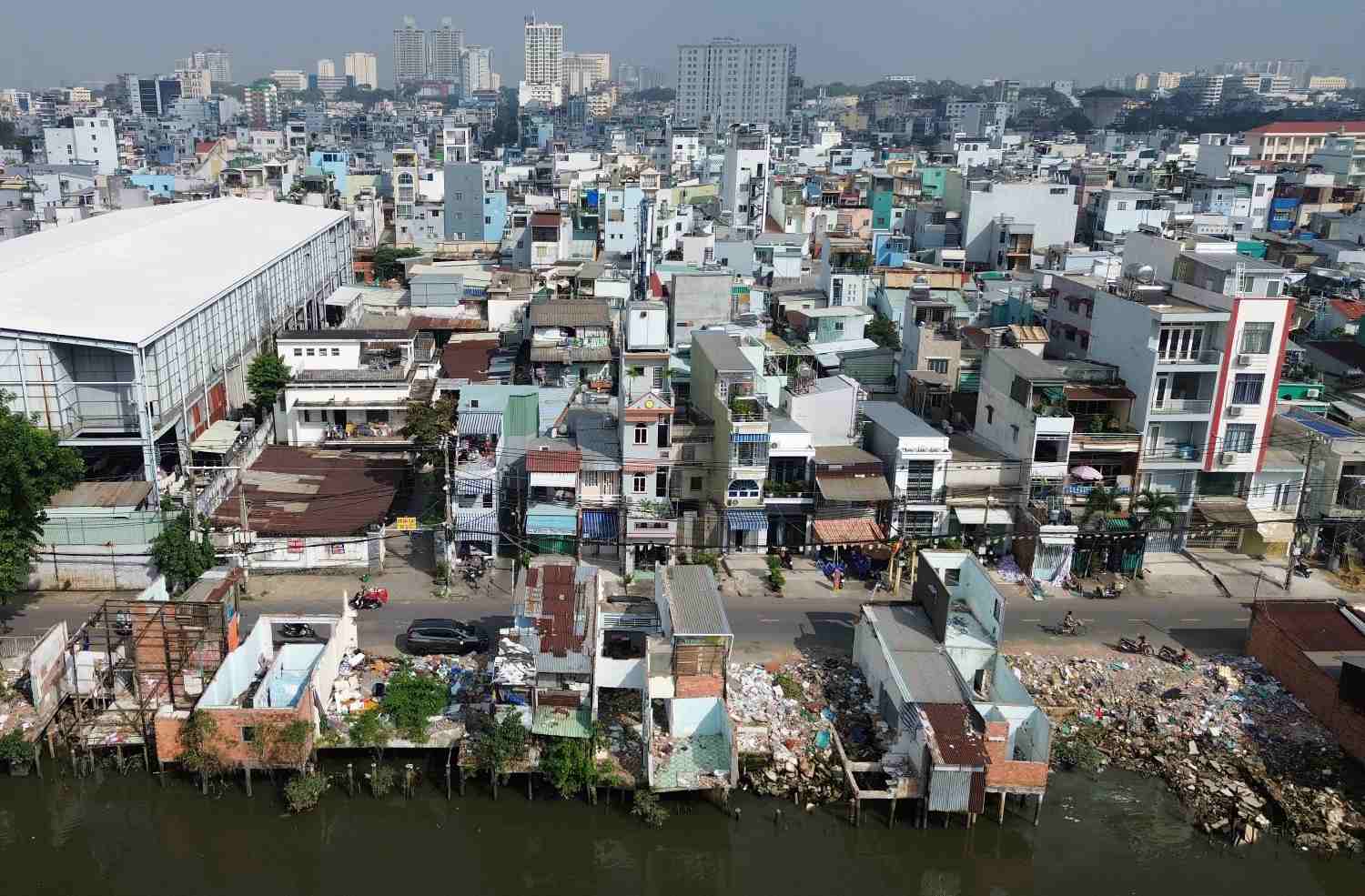
In addition, the city will develop specific projects, programs and plans to support people after relocation, from livelihoods, jobs to social security and legal procedures.
Solutions being researched include: Organizing vocational training suitable to people's qualifications and needs; connecting businesses to create jobs; supporting low-interest credit loans to start businesses and expand production and business; encouraging the development of handicraft, service, and specific urban agriculture industries in the locality.
Ho Chi Minh City also plans to apply separate support policies for poor households and households in difficult circumstances such as exemption and reduction of electricity, water, tuition fees and some public services for a certain period of time; and at the same time accelerate administrative procedures related to land, household registration, and personal papers so that people can soon stabilize in their new places of residence.
In parallel, the city will build a database on households that have to be relocated, organize monitoring and assessment of life after resettlement, and regularly survey to promptly adjust support policies.


