
From the beginning, Ruben Amorim faced doubts. Not long after taking over Manchester United in February 2024, Sir Jim Ratcliffe - a minority shareholder and in charge of the club's football activities - summoned the CEOs to a meeting and affirmed that the team's playing style "will be decided in this room".
Therefore, many people find it difficult to understand that after Erik ten Hag was sacked in November, the name that Ratcliffe wants to bring in to replace him possesses a very specific coaching philosophy and has almost no precedent of compromise.
At that time, Ratcliffe was warned that appointing Amorim was a gamble. He was also reminded in advance that if he wanted to restructure the squad to suit the 3-4-3 formation - the system that Amorim preferred and had achieved success at Sporting - Man United would have to spend millions of dollars, while the club's budget did not allow it.
Besides, there is also concern that the academy's youth teams will have to synchronize their playing style according to the same system. According to some members of Man United's coaching staff, the team of assistants that Amorim wants to bring from Portugal is considered "too young and inexperienced".
Even so, Ratcliffe continued to push the plan forward. In the end, things went nowhere. Earlier this week, Amorim was sacked after 14 months, closing a period when he only won 24 wins in 63 matches. His 31.9% win rate is significantly lower than any other official coach of Man United since Sir Alex Ferguson retired in 2013.
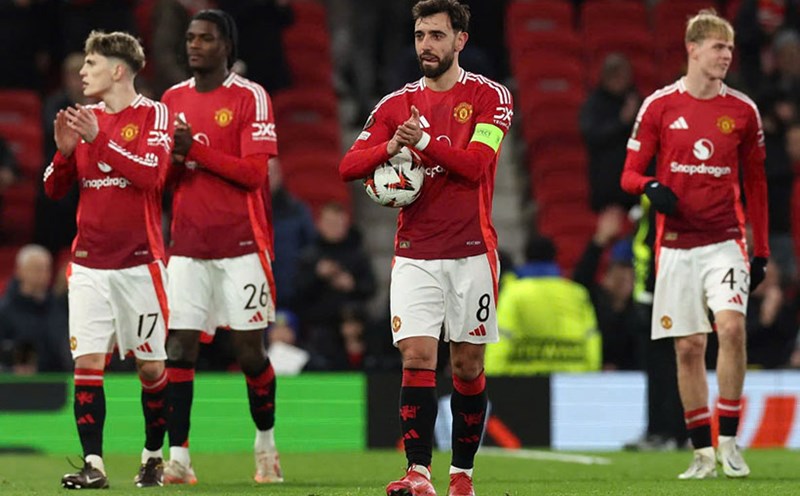
How did the relationship between Amorim and Man United break down?
CEO Omar Berrada and Football Director Jason Wilcox directly announced the decision to fire Amorim at Carrington. This move took place less than 24 hours after the press conference after the 1-1 draw with Leeds United, where Amorim made a shocking statement. He asked to be seen as "manager, not coach", and sent a message to the club's board of directors - referring to Wilcox and others - that "do your job well".
Right from the moment Amorim publicly criticized those above, bad omens were almost revealed.
Sources from Man United said that the decision to sack came not only from the rift in the relationship between Amorim and the board of directors, but also because the team did not show enough signs of progress on the field. Amorim only won 15 out of 47 matches in the Premier League. And the time he was sacked - not long after his statements at Elland Road - further made the story bear the color of an inevitable ending.
Initial suspicions about Amorim are also seen as part of the reason for Dan Ashworth's departure from the position of Football Director in December 2024. Ashworth wanted to appoint an experienced coach in the Premier League, but failed to achieve his goal and lost his job just one month later.
Some former Man United personnel have pointed out a paradox. Last summer, the club spent about 130 million pounds to bring in experienced Premier League players such as Bryan Mbeumo and Matheus Cunha, but did not apply the same logic when choosing a captain. And even outside the decision-making group, concerns about Amorim have never disappeared.
The "Red Devils" players once welcomed Amorim with optimism. Many people were tired of Ten Hag's strict, sometimes clumsy personality and were ready for a new breeze. Amorim's reputation as an attractive communicator immediately took effect, but his impact on other aspects was not really convincing.
Some players described his training method as "basic". Amorim focused heavily on tactical exercises, trying to help players understand and operate the 3-4-3 system. Players who did not participate in the training session were often asked to stand outside to observe. There were even times when Amorim was so annoyed that he pulled the players on the field back to the position he considered "standard".
In the end, the stubbornness in the tactical scheme story became a problem. According to Man United sources, initially Amorim was ready to adapt and develop the system as well as the playing style, but it seemed that it was never done thoroughly.
This is not simply a debate about 3 defenders or 4 defenders, but the expectation that the team must control the game and attack more - in contrast to Amorim's approach that is sometimes considered too conservative.
In a tense meeting with Wilcox - arranged as an assessment after the 1-1 draw with Wolves - Amorim was encouraged to be more proactive in choosing a squad. Man United played well in the first half against Newcastle on Boxing Day with a 4-defender system and then won 1-0. But 4 days later, against Wolves, Amorim returned to a 3-defender formation, even though the away team to Old Trafford only had 2 points after 18 matches.
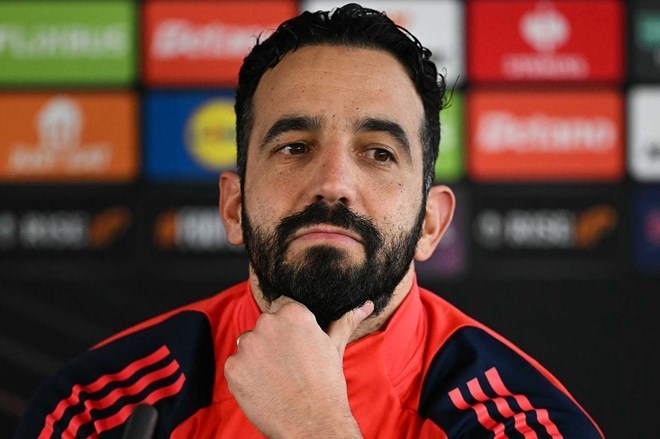
Wilcox questioned the decision, and Amorim reacted fiercely. According to sources, Wilcox conveyed the message calmly and moderately, but received feedback that the British media described as "too emotional".
People in the meeting said Amorim had a fit of anger, following a pattern in recent weeks. He increasingly refused to discuss with superiors about tactics and formation arrangements, which are designed in a constructive direction.
In the opposite direction, Amorim believes that those questions violate his scope of responsibility. According to sources close to this coach, he believes that the pressure to change the system stems from the persistent wave of criticism from former players in the media, including Gary Neville and Paul Scholes.
Notably, after the match against Leeds, Amorim said bluntly: "If people cannot accept people like Gary Neville and criticism of everything, we need to change the club".


