
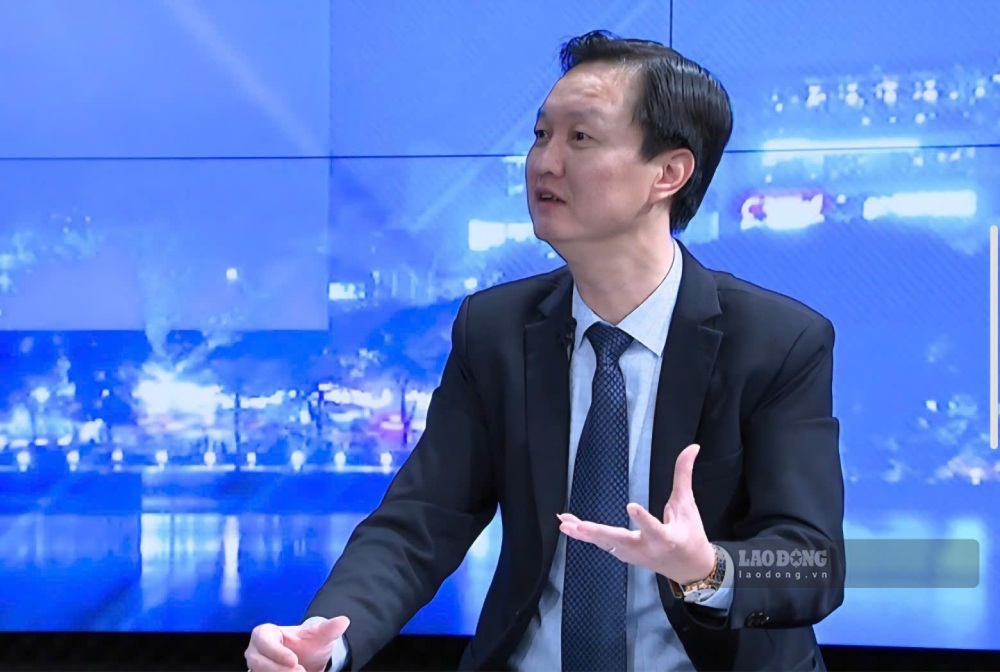
This is the sharing of Mr. Vu Quang Thanh - Deputy Director of Hanoi Employment Service Center in an exchange with Lao Dong reporters.
Sir, the Hanoi Employment Service Center has just launched the newsletter "The picture of Hanoi's labor market for students and parents in 2026", based on a survey of more than 1,000 high school and secondary school students in Hanoi. How do you assess the figure of 75% of high school students in Hanoi actively learning about industries with high human resource demand?
The figure of 75% of high school students proactively outlining a future roadmap is an extremely positive sign. It shows a major change in the awareness and career orientation thinking of the young generation and parents in the Capital. Instead of choosing schools and careers based on feelings or trends as before, they have begun to have a realistic view, proactively shaping a more strategic development roadmap from an early age.
Students proactively positioning themselves and accessing labor market information early helps significantly reduce the supply-demand mismatch later. When students understand clearly what the Capital needs, which positions businesses are lacking, they will build a suitable study path. This is a bright spot, promising to create a future generation of workers with high adaptability, reducing the unemployment rate or working in the wrong field after graduation.
Sir, can you state some specific requirements of businesses in Hanoi for young workers/human resources today, regarding qualifications, experience and some specific contents?
Through the work of connecting labor supply and demand at the Hanoi Employment Service Center, we see that businesses in the Capital today, especially units in the technology, service and high-tech manufacturing sectors, are setting very clear and highly practical requirements for young workers.
Regarding qualifications and skills: Businesses do not overemphasize excellent theoretical degrees but prioritize the practicality of knowledge and practical action capacity. Young workers must possess solid vocational skills, self-learning ability and the ability to quickly adapt to new technologies.
Regarding experience: For new graduates, businesses do not require a lot of years of experience, but they highly appreciate candidates who have had quality internships or participated in school projects in collaboration with businesses.
Specific requirements: Hanoi market is deeply integrated, so soft skills (communication, teamwork, problem solving) and foreign language skills, AI application, multitasking... are highly appreciated. In particular, industrial style and labor discipline are what businesses always expect young people to improve.
What is your assessment of the 9+ vocational training model (vocational training in parallel with cultural education) in the Capital, when a survey shows that up to 14% of secondary school students are willing to participate in the model?
Survey data recorded that 86.2% of secondary school students are willing or can consider learning about the 9+ training model if fully informed and 14% are willing to participate in the model is a very meaningful indicator. This figure affirms the correctness and extremely large growth potential of this model in the Capital, and at the same time shows that students and society's awareness of vocational education has become much more open and practical.
The 9+ training model possesses outstanding advantages and directly solves the socio-economic problem: shortening training time, optimizing learning costs and committing to sustainable job opportunities. Graduates of this model both own a high school diploma in culture and have a formal vocational degree, fully capable of directly participating in the labor market in the position of skilled technician.
With job commitments from companies linked to the school, this model not only solves the economic problem for student families but also promptly provides a source of high-quality technical labor for industrial parks and high-tech parks in Hanoi, contributing to ensuring sustainable social security.
Thank you for the interview!


