Artificial intelligence pioneer Andrew Ng (co-founder of Coursera, visiting professor of computer science at Stanford University) has just proposed a new assessment standard called "Turing-AGI", with the goal of eliminating exaggerated claims and abuses of the concept of General Artificial Intelligence (AGI) that is spreading in the technology industry.
The co-founder of Coursera believes that AGI is still a vague, inaccurate definition and is being used by many businesses as a marketing tool.
According to Mr. Andrew Ng, this makes the public, investors and even policymakers misunderstand the true capabilities of modern AI systems.
Mr. Andrew Ng proposed that the Turing-AGI test is not only based on chatting ability like the traditional Turing test. Instead, an AI system and a skilled person use a computer connected to the internet with popular software such as web browsers, emails or Zoom to perform a series of actual work tasks for many days.
For example, AI may have to take on the role of switchboard operator, processing calls, emails and arising situations like a real worker.
A system passes the Turing-AGI test if it can perform as well as a skilled person," Andrew Ng emphasized.
According to him, if AI truly reaches the level of intelligence equivalent to humans, completing common labor tasks will be inevitable, not just stopping at text dialogue.
Andrew Ng also pointed out the limitations of the original Turing test, which required computers to trick the scorer in a conversation. Mr. Andrew Ng said that the ability to "play humans" in conversation is not enough to prove intelligence at the human level, let alone represent AGI.
This proposal was made in the context of increasingly fierce debate about AGI between researchers and technology leaders.
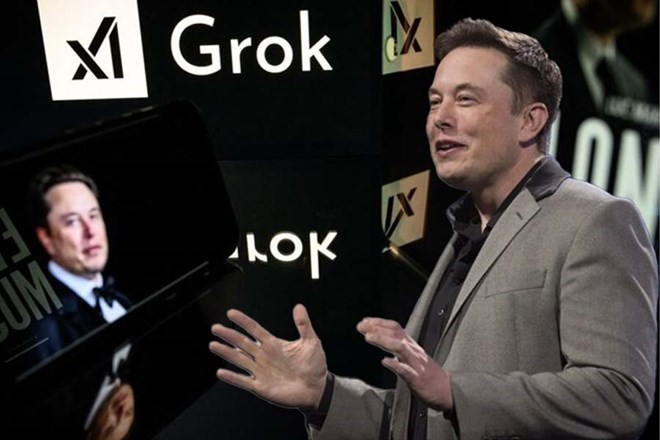
At the end of last year, Yann LeCun and Google CEO DeepMind Demis Hassabis publicly disagreed on whether human intelligence is general or specialized. This debate also attracted the attention of Elon Musk, who publicly supported Hassabis's point of view.
Mr. Andrew Ng believes that the lack of a clear AGI standard not only causes academic confusion but also creates social consequences. He also warned that students may avoid important research fields because they believe that AGI is about to appear, while CEOs may make wrong investment decisions due to overestimating AI capabilities in the short term.
In addition, he also criticized fixed AI assessment kits such as GPQA, AIME or SWE-bench. According to Ng, models can be "trained backwards" to pass published tests, while these data sets only measure a very small part of intelligence.
Conversely, the Turing-AGI test allows examiners to design completely new, unannounced scenarios to test the true "overall" level of AI.
According to Andrew Ng, this approach will help society adjust expectations, reduce the risk of an AI bubble and create a more sustainable foundation for long-term investment.
If a company passes the Turing-AGI test, they will create real value, not just a press release," Andrew Ng affirmed.