
Scientists wait for new mechanism to come into play
The 2025 Law on Science, Technology and Innovation has for the first time stipulated a risk-taking mechanism in scientific research. However, what the research community expects is not only the regulations in the law, but sufficiently strong mechanisms to change the management of scientific activities.
Assoc. Prof. Dr. Nguyen Luong Quang - SAGI Astrophysics Group (IFIRSE/ICISE) believes that researchers expect substantial changes in the management mechanism to reduce procedural pressure, creating conditions for scientists to focus on expertise.
According to him, when research groups are given more initiative in the process of task implementation, and administrative procedures are streamlined, scientists will have conditions to pursue new research directions, including breakthrough but potentially risky topics.
This view is also consistent with the opinion of Prof. Dr. Nguyen Dinh Duc - Vietnam National University, Hanoi in a recent exchange with Lao Dong Newspaper. Mr. Duc said that if science and technology want to become a driving force for development, it is necessary to create conditions for universities and research groups to promote autonomy, focus on creating new knowledge and solving major problems of the country.
The expectations of the scientific community also set out the requirement to innovate research management methods in the direction of valuing the quality and value of scientific results, instead of focusing on processes and administrative procedures.
Strongly shift to post-inspection, increase autonomy
Exchanging views on this issue, the Ministry of Science and Technology said that it is completing the system of guiding documents for the implementation of the Law on Science, Technology and Innovation in 2025 to concretize new mechanisms, shifting from administrative management to research management.
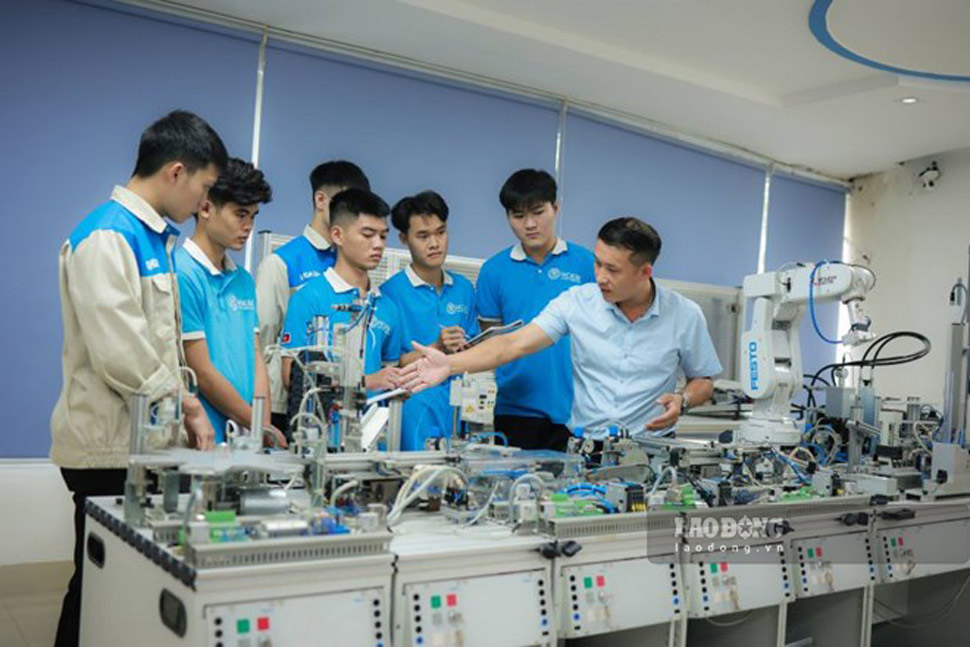
According to the Ministry, the management method of science and technology tasks will be innovated in the direction of promoting post-inspection, minimizing control procedures before and during the implementation process. The selection will focus on assessing the capacity of the research group, the quality of scientific proposals and research objectives, instead of focusing on dossiers and procedures.
The Ministry will also continue to expand the outsourcing mechanism, increase the proactiveness for task managers and key organizations in adjusting plans, funds as well as implementation plans in accordance with reality. Instead of detailed control of each professional activity, management agencies will supervise according to result milestones, mid-term and end-term assessments.
Regarding the risk-taking mechanism in scientific research, the Ministry said that the evaluation will be based on the organizational implementation process, compliance with professional procedures, scientific honesty and the value of knowledge created, instead of just based on whether the topic is successful or failed compared to the initial goal.
In addition, the mechanism for selection, evaluation and acceptance will also be innovated according to international standards, strengthening evaluation by independent experts, including foreign experts. The entire process of managing science and technology tasks will be promoted for digital transformation to reduce time and compliance costs for scientists.
According to the Ministry of Science and Technology, changes in research management will not only be regulated in guiding documents but also implemented through key research programs.
One of the first programs to apply the new mechanism is the Outstanding Basic Research Program (PEBR) for the period 2026-2035. The program is designed according to a modern research management model with a competitive selection mechanism, evaluated by a prestigious expert council, granting high autonomy to research and management groups in a flexible direction, focusing on quality as well as the impact of research results.
The Ministry of Science and Technology expects PEBR to become one of the pioneering programs to realize the spirit of the Law on Science, Technology and Innovation in 2025, especially post-inspection mechanisms, modern research management and acceptance of scientific risks.


