
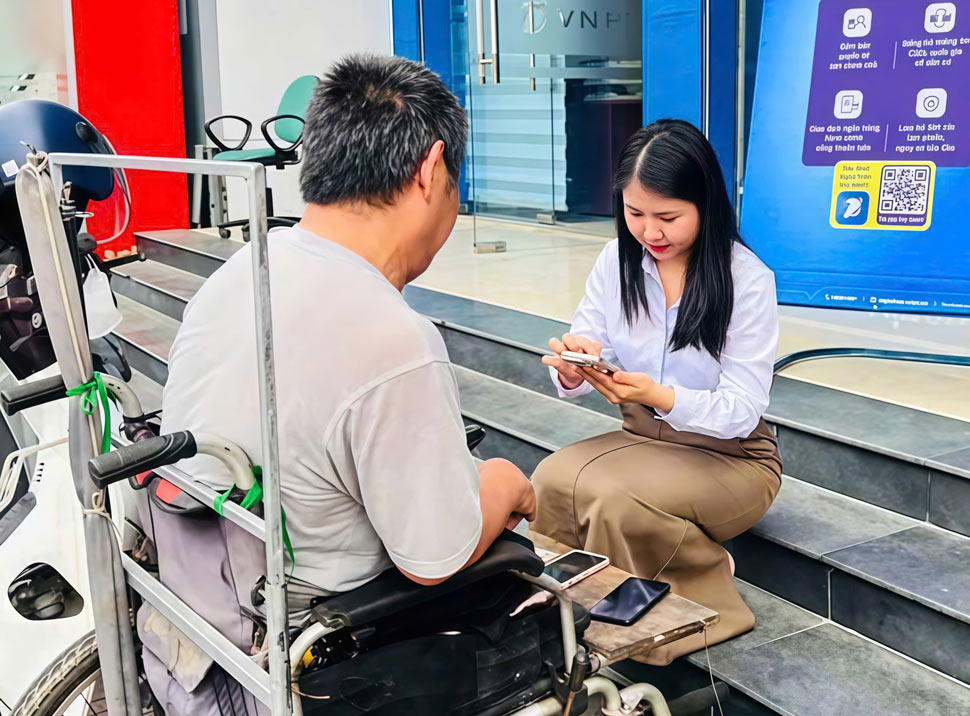
The implementation of subscriber authentication is being carried out in many flexible forms, creating conditions for users to easily access. However, for a part of the elderly or using feature phones, getting acquainted with the authentication steps is still confusing and requires more support.
Ms. Nguyen Thi Hoa (58 years old, Hanoi) said that she has been using a feature phone for many years, mainly to make calls with her children and grandchildren. When she heard the information that she had to verify her subscription, she was quite worried because she didn't know where to start.
I only know how to answer calls, I don't use any applications. These days I heard that it must be verified, but I don't know if I have to do it or not, and I don't know how to do it," Ms. Hoa said.
Not only Ms. Hoa, many other elderly people also fall into a similar situation when they do not use smartphones, do not have electronic identification accounts. In some cases, they have to ask their children and grandchildren to check for them, but not everyone has regular support.
Mr. Nguyen Van Dung (71 years old, Bac Ninh) said that his son works far away, and he himself is not used to using smartphones, so access to information is quite limited.
I have been using this number for a long time, now I hear that if it is not verified, it may be locked, so I am worried. But if you tell me to do it myself on my phone, I don't know how to do it," Mr. Dung shared.
According to records, the common point of this group of users is not knowing whether they are subject to authentication or not, and also encountering difficulties in accessing online channels such as network operator applications or electronic identification systems.
Faced with this reality, telecommunications businesses said that in addition to deploying authentication through applications, network operators have developed plans to directly support groups of users facing difficulties.
The network operator will coordinate with local police forces to support subscriber authentication at the place of residence for the elderly, vulnerable people, people who do not use smartphones or use devices without authentication functions.
For remote, isolated, border, island areas or cases requiring special support, authentication will also be organized directly in the area, to ensure that people can complete procedures without service interruption.


