
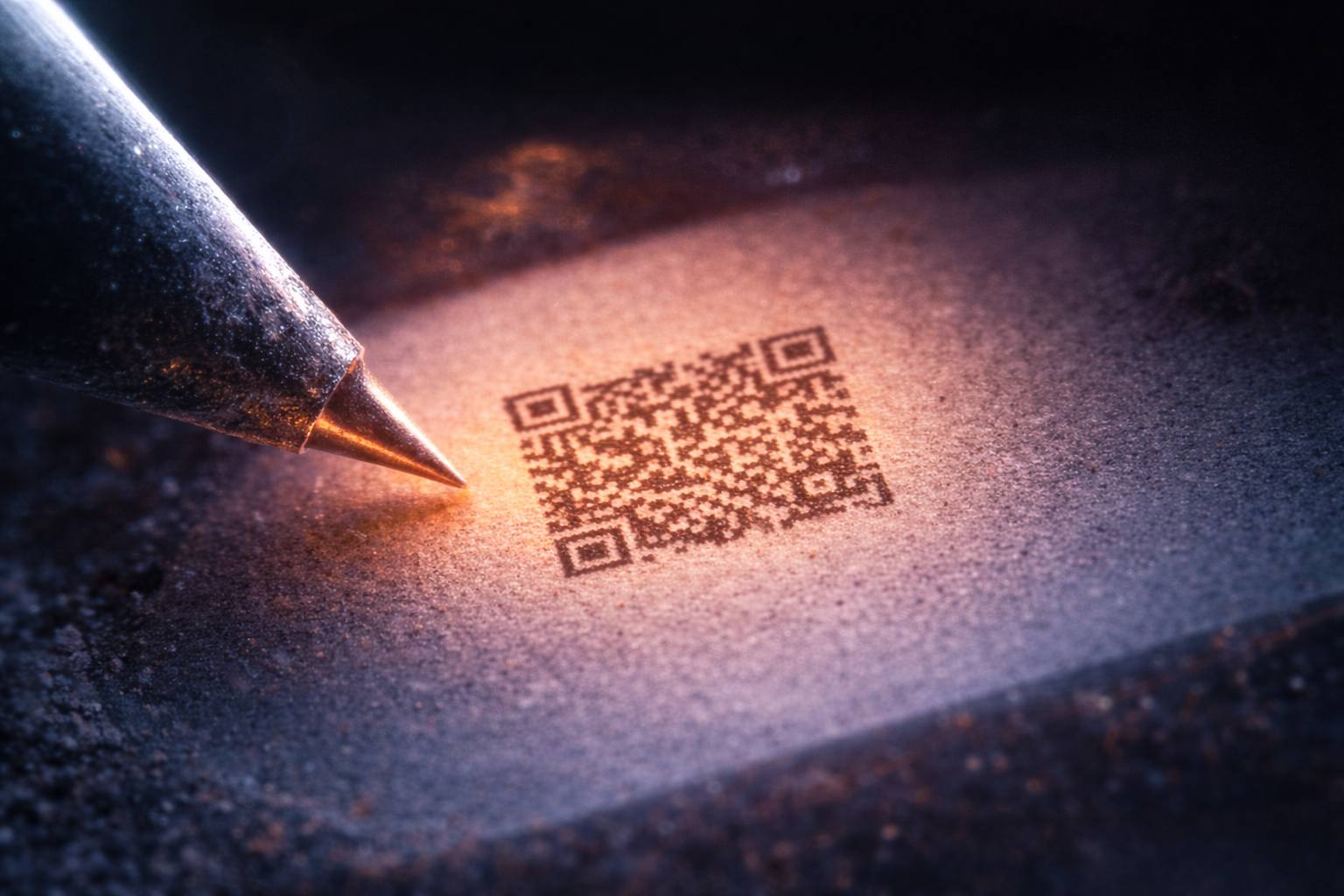
The project was implemented by a research group at TU Wien (Austria) in collaboration with the technology company Cerabyte. This QR code is only about 1/3 of the QR code that set the Guinness World Record earlier. Therefore, this new achievement was awarded the Guinness World Record when it was announced.
According to material scientist Paul Mayrhofer, the structure of the code is so small that it cannot be observed with an optical microscope. However, the big challenge is not only to reduce the size but also to ensure that the code remains stable and readable.
The research team said they printed QR codes on a super-thin ceramic film, a material commonly used to cover high-performance cutting tools. Then, they used an ion beam to engrave the code with a pixel size of only about 49 nanometers, much smaller than the wavelength of visible light.
Despite its extremely small size, the QR code still works when tested with appropriate equipment. The record-setting process is carried out publicly and certified by an independent unit.
Scientists say the use of ceramics helps store data in a sustainable way, similar to ancient civilizations that could survive thousands of years by carving letters on materials. This approach opens up the potential for long-term information storage with extremely high density.


