
Ho Chi Minh City is determined to clean up large-scale enterprise data (including businesses, household businesses and other types) to build a shared data warehouse. Regarding the roadmap and implementation plan, Lao Dong Newspaper had an interview with Ms. Vo Thi Trung Trinh - Director of Ho Chi Minh City Digital Transformation Center.
Madam, what is the significance of cleaning up population data and large-scale businesses for Ho Chi Minh City?
- Cleaning up population and business data on a large scale is a fundamental step to improve the efficiency of exploitation of the city's shared data warehouse. Currently, after the process of arranging administrative units, data is being managed in many different systems, so there is often a situation of overlap, deviation or lack of standardization in terms of identification, address, industry... Therefore, the data cleaning process needs to be carried out in a methodical manner and with close coordination between relevant agencies.
First of all, data standardization and cross-checking. Important information such as personal identification codes, business codes, addresses, administrative boundary codes and business lines need to be standardized according to a unified structure.
In this process, the City Police plays a very important role in coordinating the cross-checking and verification of population data, ensuring the accuracy of information about population, residential addresses and data related to population management for legal representatives and business households.
Regarding business data, the Department of Finance coordinates to provide and review information on business registration, business operations of enterprises, business households and data related to financial and tax management. In addition, there is coordination of relevant departments and branches to connect and cross-check between business data and population data to ensure synchronization between the legal information of enterprises and the identification information of representatives or owners.
How will data after being cleaned be processed?
- Data after being cleaned will be standardized with addresses and attached to spatial coordinates on the GIS platform, creating conditions for direct integration into the city's digital map system. This helps data not only be accurate in terms of information but also valuable in spatial analysis, serving urban management and policy planning, industry development orientation in particular and the city's economy in general.
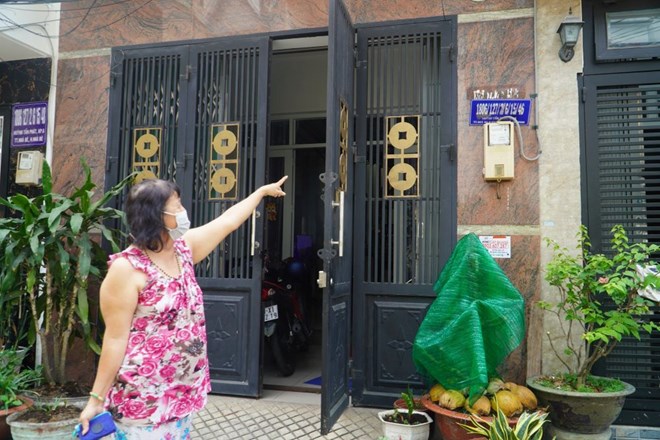
When business data is cleaned, standardized and interconnected, the city's shared data warehouse will become an important data infrastructure for digital government. Departments and sectors can unify data exploitation, reduce information duplication, and create convenience for people and businesses when carrying out administrative procedures.
What is the implementation roadmap, Madam?
- Regarding the implementation roadmap, the city can implement it in three main phases. The first phase is to review, collect and standardize data from existing systems, and at the same time conduct cross-checks with the population database.
The next stage is data cleaning, eliminating duplication, address standardization and data integration on GIS platforms and shared data warehouses.
Phase three is to build and integrate an expanded management platform for data exploitation, connecting with the city's digital platforms to serve management, provide public services and support digital economy development.
What are the difficulties and advantages when implementing?
- In general, the deployment of data cleaning is very favorable, departments and sectors actively coordinate with the Digital Transformation Center and the City Police, there are only a few initial difficulties. For example, some units are using data files in many different formats, but we will handle this issue, it will take a little time, but it is not a big obstacle.
The most important thing in cleaning data this time is that the data must be put into service immediately, with an information update mechanism, ensuring that the data is "correct, complete, clean, live, unified and shared". The data when collected will be evaluated to be published on the City Digital Citizen Application for people and businesses to exploit.
Can you tell us about Ho Chi Minh City's upcoming direction when implementing data cleaning?
The upcoming direction is that we will form a foundation for the city's business ecosystem so that businesses and business units can find each other and be guaranteed by the city's system.
From there, it will better manage businesses, support businesses to have an environment to promote, find partners, transact, support legal advice, as well as policies to support capital and incentives of the city, helping people who need to "buy" find reputable "selling" units, helping to increase tax revenue from increasing transactions contributing to growth for the city as a form of digital economy supplementation. At that time, it will not only serve the city's internal needs but also support businesses to reach out to the whole country through the City Business Ecosystem Platform.
This is also the foundation for the city to improve data-based governance capacity and promote digital transformation to support businesses and innovative startups effectively and sustainably.
Thank you for the interview.


