
Unifying regulations on specialized postgraduate training in the health sector
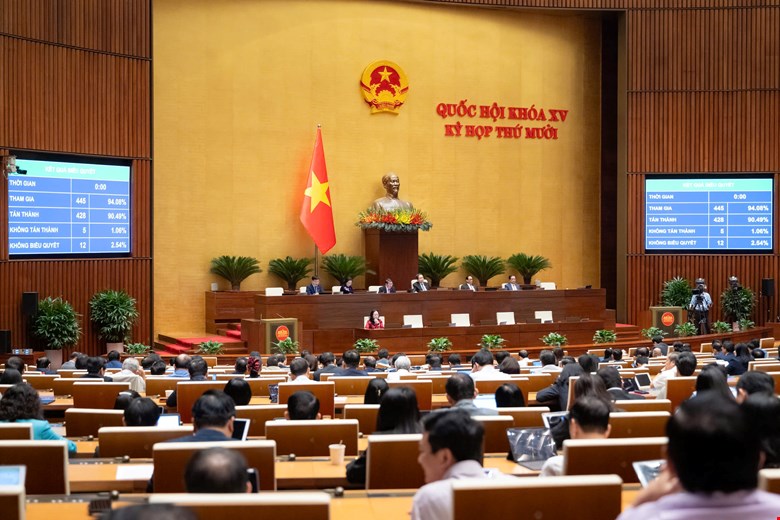
On the morning of December 10, the National Assembly voted to pass the Law on Higher Education (amended).
The electronic voting results showed that 411/440 delegates approved, accounting for 86.89%.
Previously, Minister Nguyen Kim Son reported on the reception and explanation of the draft Law on Higher Education.
The Minister said that the statistical drafting committee has more than 20 groups of questions on major content groups that delegates are interested in from academic freedom, quality assessment, accountability, school councils, artificial intelligence... to system model, university governance, digital education, school councils, Party Committee Secretaries, ...
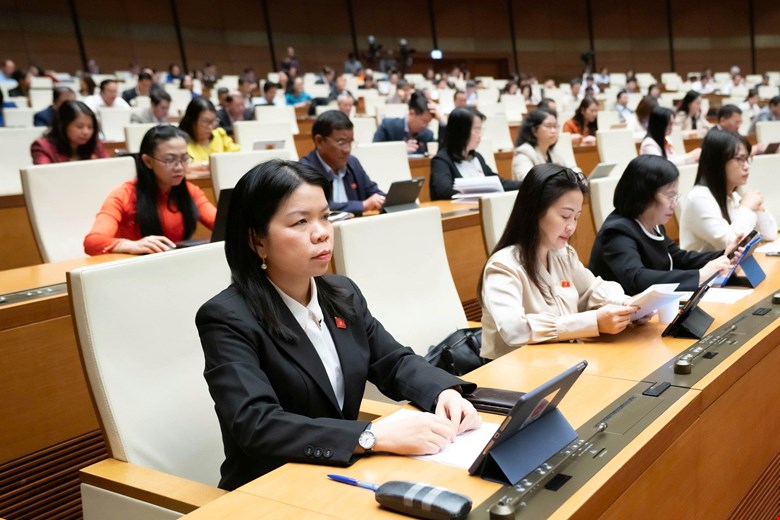
In particular, specialized postgraduate training in the health sector is a group of issues that received many opinions from National Assembly deputies.
Through a comprehensive review and consultation with international experience, training in resident doctors and specialties I and II is postgraduate training to become good doctors working in hospitals, not equivalent to master's or doctoral degrees in the academic field.
"The Ministry of Education and the Ministry of Health have highly agreed to stipulate general principles in the draft Law regulating specialized postgraduate training programs in the field of health with the degrees of resident doctors and specialist doctors guided, organized and managed by the Ministry of Health" - the Minister said and affirmed that this is the regulation of groups of work that the Ministry of Health has been doing up to now.
The Ministry of Education and Training would like to wish the Ministry of Health to continue to manage these programs well, the education commander told the National Assembly.
retention of regional universities, improving internal governance efficiency
Regarding the regulations on higher education institutions and other educational institutions with higher education activities, the Law stipulates that higher education institutions are educational institutions in the national education system, with legal status, organized and operated according to the provisions of this Law and other relevant legal provisions.
Higher education institutions include: Universities and universities called academies, training in many fields at all levels of higher education; University of multi-disciplinary training at all levels of higher education; National universities, universities with multi-disciplinary training at all levels of higher education, also in the higher education system.
With this regulation, the National Assembly decided to keep regional universities instead of proposing to abolish regional universities as some opinions of National Assembly deputies in the discussion sessions.
In the explanatory report, Minister Nguyen Kim Son said that according to the current planning of the network of higher education institutions, regional universities still have a mission to carry out strategic tasks, link regions and develop a science - technology and innovation ecosystem.
The proposed opinion to review this model is mainly concentrated in a regional university that needs to be studied, evaluated and objectively recognized as due to the general problem of the regional university model, or belonging to the internal organization, management capacity, decentralization, delegation of authority and operation of a specific university.
The Government determined that the amendment of the Design Law aims to improve the effectiveness of governance within each regional university, clarify the strategic coordination function of regional universities and the academic, organizational and financial autonomy of member universities; perfect the decentralization mechanism, explanatory mechanism, personnel standards, operating methods and responsibilities of each level. This approach ensures the accurate and correct handling of shortcomings arising in practice at each specific higher education institution.
The Law on Higher Education (amended) stipulates that regional universities carry out the mission and function of training highly qualified human resources, developing talent, scientific research, developing technology, innovating, transferring knowledge, serving society, the country, and humanity.
Regional universities also gather resources, promote regional linkages, support the socio-economic development of the region; contribute to the implementation of national development strategies.


