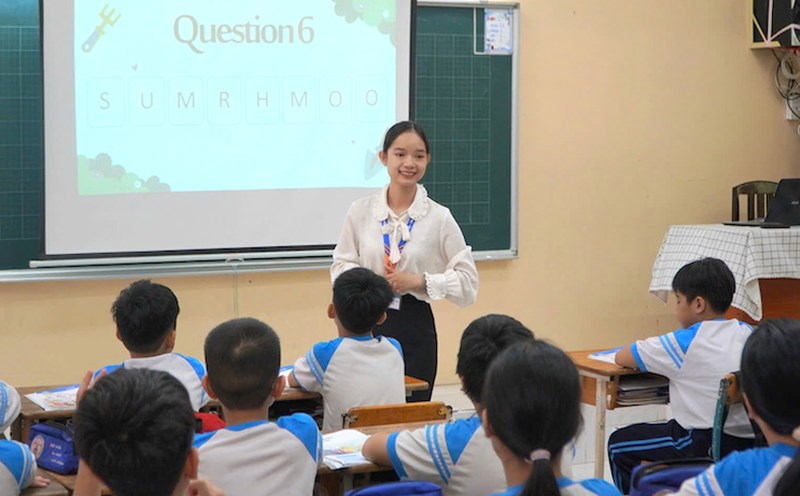
Special visual educational vehicle
In the professional luggage of primary school teachers, there are countless tools and teaching aids: boards, envelopes, paintings, word cards, models, digital learning materials, artificial intelligence... Everything is useful, contributing to expanding the learning range. But there is a "use" that is not in the device cabinet, cannot be purchased with the budget, and cannot be copied using algorithms. That is the standard reading voice of teachers - a special visual tool that can only be created from knowledge, personality and love for the profession.
In primary education, especially grade 1, the teachers' reading voice plays a fundamental role. When students first got used to Vietnamese, every note, every line, every sound was still as confused as the first bricks placed on the foundation of the language. Children are not yet capable of clearly distinguishing between perfect - subnormal, initial - last, and tonal - level. At that time, the accurate, clear, and slow reading voice of teachers is the living model for them to listen, impersonate and form the habit of speaking correctly, reading correctly, and writing correctly.
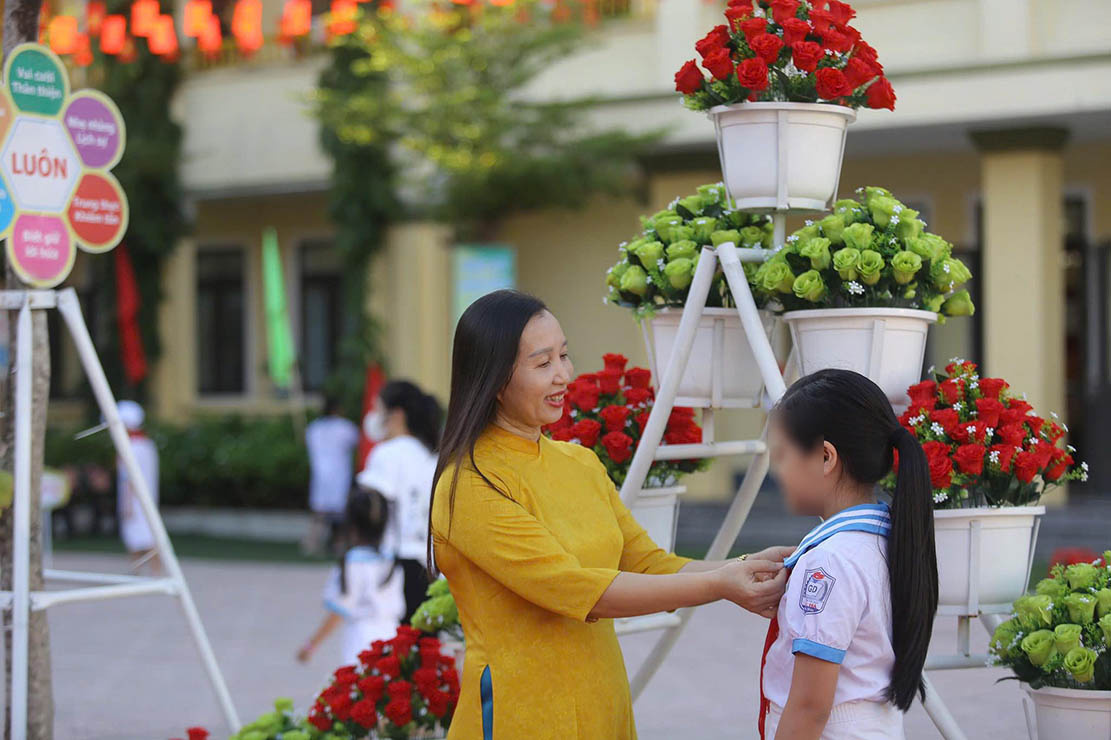
The sample reading voice is not simply the correct pronunciation. That is the path that leads children from sound to writing, from recognition to feeling. Through her reading voice, students learn how to break, get up and down, and feel the rhythm and nuance of Vietnamese. Each round, clear reading sentence is a lesson in language logic; each time the voice is emphasized, the whistle in the right place is an aesthetic seed sown in the soul of the child.
That voice is also an example of pedagogical qualities. A teacher who knows how to practice speaking, maintain voice, and pronounce standardly is quietly teaching students to be cautious, respectful of the right and love for beauty. Where there is a clear female voice, Vietnamese is preserved; where there is a teacher's voice, there is faith and interest in learning lit up. This is a value that no pre-recorded lecturer or automatic reading software can completely replace.
Today's artificial intelligence can read correctly, read quickly, and even read well according to programming. AI can support teachers in standardizing pronunciation, providing a diverse reading voice base, helping students practice listening extra in class. From a tool perspective, it is a remarkable step forward in modern education.
But AI only really promotes value when placed next to it, not replacing teachers' voices. In primary schools, especially primary schools, teachers' sample reading is still the focus of orientation. Teachers can use AI as an expanded practice room for students to practice listening and reading; in class, the real reader plays a role as a leader, adjustment and support. AI reads for students, but teachers listen to students read again - that is the core pedagogical difference.
The love package in the reader's voice
Teachers' voices also have the ability to adapt instantly that technology cannot copy. When a student pronounces incorrectly, she can slow down, emphasize, read more slowly; when the whole class is proficient, the teacher can speed up and increase the tone of the expression. That flexible regulation is based on students' eyes, breathing, emotions, and progress - living signals that AI cannot fully feel.
Therefore, in modern teaching, the right relationship is the standard teacher's voice - AI support. Technology helps expand the learning space, while the leo leo leo pedagogical voice plays the role of anchoring quality and emotions. When coordinated harmoniously, students have access to rich learning materials and do not lose the warmth and standards of Vietnamese in the classroom.
In the first lessons of life, when the letters were still unfamiliar, the teachers' reading voice was the opening music for the learning journey. It is simple but miraculous, quiet and lasts for a long time. Maintaining a standard, clear and emotional voice is not only a professional requirement, but also a cultural responsibility of teachers. That is how teachers preserve the purity of Vietnamese in a turbulent life, giving students the priceless first gift of life: a correct voice, a solid language foundation and a beautiful love for the mother tongue.
In the flow of educational innovation, technology can continue to go very far, but primary schools still need undigitable values. The teachers' reading voice - when standard, when warm, when supportive - will remain for a long time, like a lasting memory of following students throughout their journey of learning and becoming a human being.