
The above content is stipulated in the Draft Circular promulgating the Regulation on university-level training. The draft is being consulted by the Ministry of Education and Training for comments.
The draft Circular is built to replace Circular No. 08/2021/TT-BGDĐT dated March 18, 2021, ensuring compliance with the new regulations of the Law on Education and the Law on Higher Education. At the same time, it updates the new requirements of higher education in the context of digital transformation, artificial intelligence (AI) development and lifelong learning.
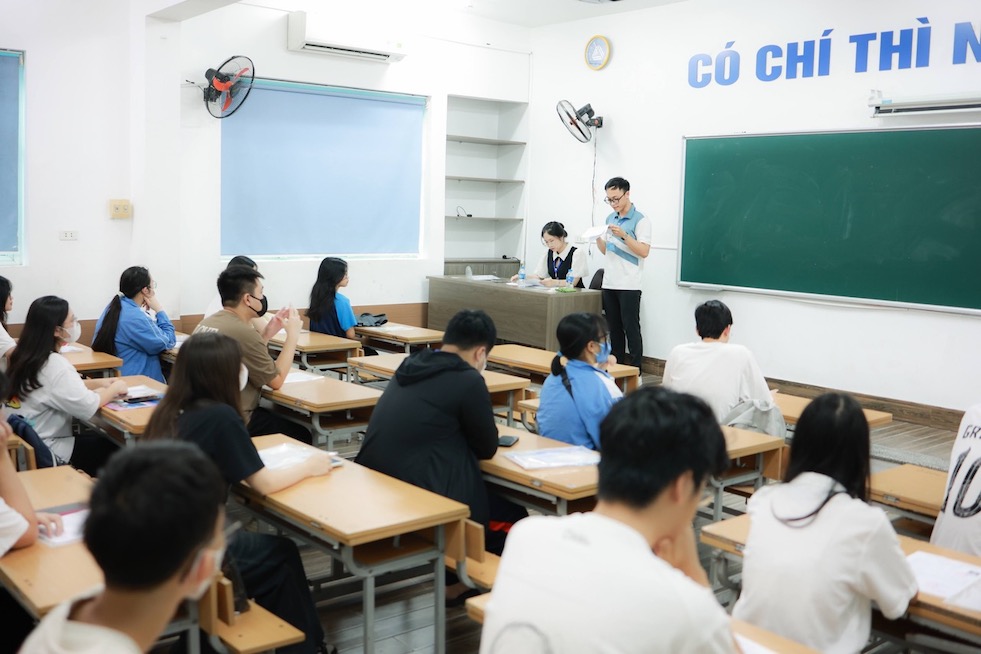
AI application in higher education must ensure academic integrity
The draft for the first time supplements regulations on the application of digital technology and artificial intelligence in university training. Accordingly, AI is used to support improving the quality of teaching and learning, but does not replace the role of lecturers and the independent learning ability of students. The application of AI must ensure transparency and fairness in evaluation, protection of personal data, intellectual property rights and academic integrity.
According to the draft, the graduation grade of students with excellent and excellent accumulated average scores will be reduced by one level if they fall into one of the following cases: The volume of modules to be re-studied exceeds 10% compared to the total number of credits prescribed for the entire program; Students who have been disciplined from a warning level or higher during their study period; Students who violate regulations on academic integrity and scientific integrity.
Not re-learning what has been learned, what has been done
One of the important new points of the draft is to expand the mechanism for recognizing learner learning outcomes.
Accordingly, the training institution can consider recognizing to convert credits from distance learning results or from skills, knowledge, and experience that learners have accumulated through the learning and working process.
The draft also allows high school students who are eligible for graduation exam exemption to register to accumulate higher education credits.
These regulations aim to recognize what learners have learned, done and demonstrated their abilities, instead of just recognizing academic results according to the traditional path. Thereby, creating conditions for learners to have more choices and more flexible learning paths, saving time and training costs, and promoting lifelong learning in the context that knowledge and skills need to be continuously updated.
First time having a higher education certificate, learn as much as you learn.
The draft for the first time supplements regulations on higher education certificates - types of certificates confirming the results of completing modules or part of the training program.
This regulation creates a mechanism to record each learning stage of learners, increasing the ability to accumulate, recognize and convert learning results between training programs. This is also the basis for learners to gradually accumulate learning results according to their own needs and conditions, instead of only being recorded when completing the entire training program.
In addition to increasing flexibility in learning, the draft continues to emphasize the requirement to ensure the rights of learners. Training institutions are responsible for ensuring the right to study, the right to access information, the right to learning support and the right to fair treatment of students.
For joint training programs or cases of changing training organization conditions, the draft supplements regulations to ensure that students' learning is not interrupted and the legitimate rights of learners are protected.
The new contents of the draft not only meet the requirements arising from training practice but also contribute to creating conditions for learners to have more opportunities to access higher education, to be better recognized for their accumulated learning results and to be more proactive in their learning path.


