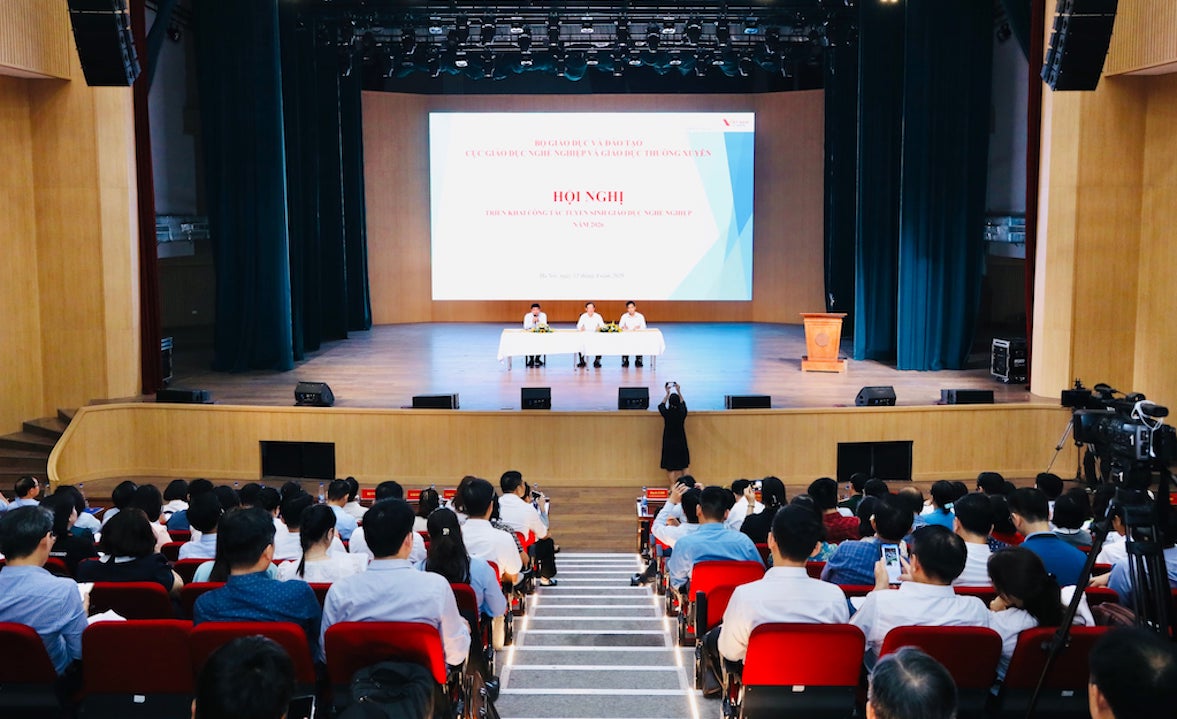
On the afternoon of April 15, the Ministry of Education and Training organized a conference to deploy vocational education enrollment work in 2026.
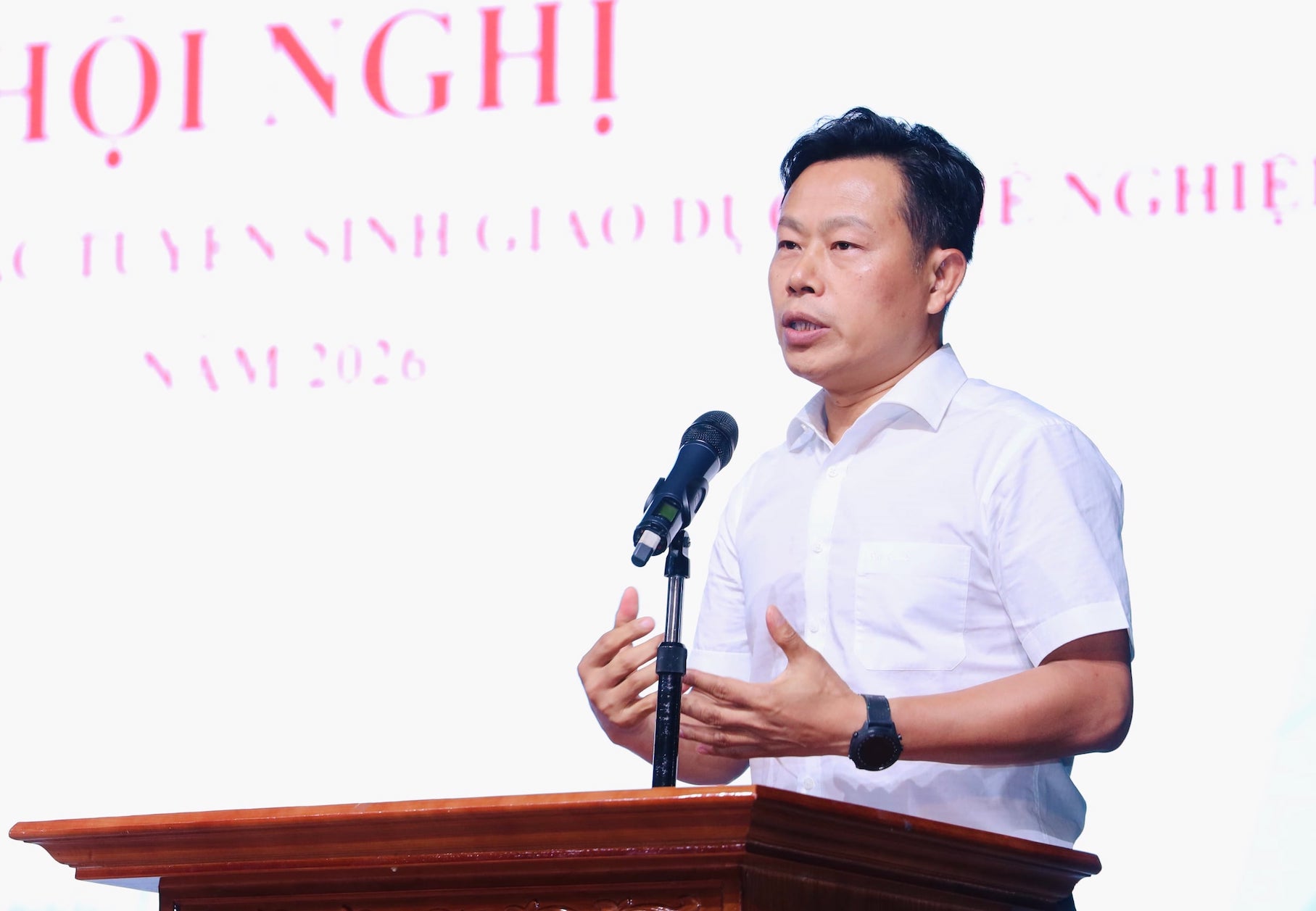
Speaking to direct at the conference, Deputy Minister of Education and Training Le Quan said that the vocational education enrollment work this year faces both advantages and difficulties, especially in the context that the Law on Higher Education (amended) and the Law on Vocational Education (amended) are being implemented with many important changes.
The Deputy Minister said that in the coming time, many new regulations will be issued, which directly relate to vocational education enrollment; and there are also some new regulations on enrollment regulations.
According to the Deputy Minister, the core point for effective enrollment is that the training major must meet the needs of the labor market.
To do so, vocational education institutions must proactively restructure training programs, review industry structures, and strengthen the deep participation of businesses in the training process.
The Deputy Minister also encouraged localities and educational institutions to proactively reflect difficulties and obstacles in the implementation process, thereby helping management agencies continue to improve policies and improve the effectiveness of the vocational education system.
Removing obstacles in implementing 9+ model support
According to the provisions of the Law on Vocational Education, training institutions are still allowed to continue enrolling junior high school graduates according to the 9+ model until 2030. However, this content has not been clearly shown in the draft enrollment regulations, causing many institutions to be concerned when developing plans.
Mr. Nguyen Van Ngoc - Vice Principal of Ha Tinh Vocational Secondary School - said: "If the enrollment regulations do not specifically stipulate 9+ subjects, schools will face difficulties in developing plans and organizing enrollment, especially in determining targets and appropriate enrollment methods.
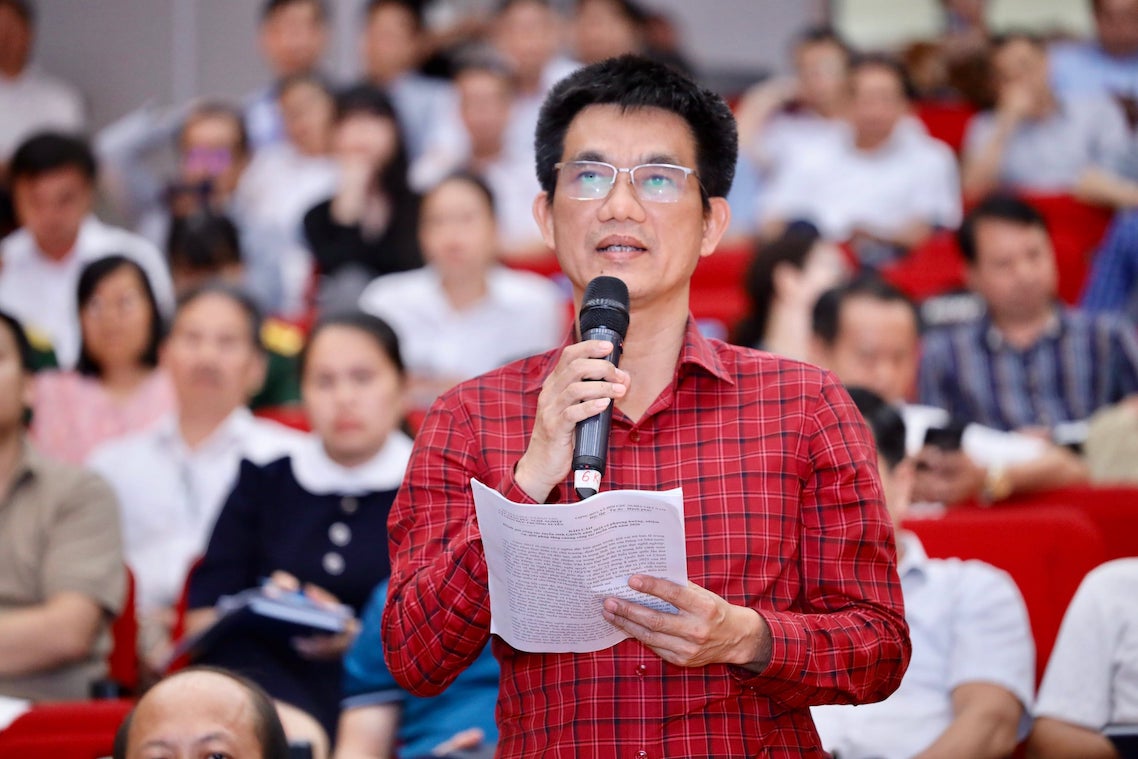
According to Mr. Tran Minh Tuan - Deputy Director of Phu Tho Provincial Department of Education and Training - the policy of supporting learners during the transition period is also a content that needs to be clarified.
Previously, students following the 9+ model were exempt from tuition fees and were compensated for training costs. The new law stipulates "tuition fee support", but there are no specific instructions on the level of support, subjects of application and how to implement it.
This leads to the reality that localities have difficulty in comparing current regulations to implement policies.
Specific guidance is needed for localities to easily compare between laws and sub-law documents, thereby implementing policies in a unified manner, ensuring the rights of learners" - Mr. Tran Minh Tuan shared.
Training institutions and localities are still confused in implementation
In addition to policies for learners, content related to training organization and facility management is also reflected by many localities that there are still some points that need to be guided more specifically.
According to Mr. Tran Minh Tuan, in the process of arranging and merging vocational education institutions, having guidance to avoid interrupting classes being trained is one of the issues of concern.
Regarding licensing, the mechanism of shifting from pre-inspection to post-inspection is assessed as creating favorable conditions for training institutions in expanding their scale and occupations.
However, delegates also said that there should be appropriate management solutions attached to ensure the quality of training and avoid the emergence of cases where conditions are not fully met but enrollment is still organized.
In addition, some contents such as transferring training locations, training links with businesses or between institutions, as well as determining the scope of training occupations currently do not have specific procedures and guidelines. This makes it difficult for localities in the process of resolving administrative procedures and organizing implementation.
Early completion of specific guidelines in the transition period
From the above reality, delegates believe that completing the system of guiding documents will help solve the obstacles in the current period, when many new policies are in the process of implementation.
Localities propose that the Ministry of Education and Training soon issue complete circulars and detailed instructions to clarify the contents related to enrollment, learner policies, licensing authority and training organization. Having timely guidance will help training institutions be more proactive in developing plans and implementing activities.
At the same time, ensuring consistency between legal regulations is also emphasized, in order to avoid the situation where each document has different understandings.