
Right policy and strategic vision
Many provinces and cities across the country have issued plans to implement the arrangement and streamlining of the school network.
In Hanoi, the policy of arranging and reorganizing public educational institutions is implemented according to Plan No. 272/KH-UBND of the Hanoi City People's Committee.
Ms. Nguyen Thi Thanh Loan - Principal of Chim Non Kindergarten (Hai Ba Trung ward, Hanoi) - said that from the reality in wards and communes of Hanoi, especially in areas belonging to the core district in the past, besides kindergartens with strong development scale, there are still many schools with small scale, limited campus areas, and a lack of subject classrooms, functional rooms or specialized spaces to serve children's experiential activities.
Therefore, the policy of arranging schools is completely consistent with reality, helping to overcome fragmentation, optimize facilities, improve effectiveness and efficiency of management, and better ensure the learning rights of students" - Ms. Loan said.
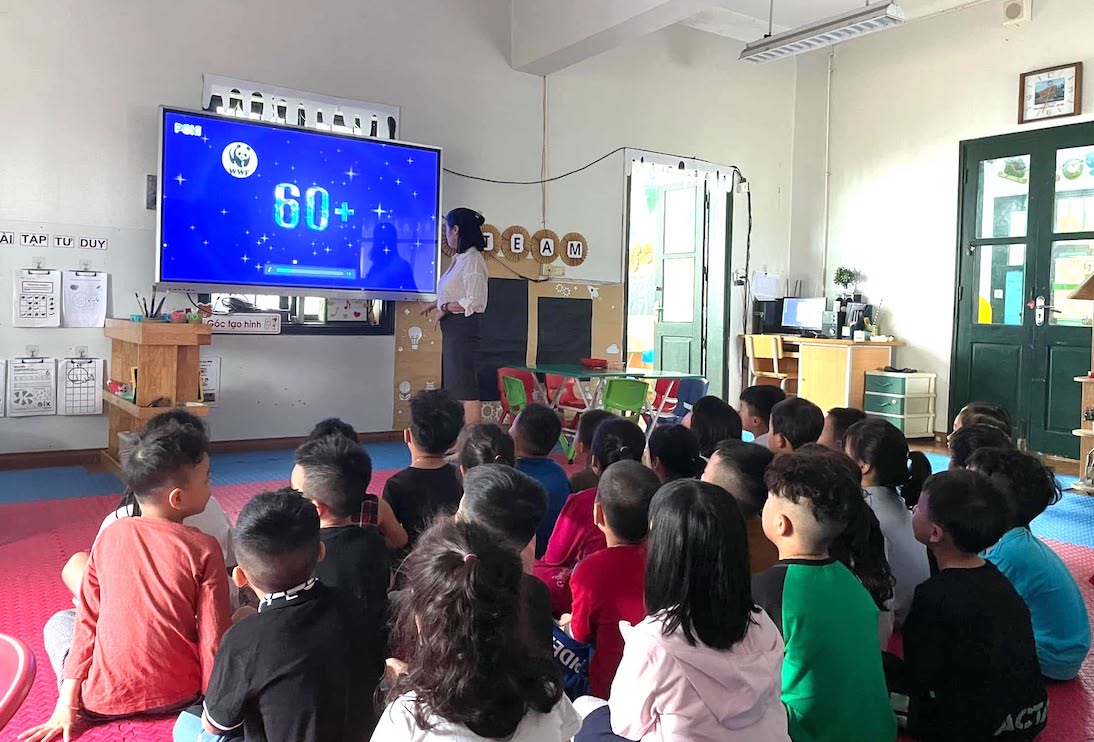
Ms. Loan shared that she herself and the school's teaching staff are deeply aware that all major policies of the Party, State and City are aimed at the noble goal of improving the quality of education for the young generation.
Concerns and worries
Although highly agreeing with the general policy, as an education manager, Ms. Loan as well as many management officials (principals, vice-principals) at kindergartens, when facing the problem of arranging large-scale schools (managing 5-6 school sites), cannot help but have concerns and worries.
First, there is pressure on space and geographical distance. When the head cannot be present directly at each school point to closely direct, it leads to certain confusion in handling emergencies.
In addition, the synchronization of facilities, professional management and teacher spiritual life, food safety and asset management are also issues raised. School sites after arrangement often have disparities in infrastructure and teaching equipment, "each place has its own style", requiring large resources for renovation and standardization. Maintaining synchronous professional activities and emotional connection between teachers at discrete school sites is a significant challenge.
Managing semi-boarding kitchens, food safety and hygiene, as well as controlling public assets at many school sites requires high concentration and high potential risks" - Ms. Loan analyzed.
In addition, it is also necessary to pay attention to communication and parental relations to create absolute consensus in the parents' community in different school sites when changing management models.
This is no small pressure for the school board" - Ms. Lan said.
Agreeing with this view, the principal of a primary school in Hanoi expressed his concern about the management stage when arranging schools into a multi-campus school. The immediate concern pointed out by the principal is the organization of the opening ceremony for the new school year 2026 - 2027.
Students still go to whichever campus to open the school year. Similarly, other experiential activities in the school year - which may be more expensive than the opening ceremony - will be implemented when the budget is limited?" - the principal worried.
Technology is the key to bridging the gap
According to teacher Nguyen Thi Thanh Loan, to effectively operate a large-scale kindergarten with many school sites after arrangement, it is necessary to shift from administrative management thinking to digital management and clear decentralization.
In the context of the geographical distance between school sites being widened, Ms. Loan recognizes that technology is no longer a supporting tool but has become a decisive factor in management efficiency, helping schools operate smoothly, transparently and promptly.
Accordingly, schools need to decentralize management according to each school branch, assigning powers associated with responsibilities to professional team leaders and Vice Principals in charge of grassroots levels. At the same time, promote digitization of professional work, childcare, application of management software, digital signatures, electronic documents and camera systems connecting between school branches. Managing assets with QR codes, strengthening online interaction with parents, and building a culture of sharing and professional activities between school branches are also solutions to help improve management efficiency after arrangement.


