
A call rang at 1800. 8022. The other end of the line was the voice of a man in his eighties, speaking in the local dialect, telling about a forest, a stream, an afternoon in 1972 and three comrades he buried himself. He did not remember exactly what the commune name was now. He only remembered which direction the stream was flowing.
That call may be the missing link in a file that lasts for more than fifty years. It may not. But it must be recorded, listened to again, verified and delivered to the right place, because no one knows in advance what clues will lead to a return.
Not every family is lucky
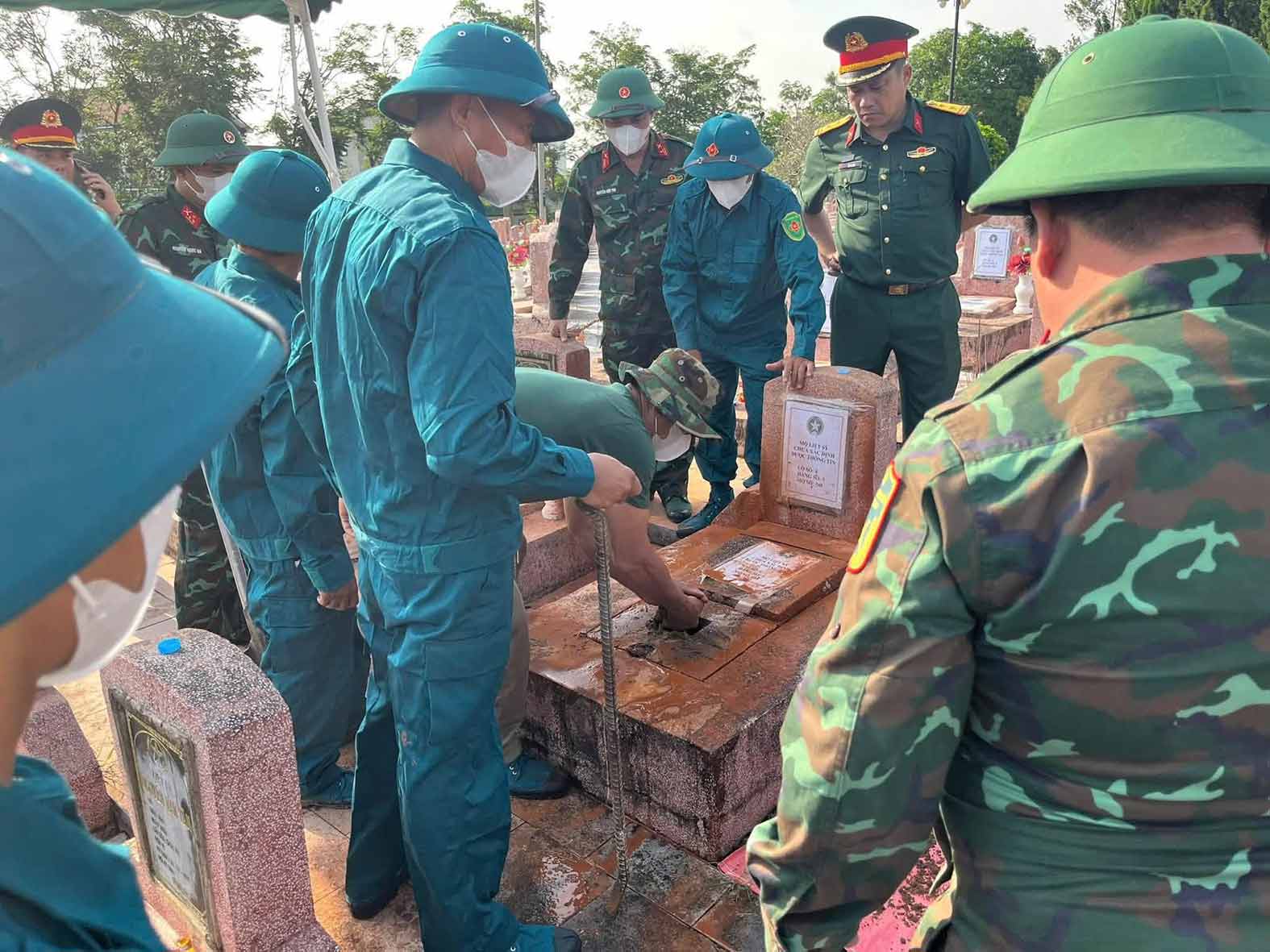
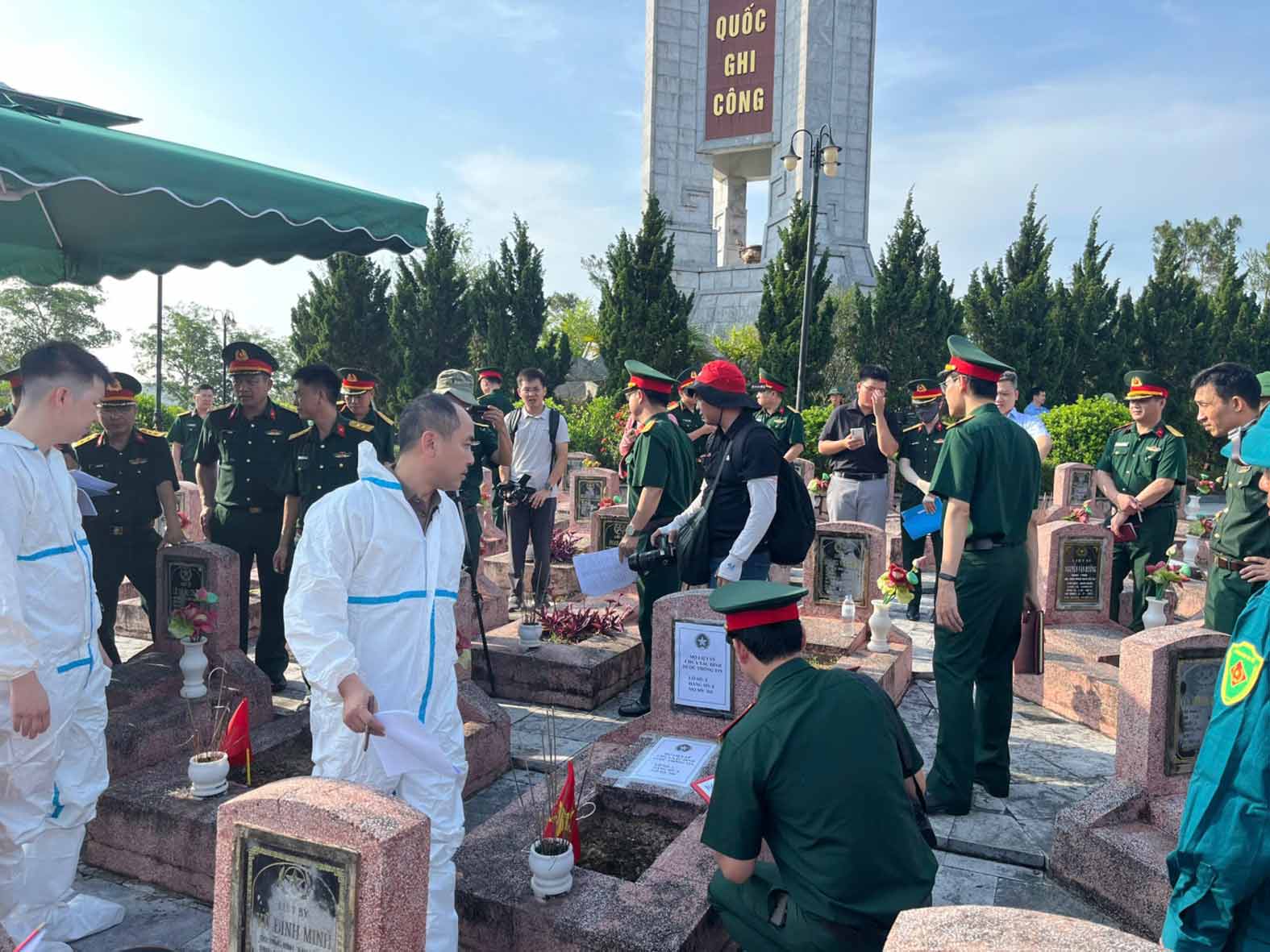
On July 6, 2026, at Le Thi Rieng Cultural Park (Ho Chi Minh City), the repatriation force found a set of remains and a piece of paper named Huynh Van Quen. That afternoon, a family in Vam Co commune, Tay Ninh province contacted the local authorities: their older brother who had been searching for nearly sixty years also had that name.
Twenty days later, on the evening of July 26, the Ho Chi Minh City Command officially confirmed her identity. Ms. Nguyen Thi Le - the girl who was once promised by Mr. Quen "I will fulfill my duty and then come back to marry you", who had been single for nearly six decades - received her husband's wallet, comb, ballpoint pen and medicated oil bottle, choked up and speechless.
But that is a rare case. Martyr Huynh Van Quen was lucky to lie down with a piece of paper that can still read his name. Most of the soldiers who have not returned have no piece of paper. No artifacts, no tomb maps, no complete records. For their families, the only clue may be the memory of a living comrade, or the story of a villager who witnessed it.
The problem is that those memories must have a place to be sent back.
The gate of the campaign
Operation 500 days and nights to promote the search, repatriation and identification of martyrs' remains" is deployed from June 15, 2026 to July 27, 2027, towards the 80th anniversary of War Invalids and Martyrs' Day. As of July 26, 2026, the operation has searched and repatriated 1,491 martyrs' remains in the country and in Laos and Cambodia.
Performing tasks assigned by the Ministry of National Defense and the National Steering Committee 515, Viettel built a switchboard system to receive information about martyrs and martyrs' graves with two prefixes: 18008022 is free for domestic calls, and 0965. 001222 serves calls from abroad - for relatives and veterans who are far from the Fatherland.
Since the system was deployed on June 15, the switchboard has received more than 11,000 calls from all over the country. But what makes this work different from any normal switchboard is not the number.
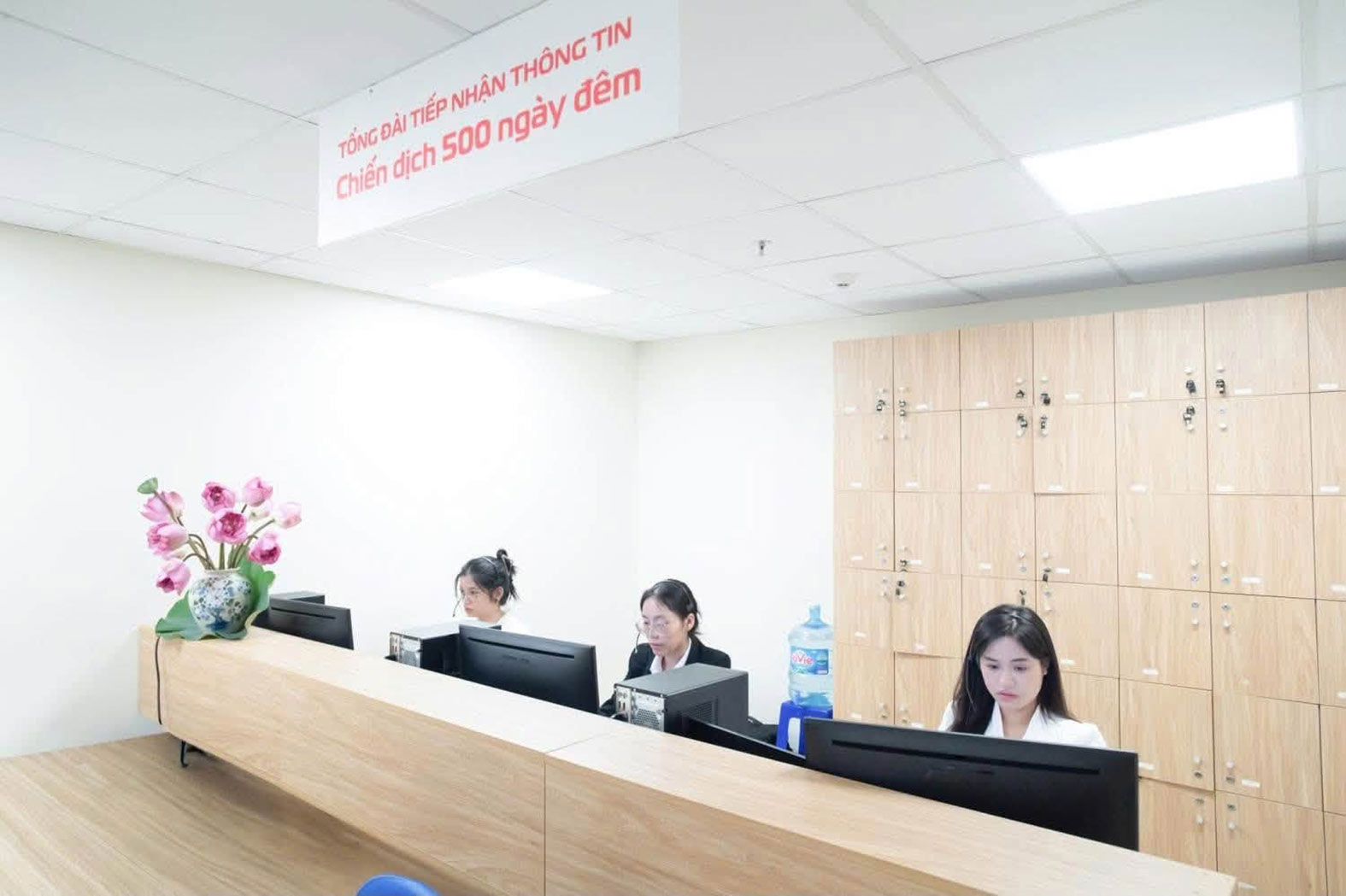
The callers are mostly elderly people, speaking with a local accent, telling stories according to memory circuits rather than according to forms. An old place name can be pronounced in many ways. A name may be mispronounced just because of a sound mark. Therefore, after each shift, telephone operators also have to listen to recordings, remove tapes of each call to compare and standardize information before moving away.
It's not simply that people just call and we receive them. Some people speak difficult regional languages, we are very afraid of missing out. Because the other end of the line is full of anticipation, hope and belief. We try to put all our responsibility into each call, cherish every piece of data and hope for good luck to come to the families," shared the representative of the 500 Days and Nights Campaign communication team.
Besides the switchboard, the official fanpage and TikTok channel of the campaign are also operated as a parallel gateway, so that people who are familiar with using social networks - usually children and grandchildren of martyrs' families - can send information, images, and documents.
All collected information is summarized, classified and transferred to functional agencies for verification, search and repatriation.
Behind the gate
A source of information received is only the first step. To reach the destination, that information must also find its place among hundreds of thousands of other pieces of data. Viettel is assigned to take the lead in building a digital ecosystem to serve the entire campaign, including specialized software, following the exact journey of a set of remains: from the time it is found, sampled, examined, until the name is found again.
In the initial stage, the Software for Managing Martyrs' Remains Sample Information has been deployed in 34/34 provinces and cities, digitizing the sampling process including 14 steps, clearly classifying samples that meet the conditions for testing, samples that have been transferred and samples that do not meet the conditions - a stage that seems purely technical but determines where the testing resources are focused.
Next, a DNA data management system is being built to manage the entire data life cycle, from sampling, storage, testing to comparing with personal data. Covering everything, the Progress Management Software helps the Steering Committee monitor in real time nationwide.
Progress pressure is very high: some software only takes about 20 days to complete. Viettel engineers and personnel in 34 provinces and cities have directly gone to martyrs' cemeteries to train, guide the use and support the digitization of dossiers.
But technology does not replace footsteps on the ground. It only helps those footsteps go in the right direction. And for project workers, what keeps them is not progress.
Each set of martyrs' remains being searched for and repatriated is a great hope for relatives. Each identified identity is a happiness for a family. Therefore, the project team always thoroughly grasps that this is a task from the command of the heart. Each personnel member must dedicate all their heart, resources and enthusiasm to make the project successful, contributing a small part to the success of the campaign," emphasized the representative of the Board of Directors of Viettel Enterprise Solutions Corporation (Viettel Solutions).
The campaign is still a year ahead. There are still tens of thousands of records to be verified, hundreds of thousands of graves waiting to be named correctly. And somewhere, there are still veterans who do not know that their memories may be the last link in a record that has been hanging for half a century. There are still families who do not know that there are some numbers waiting for them to call. Because after each call, one person is waiting to return.
The campaign still has exactly one year ahead. Meaning there is still time for the memories that have not yet spoken to be heard, for the remaining clues to find a place to send, for the names that have been dormant for half a century to have another chance to be called up. There are calls that only last a few minutes. But there are also calls that close the waiting journey of an entire family.
Because what Viettel opens up is not just a switchboard. It is a gateway for people's memories to find the right place to go. And that gateway is always open.


