
Energy transition is identified as a foundational industry
Vietnam is entering a new era of development, an era of national rise, requiring fundamental changes in the economic growth model to move towards sustainable and inclusive development. The increase in extreme weather phenomena, typically Typhoon Yagi in 2024 causing economic damage estimated at 0.7% of GDP, is clear evidence that Vietnam is one of the countries vulnerable to climate change. World Bank analysis points out that, without drastic adaptation and emission reduction solutions, losses due to climate change in Vietnam could reach 3.2% of GDP per year, even accumulated could reach 12% to 14.5% of GDP by 2050, equivalent to huge financial losses from 400 to 523 billion USD (WB Report 2025). In that context, the political determination of the Party and State has been strongly demonstrated through the commitment to achieve net zero emissions by 2050 (Net Zero 2050) at the COP26 conference, along with the integration of NDC reduction targets updated in 2022.
The macroeconomic institutional framework for green growth has been synchronously shaped through the national strategy on green growth for the period 2021 - 2030, vision 2050 according to Decision No. 1658/QD-TTg and the national action plan on green growth according to Decision No. 882/QD-TTg. The key point of these strategies is to transform the economic model from "brown" to "green", in which energy transition is identified as a foundational industry, which has a spillover effect and determines the success or failure of the entire process.
This shift is not happening in isolation but accompanies the fourth industrial revolution, creating a "double transition" trend, which is the integration between digital economy and green economy. Real-world data analysis in Vietnam in the period 2014 - 2023 shows that the explosion of telecommunications and information technology (ICT) infrastructure has two-sided impacts on the environment (WB 2025). While process digitization helps improve resource efficiency, the expansion of large-scale data centers and high-speed connectivity networks consumes a huge amount of electricity, indirectly increasing greenhouse gas emission pressure if the baseline power source still depends on fossil fuels.
Table 1: Current situation of ICT infrastructure development and greenhouse gas emission trends in Vietnam (2014-2023)
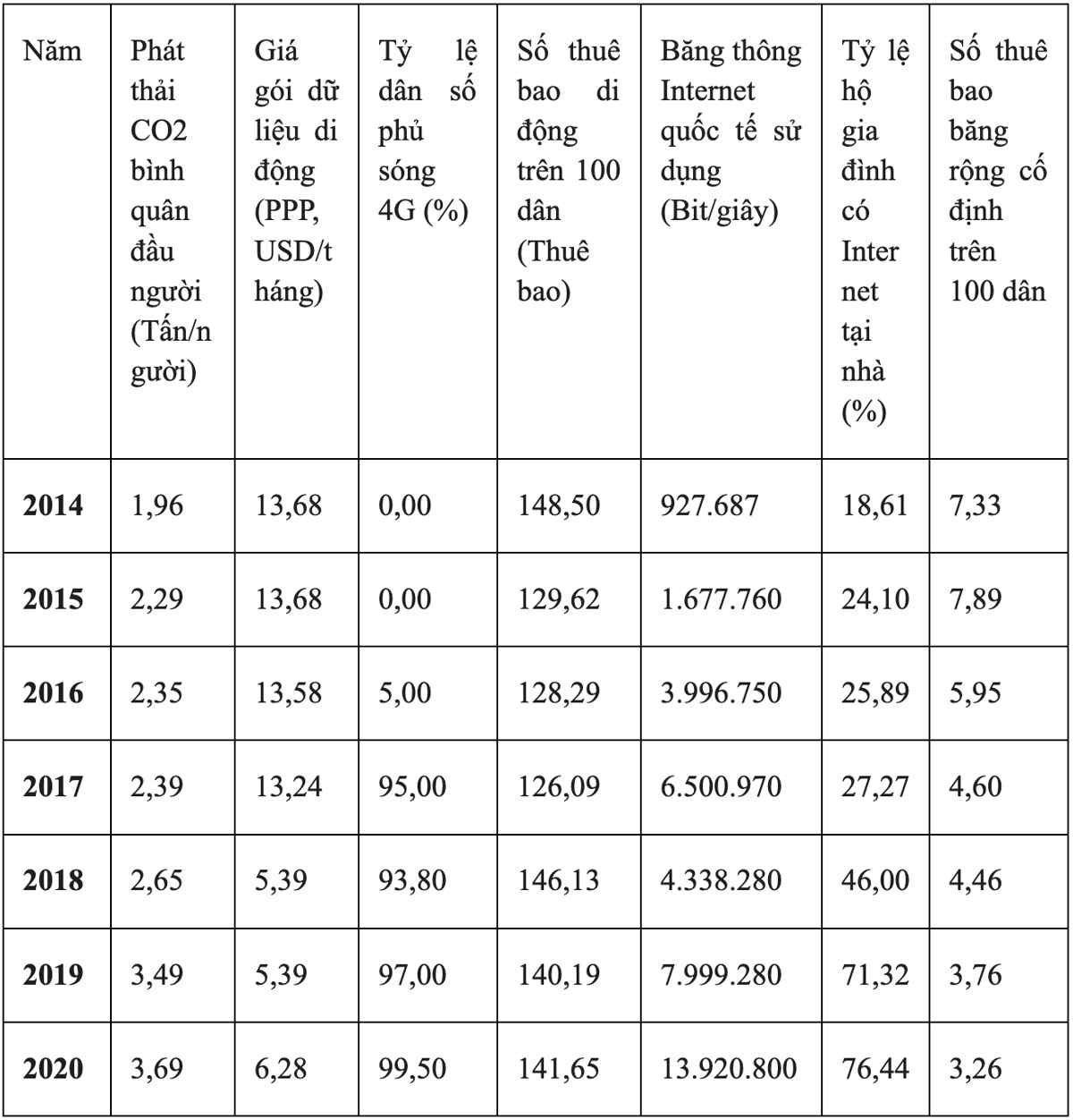
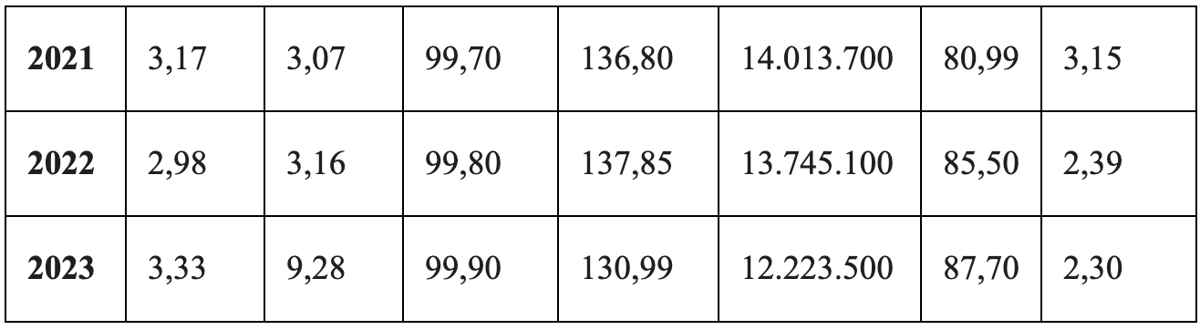
Data in Table 1 shows that Vietnam's per capita C02 emissions increased by about 70% after ten years, peaking at 3.69 tons in 2020 before a slight adjustment thanks to the integration of renewable energy sources accounting for about 25% of the national electricity capacity in 2023.
The central role of businesses in the energy transition ecosystem
Businesses are the investors and practical operators of clean power source projects
In the energy transition institutional structure, the state plays a role in creating policies and shaping planning, but businesses are the central actors directly deciding the success or failure of this process. All strategic ideas, all emission reduction scenarios in NDC or the adjusted targets of Power Plan VIII can only turn into material strength when there is the investment and practical operation participation of the Vietnamese business community.
It is worth mentioning that without investment from private capital sources, energy transition cannot be successfully implemented. Mobilizing huge investment capital of an estimated nearly 136 billion USD for the development of power sources and transmission grid of Vietnam by 2030 will exceed the balancing capacity of the public budget. State capital can only play a leading role, while most financial resources must be unlocked from the private sector, high-quality FDI capital flows and international financial institutions through multilateral cooperation mechanisms. Businesses not only stand out to build offshore solar and wind power farms or LNG power plants running on land, but are also the direct subjects implementing the conversion of production technology towards energy saving at processing and manufacturing industrial plants.
International carbon barriers and ESG compliance requirements for Vietnamese businesses
The participation of businesses in energy transition is no longer a voluntary encouragement activity or mere social responsibility, but has become a mandatory compliance requirement to survive in the global market.
From 2026, when the European Union's Carbon Border Ajustment Mechanism (CBAM) officially applies, the obligation to report and tax carbon on imported products, Vietnamese export enterprises will face the risk of completely losing competitive advantage if they do not soon "green" the energy source used in the production process. This pressure is not only limited to the EU market but is spreading globally, when more than 85% of multinational corporations and foreign-invested enterprises (FDI) in Vietnam require domestic suppliers to prove the roadmap for indirect emission reduction in the entire value chain according to Scope.
This trend is also directly affecting the transportation industry. For example, in the field of civil aviation in Vietnam, according to the roadmap of Decision No. 876/QD-TTg, airlines are required to optimize their fleet and apply sustainable aviation fuel (SAF) from 2027 to avoid being excluded from sustainable linked financial funds. Therefore, businesses' proactive shift to renewable energy use is the only way to protect strategic export markets worth tens of billions of USD as well as expand higher markets and value chains in the global supply chain.
Vietnam's industrial capacity and technological gap
Although playing a decisive role, the industrial capacity of the domestic private sector is still limited, creating a major barrier to the energy transition process. Statistics on the UNIDO Industrial Competitiveness Index (CIP) show Vietnam's significant progress in recent years when it increased from 69th in 2006 to 31st in 2022, surpassing many countries in the region such as Indonesia and the Philippines.
Table 2: Industrial Competitiveness Index (CIP) ranking of some ASEAN countries (2006-2022)
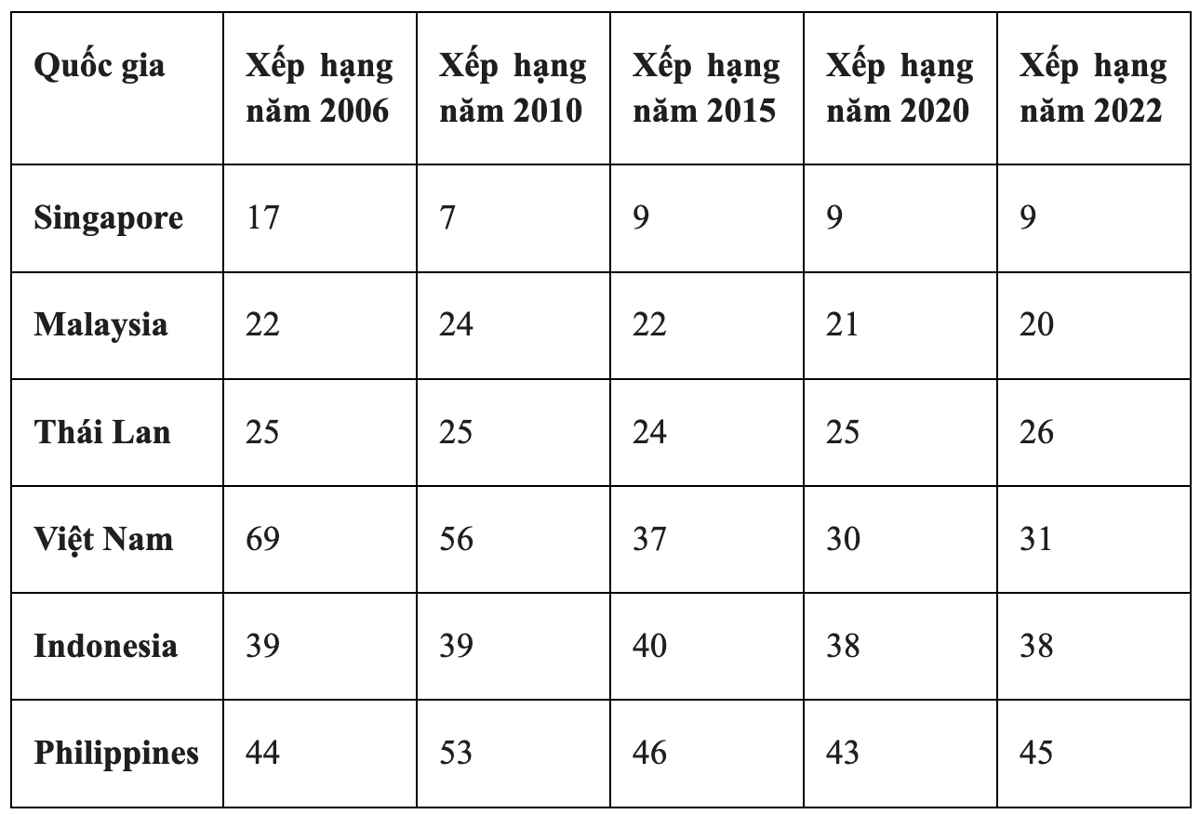
However, in-depth analysis of growth quality shows that Vietnam's CIP ranking increased mainly thanks to export activities of the foreign direct investment (FDI) sector, which accounts for more than 75% of the country's total export turnover in 2025. Domestic added value (MVA) content in Vietnam's total exports is very low compared to countries in the region. The technological capacity of domestic private enterprises is still very weak, with the proportion of domestic component supply for high-tech industries only reaching about 10%, and most primary suppliers are foreign enterprises operating in Vietnam. The great dependence on imported technology, the shortage of highly skilled labor specializing in new energy such as ammonia or green hydrogen, and low energy efficiency in industrial production (CO2 emissions of the manufacturing industry increased sharply from 0.54 kg/US$ in 2017 to 1.1 kg/US$ in 2020) are major internal challenges hindering businesses from actively participating in the transition.
Linking "four houses" in green transition and renewable energy
To overcome the technological gap and unlock resources, the establishment and effective operation of the "four-house" linkage model including managers, scientists, businesses and banks is an urgent requirement. In this ecosystem, each entity plays the role of a mutually supportive link:
(a) The manager promulgates mechanisms, policies, technical regulations and supervises implementation;
(b) Scientists at research institutes and universities focus on researching, mastering core technology and transferring environmentally friendly solutions;
(c) Enterprises are the central force for applying technology, financial investment and product commercialization;
(d) Banks and financial institutions provide green credit packages, issue green bonds and support long-term loans.
However, the reality over the past time shows that this linkage is still loose. Businesses and scientists have not found common ground due to the lack of a clear mechanism for benefit and risk sharing, post-research technologies have not met the requirements of commercialization, while commercial banks are still hesitant to disburse green credit packages due to the lack of a national green technical standard system to assess project risks.
Analyzing institutional - policy barriers for businesses when participating in renewable energy transition
Financial barriers and "thirst" for green credit capital
Capital is always the first and biggest bottleneck that makes businesses hesitant when entering the energy transition journey. Initial investment for large-scale renewable energy projects - such as offshore wind power with complex seabed survey costs, imported LNG power or investment in installing energy storage batteries (BESS) systems is extremely expensive, exceeding the financial balance of most domestic private enterprises. A survey by business associations shows that more than 90% of Vietnamese businesses are not financially ready for green transition. Specific barriers in mobilizing green credit capital include:
Lack of and synchronization of green credit policy institutions: Although Vietnam has issued a set of unified green project classification criteria compatible with international sustainable classification standards, guiding and implementing documents are still not synchronized and specific. This makes it difficult for commercial banks to build environmental - social risk assessment (ESG) procedures and apply them to internal credit ratings. The financial risk of new renewable energy projects has not been accurately valued, leading to domestic financial institutions applying very strict lending conditions, requiring high collateral assets similar to commercial real estate projects.
The domestic green capital market is still too nascent: The issuance of green bonds and carbon certificates in Vietnam has only stopped at small pilot programs, not forming an effective medium and long-term capital mobilization channel for businesses. Domestic businesses are almost unable to directly access large international green finance sources due to lack of world-standard ESG certification. Although localities such as Hue city have proactively promoted economic diplomacy in June 2026 to seek green financial resources directly from European financial institutions in Luxembourg and Belgium, this is still only a localized solution of a few leading localities, not yet able to fundamentally solve the "capital thirst" of hundreds of thousands of businesses nationwide.
Lack of substantive and synchronous incentive mechanisms
Businesses operate on the principle of optimizing costs and profits. The lack of clear, continuous and long-term economic incentive mechanisms by the state makes businesses see green transformation investment as a financial burden that reduces short-term profit margins, rather than an opportunity to create long-term added value. Specifically, some institutional and policy incentive issues that are neglected and hinder businesses have been mentioned recently such as:
Policy gap after FIT prices expire: The shift from the fixed support price (FIT) mechanism to the competitive bidding or preferential pricing (FiP) mechanism is too slow and unsynchronized. The lack of an official and continuous renewable energy electricity price framework makes it impossible for investors to calculate the expected cash flow of the project in the long term to develop capital recovery plans and negotiate contracts with credit institutions.
Not yet applying a two-component electricity price mechanism: Vietnam's current electricity price system still applies a single-component price mechanism (only calculated based on electricity generated on the grid). The failure to separate power price (paying for the availability of flexible power sources) from electricity price (paying for actual output) completely eliminates the motivation to invest in battery storage systems (BESS) and flexible gas power plants. Investors cannot compensate for the very large fixed investment costs of the BESS system when the system is not mobilized to generate electricity continuously, although the presence of BESS is a mandatory technical condition to stabilize the power grid when the integration rate of solar and wind power is increasing.
The carbon mechanism has not been clearly defined: Although the carbon market is expected to create a "new type of asset" and a large source of income for green businesses, the slow operation of the official carbon exchange makes businesses lack strong financial tools to compensate for conversion costs.
Belief in the stability of policies and legal "gray areas
Business confidence in the stability and consistency of renewable energy policies in Vietnam has been significantly reduced in the past due to inadequacies and actual operating risks as a consequence of financial risks of FIT transitional projects as mentioned above. Dozens of wind and solar transitional projects have completed construction investment but have not had time to enjoy FIT preferential prices and have had to go through a multi-year price negotiation process with EVN in a financial deadlock. The fact that projects have to operate temporarily at very low estimated prices, not enough to pay principal and bank loan interest, has created a large wave of concern in the community of private investors and international financial institutions about policy cash flow risks.
In addition, renewable energy development enterprises also face the risk of capacity reduction due to system overload. The fact that the national transmission grid has not been invested in and developed to be compatible with the explosion rate of scattered renewable energy sources has led to local overload in some central and southern regions.
The overlap and contradiction between legal documents is also an important policy risk. Large-scale renewable energy projects are subject to simultaneous adjustment by many specialized laws. The lack of consensus between the Planning Law, Land Law, Forestry Law and Electricity Law related to land acquisition procedures, conversion of natural forest land use purposes to energy project construction land creates prolonged legal "gray zones". For offshore wind power, the lack of clear regulations on the scope, order of procedures for licensing marine resource surveys and sea area allocation makes no large project able to officially start construction, regardless of the extremely ideal natural potential of Vietnam's 3,000 km long coastline.
Policy solutions to remove obstacles for businesses participating in renewable energy transition
Vietnam needs a strong change in thinking in institutions and policies for the energy market in general, and renewable energy in particular: shifting from an administrative command mechanism to a market mechanism to optimize resources and reduce conversion costs.
The first is to drastically implement the direct electricity purchase and sale mechanism (DPPA), which is the "golden key" to solving the clean energy needs of large manufacturing enterprises, especially foreign investors. It allows enterprises to purchase electricity directly from renewable energy project developers without necessarily going through EVN in the traditional way. This not only helps enterprises achieve green certification but also promotes a wave of private investment in new power sources in a competitive and transparent direction.
The second is to drastically implement a carbon pricing and carbon tax system based on the recommendations of the World Bank. Vietnam needs to design a fair carbon pricing roadmap in which revenue from carbon taxes and sales of emission quotas needs to be reinvested directly in green infrastructure and support new technologies such as carbon capture. Carbon pricing will send a strong price signal to the market, encouraging businesses to abandon outdated and energy-intensive technologies.
Third is to promote institutional reform and green financial policies, combining fiscal tools: the implementation and promulgation of specific institutions in the field of capital and credit associated with the "Green Taxonomy" list is clearly extremely urgent for banks to confidently disburse. In addition, the state needs to consider innovative financial tools such as: Parametric Insurance: Encouraging quick payment based on triggering factors of natural disasters (such as storm intensity or flood level), helping businesses recover production rapidly. Land and real estate tax adjustment: Preventing infrastructure construction in areas with high risk of natural disasters, while providing tax incentives for projects that meet green building standards and are climate-resistant.
Fourth, simplify administrative procedures and reform the electricity market bidding process, for example, applying the one-stop competitive bidding mechanism, unifying the bidding process to select investors in localities based on technical criteria, financial capacity and clear environmental safety etc. For projects that have won bids through public competitive bidding, the winning bid price must be included directly in the PPA contract as the official electricity purchase and sale price. It is necessary to completely terminate the prolonged bilateral price negotiation process between EVN and contractors after the bidding results have been available to cut off overlapping administrative procedures and accelerate the project commencement progress.
Conclusion
The transition to renewable energy and sustainable development is not just a simple environmental goal to meet international commitments, but a profound revolution in institutions, technology and economic development models of Vietnam in the era of national rise. In this revolution, businesses play the role of the main driving force and the actual operating entity of clean power projects. Strategic priorities are to create an institutional and technological environment for businesses to invest in green models; policies should go hand in hand with infrastructure, human resources and innovation.
The difficulties that have made businesses slow to participate in the transition in the past time are not due to the shortage of natural resources or the limitations of technical solutions, but due to bottlenecks in green financial institutions, the lack of substantial economic incentive mechanisms and policy risks in electricity purchase and sale contracts. Therefore, Vietnam urgently needs to build a stable policy framework to encourage investment in clean energy, low-emission technologies and new business models based on the green economy and circular economy.
Policies on green growth and renewable energy should focus on developing strategic energy infrastructure to international standards, testing institutions (sandboxes) and supporting conditions for businesses to participate in the green value chain. The active companionship of the State in the role of creator, businesses in the role of pioneering action, scientists in the role of leading technology and the banking system in the role of unlocking capital flows will be a solid foundation to successfully realize Vietnam's Net Zero commitment by 2050, protect national energy security and create a green future for future generations.



