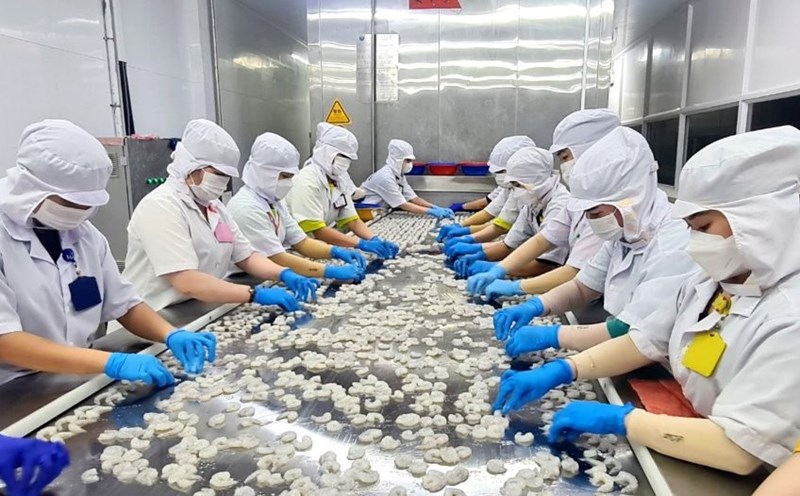
Ca Mau has about 303,264 hectares of aquaculture area. With this area, it is considered the province with the largest aquaculture area in the country.
The province's annual export turnover reaches 1.2 billion USD. Specifically, in 2023, seafood export turnover to the US market will reach 70.98 million USD, accounting for 5.91% of the province's total export turnover. In 2024, it will reach 76.78 million USD, accounting for 6.07% of the province's total export turnover.
Immediately after the US temporarily postponed the countervailing tax, raw shrimp prices in the market are gradually stabilizing and increasing slightly again. The price of white-leg shrimp with 20 shrimp/kg is 200,000 VND, an increase of 10,000 VND/kg; the 30 shrimp/kg is 146,000 VND, an increase of 7,000 VND/kg; the 40 shrimp is 127,000 VND, an increase of 5,000 VND/kg compared to the time of tax announcement.
With the current stable prices, after deducting expenses, shrimp farmers will make more profits than before.
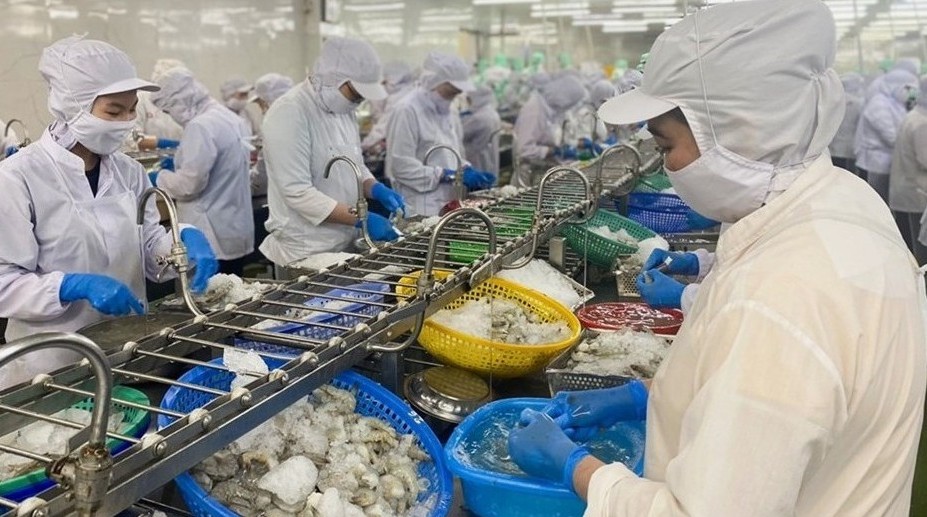
Previously, on April 2, the US announced a counterpart tax rate of 46% on goods from many countries when imported into the US market, the price of raw shrimp in the Mekong Delta region, including Ca Mau province, has decreased by 10-20 thousand VND/kg, depending on each segment and shrimp size.
According to the Department of Agriculture and Environment of Ca Mau province, currently the area of combined crop shrimp farming is 81,325.28 hectares, farmers are raising 99% of the area; improved crop shrimp farming is 190,805 hectares, currently raising 100%; intensive and super intensive shrimp farming is more than 6,400 hectares with 7,272 households, reaching 95.4% of the plan, equal to 97.4% over the same period.
Director of the Department of Industry and Trade of Ca Mau province Nguyen Chi Thien said that Ca Mau has 5 large seafood processing and exporting enterprises, ensuring the consumption of all local shrimp.
According to Mr. Thien, the announcement of the US general tax rate for Vietnam at 46% has caused some fluctuations in production, including the shrimp production activities of Ca Mau. Currently, the US is temporarily suspending taxation, but businesses still need to seek new markets, lower product prices, invest in technology... to increase the value of shrimp.
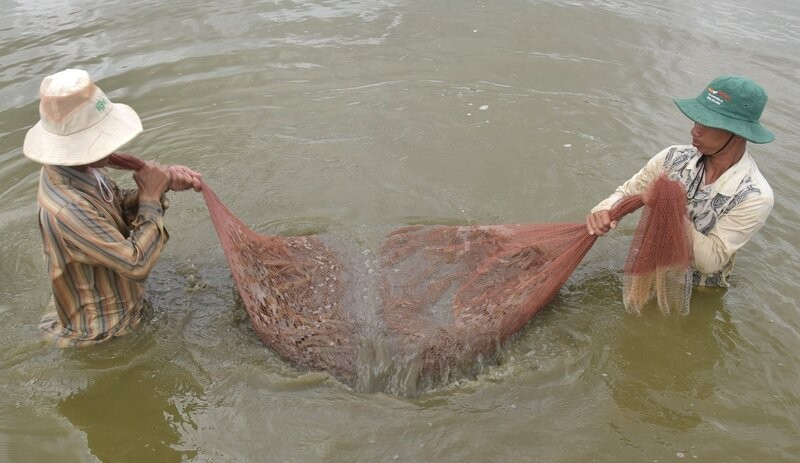
According to the Vietnam Association of Export-Import Seafood Processors (VASEP), although the decision to temporarily postpone the counterpart tax from the US side helps export businesses "ease their breathing" and finalize orders with partners, in reality, risks are still hidden and risks of trade defense are still present.
To overcome challenges, facing risks of trade barriers, seafood exporting enterprises are taking advantage of the time frame to adjust production and business strategies; focusing on investing in deep processing and building the brand "Vietnam Shrimp" associated with quality, sustainability and transparency.
In addition, businesses are stepping up the exploitation of free trade agreements FTA such as EVFTA, CPTPP, RCEP... to expand to potential markets with large shrimp consumption needs such as: Japan, Korea, Canada, Europe... to compensate for orders in the US market if the counterpart tax rate is not changed in the direction that businesses expect when passing the 9-day tax deferral mark.