
On May 20, in Hanoi, Politburo Member, National Assembly Chairman Tran Thanh Man had a working session with the Standing Committee of the Economic and Finance Committee on key tasks for 2026 and the 2026 - 2031 term.
Concluding, the National Assembly Chairman requested the Committee to proactively implement the law-making program of the 16th National Assembly, especially draft laws and resolutions directly related to the fields of economy, finance, and budget.
The Committee needs to be more proactive in policy advisory work, ensure proper procedures, improve policy quality, and cannot reduce policy depth due to schedule pressure.
Along with building new policies, the Committee needs to review current regulations to detect bottlenecks and inadequacies, thereby proposing timely amendments and supplements.
It is necessary to clarify the responsibilities of each ministry, sector, and locality, as well as the responsibility of the National Assembly in issuing policies and mechanisms to promote growth. The solutions proposed must have a practical basis, have a responsibility address, and avoid being general and infeasible.
The National Assembly Chairwoman also noted that it is necessary to urgently innovate the method of thẩm tra, from thẩm tra dossiers to thẩm tra policies. Through this, the Committee needs to strongly shift from thẩm tra in the style of "reading dossiers, giving technical advice" to thẩm tra based on policy analysis, data, impact assessment and risk forecasting.
In particular, the Economic and Financial Committee must participate right from the policy formulation stage, not wait until the dossier is submitted for verification.
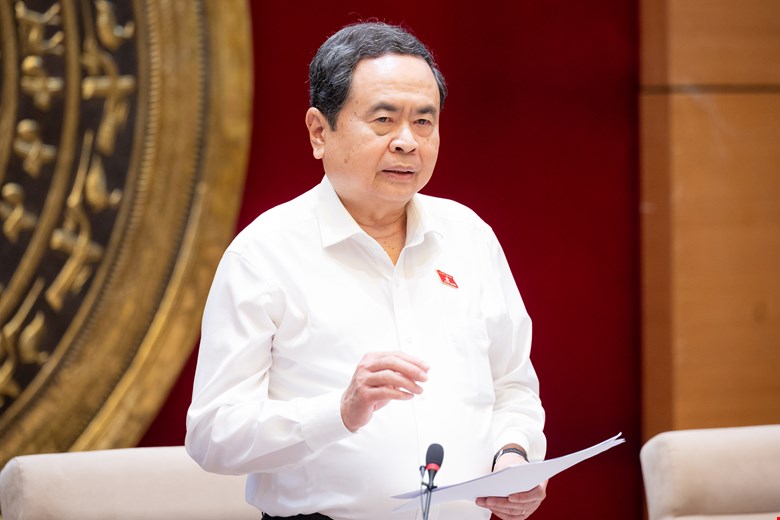
Emphasizing the issue of maintaining financial and budget discipline, paving the way for development, the National Assembly Chairwoman clearly stated that all proposals to increase expenditures, reduce revenue, exempt and reduce taxes, issue bonds, borrow debts, guarantees, public investment, and use of public assets must be strictly and in principle, in accordance with the law.
The Committee must help the National Assembly design mechanisms that are safe enough for development, flexible enough to unlock resources, transparent enough to control risks, and responsible enough to avoid loss and waste.
Financial discipline must be strict, but development policies must be open; management must be strict, but must not constrain resources; macroeconomic stability must be solid, but must not miss growth opportunities.
Along with that, the Committee focuses on supervising a number of key areas, including public investment efficiency; financial and budget discipline; public debt and public asset management; financial markets, securities, corporate bonds, insurance, banking, real estate;
Effectively supervise policies to support businesses, develop the private economy, state-owned enterprises, PPP models and the mobilization of social resources.
The National Assembly Chairwoman noted that every policy has its advantages and disadvantages; the advantages must be determined to do, and the disadvantages must be identified, monitored, and strictly controlled, and development opportunities must not be slowed down due to risk concerns. If policies are good but implemented slowly and do not go into life, they must be inspected, clarified the causes, and proposed handling.


