
On the afternoon of December 16, a conference was held in Ho Chi Minh City to summarize market management work in 2025 and deploy directions and tasks for 2026.
According to the representative of the Domestic Market Management and Development Agency (DMA), in 2025, the entire Market Management Force inspected 27,540 cases; detected and handled 23,402 violations; collected nearly 372 billion VND for state budget contributions; total value of violating goods was nearly 290 billion VND; down 31.76% over the same period in 2024.

For inspections, the violations mainly focused on trading in goods of unknown origin; counterfeit goods, goods violating intellectual property rights; violating regulations on prices, business conditions and food safety. The violating items include frozen foods, candy, alcohol, cigarettes, cosmetics, clothes, shoes, agricultural supplies, electronics and accessories.
Many typical cases have been discovered and handled such as: A series of inspections of fashion businesses in Saigon Square, inspections of smuggled milk warehouses in Bach Mai (Hanoi), more than 1 ton of candy of unknown origin in Ho Chi Minh City, thousands of An cung Nguu Hoang Nam Duong pills in Quang Ninh...
Notably, violations in the e-commerce environment continue to increase and develop complicatedly, posing many challenges for market management and control.
In addition, livestream sales on social networks are taken advantage of to consume fake, poor quality, and unsafe food, with the trick of advertising exaggeratedly, labeling "hand-carried items", "regional specialties", "working houses", "100% clean" or using KOL/KOC to create trust.
Some booths also posted false information, using documents and quality declarations that were expired, edited or from other traders to deceive consumers.
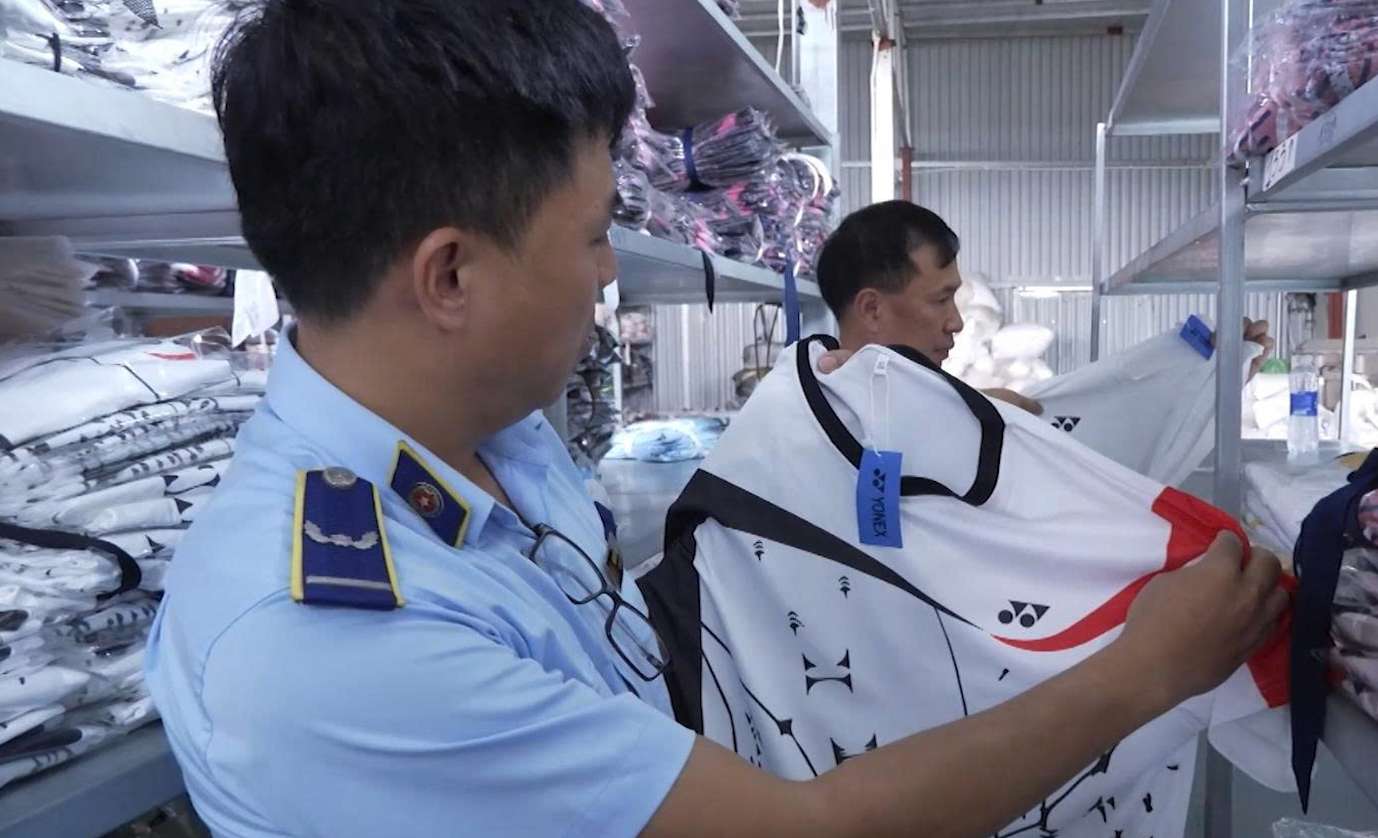
Faced with this situation, the Market Management force has increased inspections of warehouses, processing facilities, gathering points, and monitored online advertising and sales activities; coordinated with the Police, Customs, Health and e-commerce platforms to track down and strictly handle violators.
The Market Management Force also promotes propaganda and warnings to consumers in an intuitive direction, making it easy to identify fraudulent behavior.
However, besides the achieved results, market management in 2025 still has some limitations. The transformation of organizational structure in some units has not been promptly improved in terms of personnel, titles and conditions to ensure operations, leading to a time when stability and continuity in local management have not been guaranteed.
In addition, the rate of administrative sanctions for violations in the e-commerce environment according to current regulations is still low compared to the actual situation, not meeting management requirements in the context of increasing violations.
Determining that 2026 is the year to continue to strengthen discipline, improve the effectiveness and efficiency of market management, the Domestic Market Management and Development Agency focuses on synchronously implementing resolutions and directives of the Party, State and Government on preventing and combating smuggling, trade fraud, counterfeit goods and infringement of intellectual property rights.
According to the task orientation, the Market Management Force will proactively monitor and analyze domestic and international market developments; increase forecasting and warning of the risk of supply shortages and price fluctuations of essential goods; deploy focused and key inspection and control work, focusing on areas that directly affect people's health and business activities in the e-commerce environment.
Along with that, the Department continues to strengthen the coordination mechanism between local market forces with functional forces, industry associations and intellectual property entities; strengthen control of the supply chain of goods from production, circulation to distribution.


