
16 months of creation, 25 years of operation and impressive numbers
In August, in the southern Savannakhet valley, dozens of fans belonging to the Savan 1 renewable energy project still rotate steadily amidst the famous Lao winds. From an altitude of nearly 200 m, electricity is quietly generated, crossing the border before integrating into the national power system.
Few people know that, to create that electricity flow, the entire Savan 1 development process, from legal completion, plant construction to investment in a separate 220 kV transborder transmission line, only took place in about 16 months - a rare rate for wind power projects on the Southeast Asian coast.
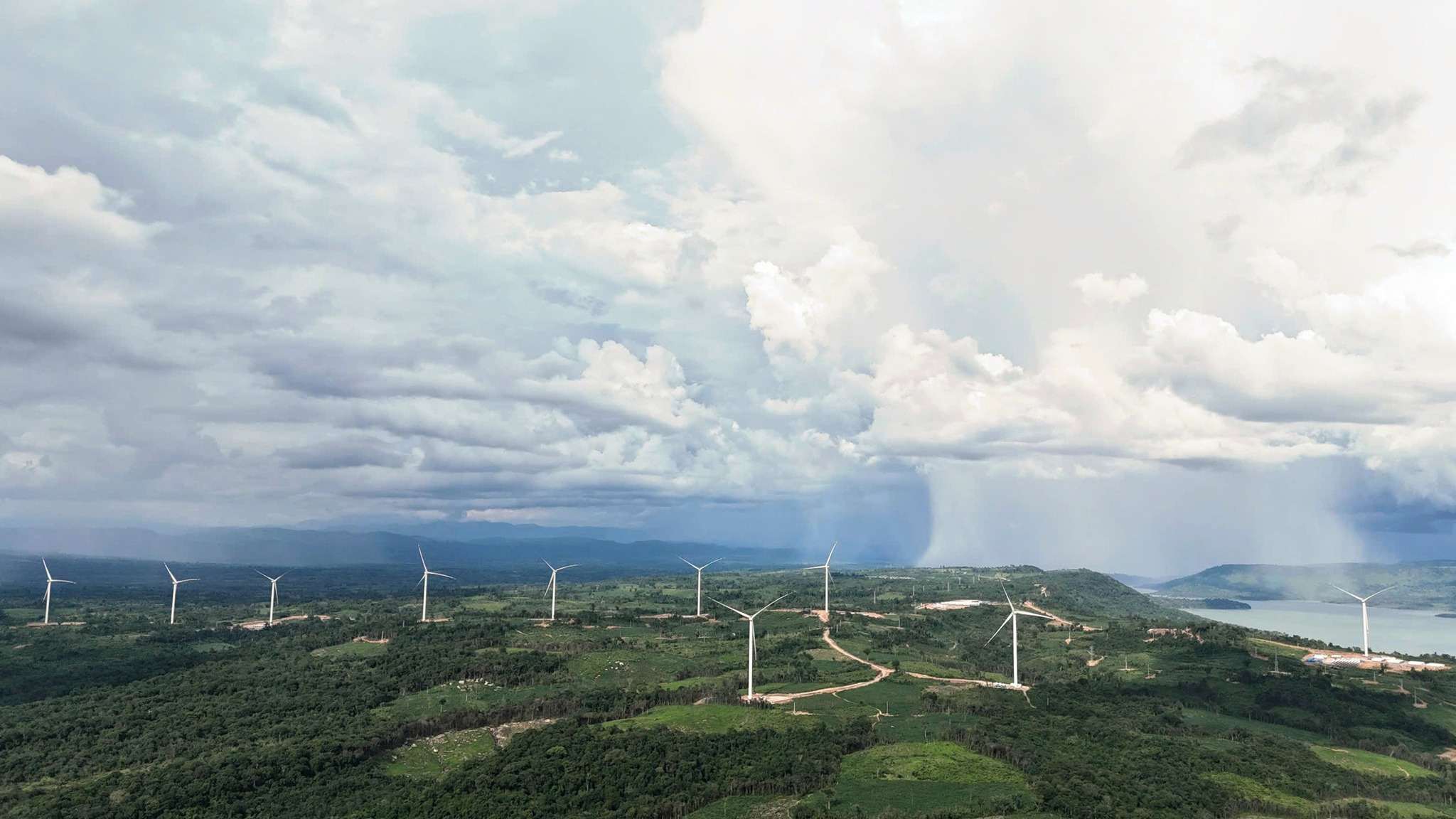
However, with Savan 1, the creation miracle is the shortest part of the journey. The project ahead is still a quarter of a century of operation with a concession contract previously granted by the Lao Government.
Notably, in phase 1, with a scale of 300 MW, Savan 1 provides about 0.9 billion kWh of electricity/year. On average, nearly 2.5 million kWh of electricity will be generated from Central Laos before being transmitted to Vietnam.
But that is only the starting point. According to the plan, phase 2 will be completed by the fourth quarter of 2027, raising the total capacity of the entire project to 495 MW. At that time, the annual electricity output is expected to reach about 1.4 billion kWh.
To visualize this scale, it is necessary to place Savan 1 in relation to the Vietnamese power system. According to EVN, the total electricity production and import of the whole country in 2025 reached 322.8 billion kWh. This means that when fully operating, Savan 1 alone will contribute electricity equivalent to about 0.43% of the national electricity output.
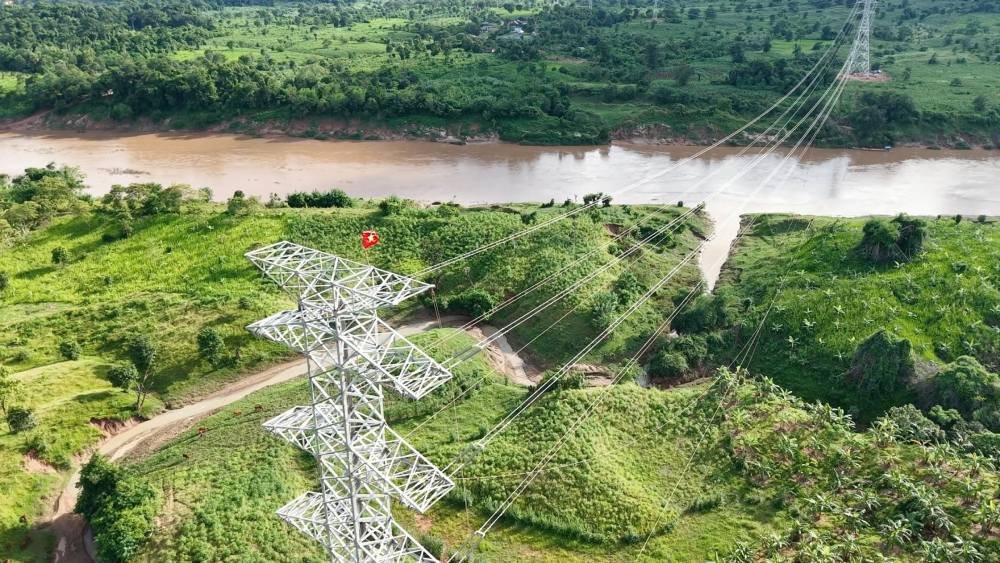
But the real value of the project does not lie in one year of operation. According to the concession contract, during 25 years of operation, Savan 1 is expected to generate about 35 billion kWh of electricity. This number is equivalent to nearly 40 days of electricity consumption of the entire domestic economy according to the scale of 2025.
Regarding revenue, Savan 1 has also recorded positive signs right from the early stages of operation. After only 7 months of commercial operation, the factory has brought in about 36.5 million USD in revenue.
According to calculations, phase 1 alone with a capacity of 300 MW can generate about 62.5 million USD per year. When the entire 495 MW project is completed in 2027, revenue is expected to increase to 97.3 million USD/year, equivalent to more than 2.43 billion USD in the entire life cycle of a quarter of a century of the plant. This figure is nearly 3.2 times higher than the initial total investment (about 768 million USD).
Another interesting detail is the comparison between the formation time and the project's "lifespan". It only took 16 months to build, but Savan 1 has up to 25 years to operate. In other words, each month of construction, the project will have nearly 19 months to generate electricity and the next cash flow.
Evaluated from an investment perspective, Savan 1 has many characteristics of a long-term infrastructure asset: Large resources, strong financial arrangement capacity, organizational capacity, synchronous deployment to shorten construction time but still ensure quality. In return, the business will have stable cash flow for decades.
In infrastructure economics, the value of a project is measured by the ability to convert initial investment capital into long-term cash flow. With Savan 1, T&T Group used 16 months of construction to exchange for 25 years of operation; 768 million USD of investment capital is expected to generate more than 2.43 billion USD of revenue; while the wind valleys in Savannakhet are gradually becoming a cross-border infrastructure asset capable of creating long-term economic value.
From rivers to new energy space
To better understand Savan 1's position in T&T Group's long-term energy strategy as well as in the regional linkage picture, it is necessary to first look back at the history of energy cooperation between the two neighboring countries Vietnam and Laos.
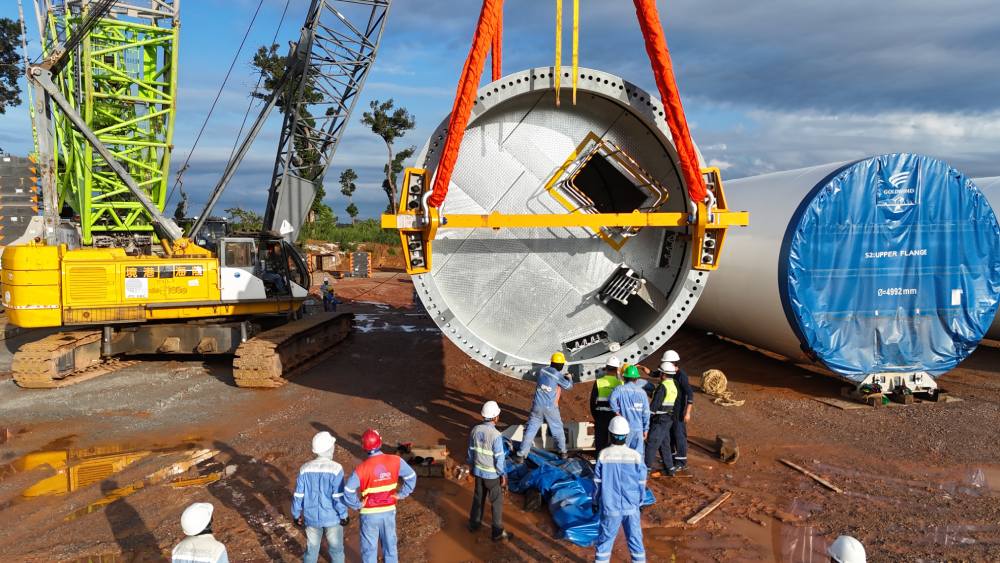
For more than two decades, that journey has undergone a remarkable shift: from hydropower plants on the Mekong River and its tributaries to large-scale renewable energy projects taking shape.
In the early 2000s, when Vietnam's electricity demand increased rapidly along with the industrialization process, Vietnamese businesses began to look at Laos as a natural complementary development space. From Xekaman 1, Xekaman 3, Xeset to Nam Mo, hydropower projects successively went into operation, creating the first power corridor connecting the two countries.
Over the next 10 years, the picture began to change. Hydropower potential in Laos was no longer as abundant as before, while Vietnam's electricity demand continued to increase along with urbanization and production expansion. Environmental and emission pressures were also increasingly clear. Vietnam-Laos energy cooperation faced the requirement to shift from traditional energy sources to cleaner and more sustainable energy forms.
In this period, many Vietnamese businesses began to research and propose renewable energy projects in the Land of the Million Elephants. Wind power is seen as a potential direction, in line with the energy transition trend of the region.
The shift continues to be accelerated after the summer of 2023. Prolonged heat waves and power shortage pressure in the North raise the requirement to diversify the power structure, expand regional linkage space and improve long-term energy security assurance capabilities.
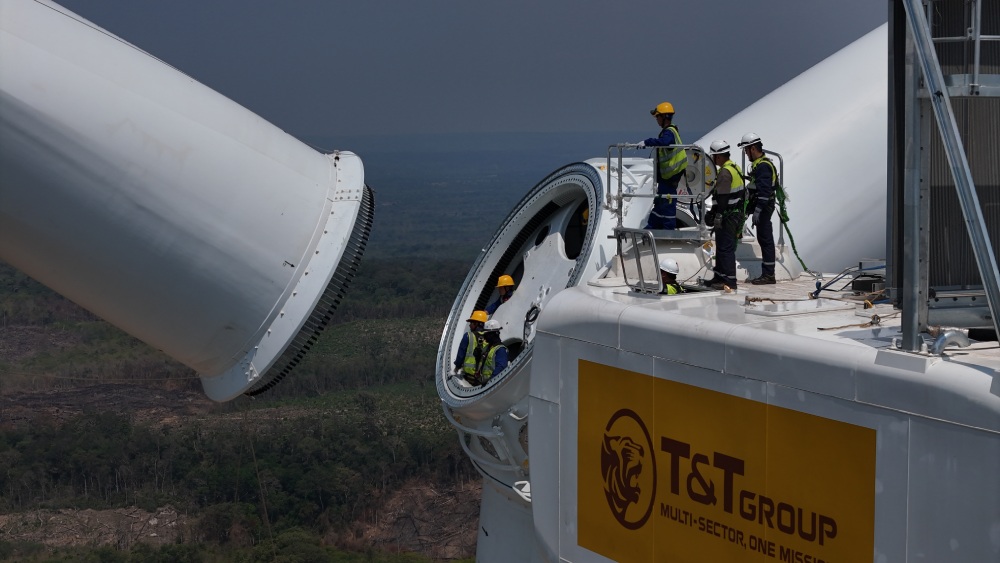
Not long after, Power Plan VIII was approved, setting out a direction to pay attention to investing and exploiting power sources abroad to supply Vietnam. By the adjusted Power Plan VIII in 2025, this thinking continued to expand as the development of renewable energy and new energy was identified as the foundation for forming an energy industry ecosystem in the future.
In that context, Savan 1 appears as a milestone of a transitional period: Developing large-scale renewable energy projects outside the territory to participate in the green energy corridor that is forming between Vietnam and the region.
Assessing the project, Vietnamese Ambassador to Laos Nguyen Minh Tam affirmed that Savan 1 is one of the typical projects in the field of cross-border renewable energy, contributing to concretizing the goal of increasing electricity imports under the Agreement between the two Governments of Vietnam and Laos, while affirming the increasingly clear role of the private economic sector in large-scale infrastructure projects with transnational elements.
Returning to Savan 1's next journey, if operated according to plan, the turbines at Savannakhet will rotate to 2050, which is almost completely accompanying the journey to realize the goal of making Vietnam a developed, high-income country by 2045. This is also the direction just emphasized in Resolution No. 19-NQ/TW dated July 28, 2026 on innovating the country's development model, with the goal of building a self-reliant, innovative, sustainable and integrated economy.
That transition process will lead to increasing demands for the scale, stability and reliability of energy supplies, as technology, data and innovation become new growth drivers of the economy.
Looking from this perspective, Savan 1 is not only a cross-border wind power project, but also reflects how a Vietnamese private corporation is preparing resources for the next stage of development of the country. With T&T Group, Savan 1 is also a link in the long-term energy strategy that the corporation is pursuing. To date, T&T has invested and developed an energy portfolio with a total accumulated capacity of nearly 2,900 MW, and set a target to increase the scale to 25-30 GW by 2035, gradually becoming one of the leading private enterprises in the energy sector.
During that time, the capital flow of 768 million USD invested in the windy valleys of Central Laos will continue to be converted into electricity, cash flow and new resources for Vietnam's development journey. And, when the concession contract closes around 2050, the windy valleys in Savannakhet may have become part of the energy infrastructure serving the future of powerful Vietnam.


