
Customer care switchboards interact on average tens of thousands of calls with customers each day, but for many years, most of this data has not been effectively exploited to detect operating problems early. This is a common limitation of the traditional switchboard control model, when businesses can only listen to a very small percentage of calls to evaluate service quality.
AI directly involved in switchboard operation
VinaPhone's customer care switchboard currently deploys an artificial intelligence call analysis system - VNPT iSense to monitor and analyze service quality on 100% of calls, serving customer care activities on a scale of more than 30 million subscribers.
According to Mr. Vu Xuan Nhan - Head of Technology Department, VinaPhone Customer Service Center, iSense directly participates in the switchboard operation process through processing layers such as converting voice into text, analyzing conversation content, recognizing the speaker's emotions and monitoring the professional compliance level of telephone operators in each call.
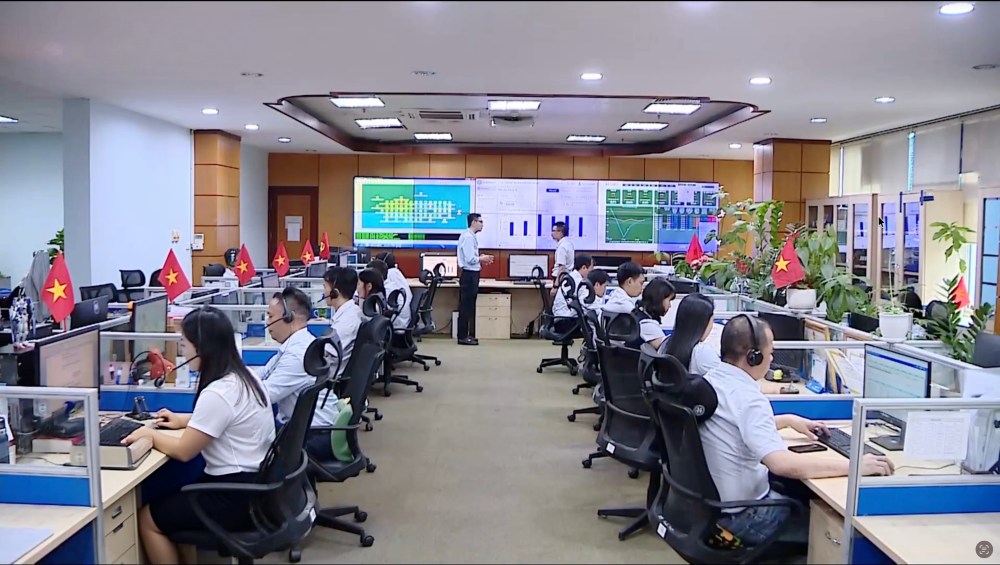
On that platform, Generative AI (generative AI) technology is applied by iSense to understand the context, automatically summarize conversations, classify topics of exchange and synthesize repetitive issues from large-scale call data. Accordingly, instead of just stopping at recording information, iSense helps the operating department to detect early abnormal signs in the service, bottlenecks in customer care processes or issues at risk of complaints. The solution also supports suggesting information and knowledge according to the conversation context, helping call center operators shorten the time to look up and handle situations right in the process of interacting with customers.
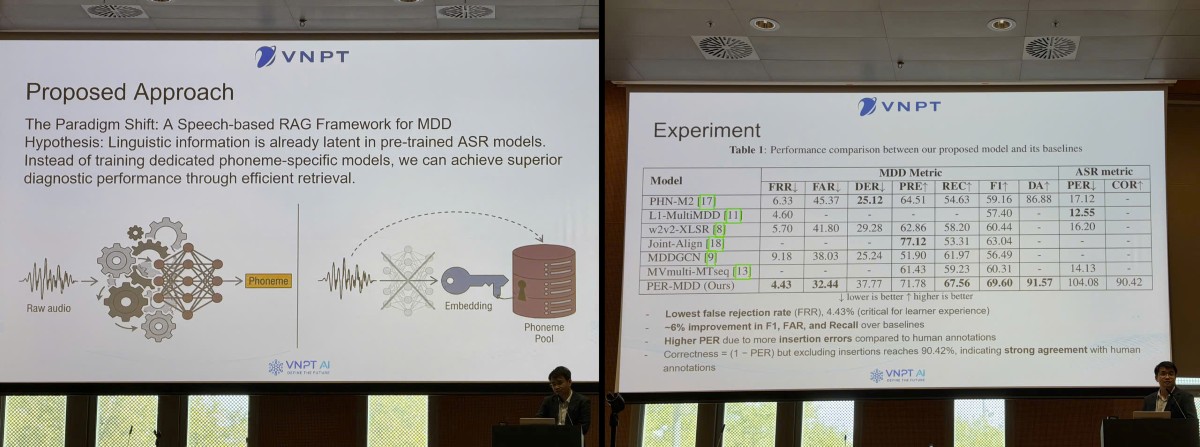
For Generative AI to correctly understand the conversation context, input data needs to achieve very high accuracy in voice recognition. This new approach to technology was just presented by VNPT AI - iSense's development team - at ICASSP 2026, the top 1 international conference on signal and voice processing of IEEE (Barcelona, Spain) on May 6th. In a working session with organizations and universities including Massachusetts Institute of Technology (MIT), Tsinghua University (Thanh Hoa University) and Ant Group (Alibaba)... at the conference, VNPT AI shared and analyzed the effectiveness of the new approach, on the one hand improving performance, on the other hand increasing accuracy compared to old methods. This method has received a lot of attention from the international scientific community.
Mr. Nhan also emphasized that the biggest change after AI deployment is not the replacement of humans, but the ability to expand the scope of quality monitoring on a large scale. "With a large-scale switchboard, it is almost impossible to listen and evaluate all calls manually. AI helps process a large volume of repetitive tasks so that the quality control team can focus more on cases that need professional evaluation," he said.
In 2025, iSense monitored and analyzed more than 30 million calls. The system contributed to reducing about 70% of the manual monitoring volume of controllers, while reducing about 21% of outsourced personnel costs related to switchboard quality control activities.
According to a representative of VinaPhone, when most of the time is no longer spent listening to manual calls, the quality control department has the conditions to focus more on practical operational issues such as handling unusual situations, improving customer care processes or training telephone operators.
AI has the sovereignty to solve the Vietnamese-language switchboard problem
For AI to operate effectively in a Vietnamese-language switchboard environment, the important factor lies in the ability to master data, models and technology optimization processes for practical operation in Vietnam.
One of the biggest challenges when deploying AI for switchboards in Vietnam is the specificity of Vietnamese in a real-life conversation environment. Customers can speak quickly, intermittently, interrupted, use local words or change in tone continuously according to regions and emotions.
To solve this problem, iSense is built in the direction of combining multiple layers of AI technology throughout the conversation life cycle. The system integrates technologies such as speech recognition to convert voice into text, speaker diarization to separate speakers, emotion detection to recognize emotions through sound characteristics, and Generative AI to perform more complex tasks.
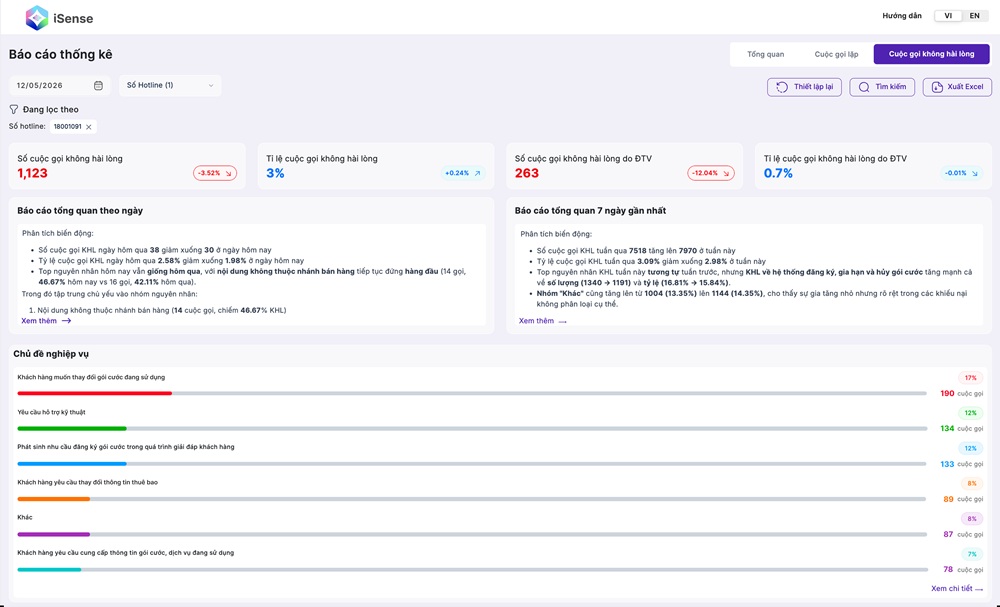
The goal of the system is not only to determine what customers say, but also to support businesses to identify where the problem lies, how the telephone operator handles it and what actions are needed next.
The iSense development team said that the AI models in iSense are optimized in a real-world switchboard environment in many years of operation, analyzing data with diverse regions, intonations and different nghiệp vụ situations. This helps the system optimize more strongly for Vietnamese and the actual communication characteristics of domestic customers.
From a solution perspective, iSense is also designed to be flexiblely customizable according to each nghiệp vụ, each customer group and the enterprise's own analysis criteria instead of applying a fixed set of standards to every switchboard.
According to the development team, this is the advantage of sovereign AI platforms, when businesses can proactively master data, technology and system customization capabilities according to actual operating requirements.


