
Those are very famous verses in the poem "The Vote of Belief" composed by poet Chinh Huu in the days when the whole socialist North was bustling with excitement for the election of the 2nd National Assembly in 1960.
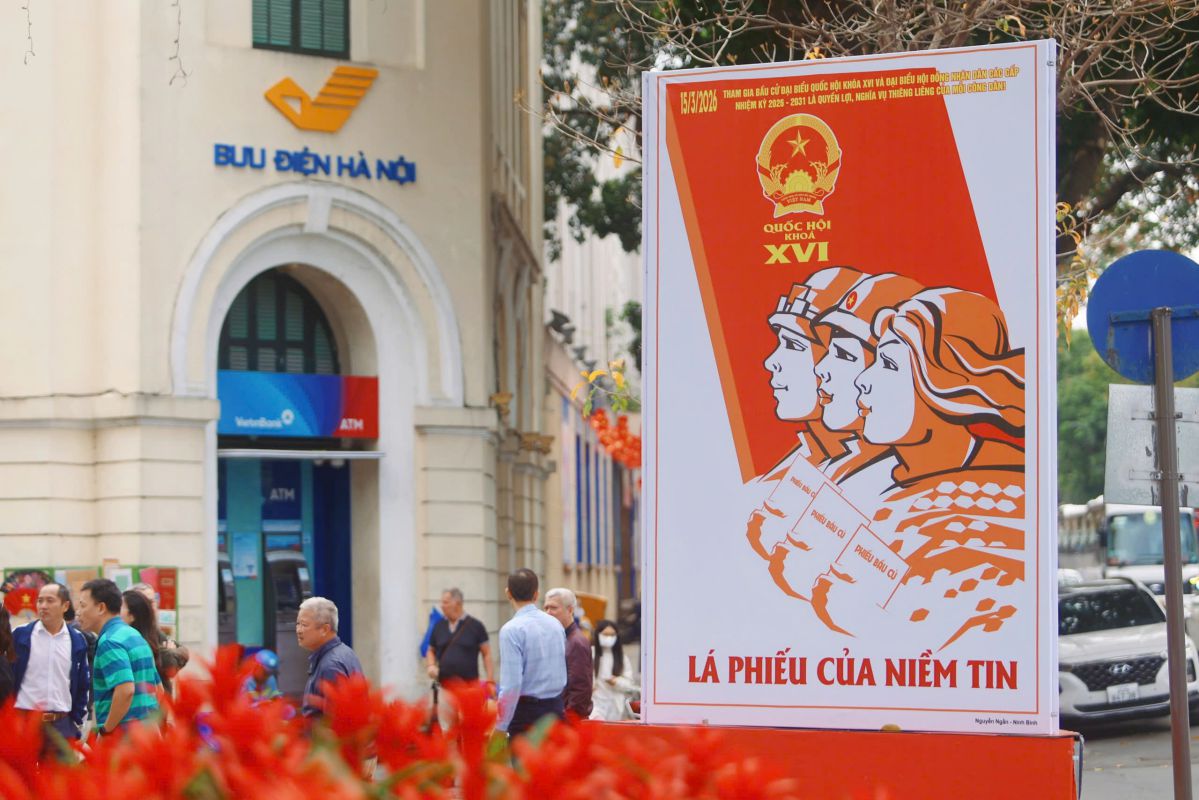
The term of operation of the 1st National Assembly lasted from January 1946 to May 1960, because in the conditions of revolutionary struggle, the country was divided, so it was impossible to organize elections nationwide to elect the new National Assembly. Therefore, the atmosphere of elections in those days was very special. And that specialness became regular in each election. It was not only an important political event of the country but also a great festival of the whole people, where each citizen exercised their rights and responsibilities to the Fatherland. In that festival, from the plains to the mountains, from the mainland to the islands, votes were sent with all faith, expectations and feelings for the future of the country.
Throughout the villages and cities, the roads are filled with flags, flowers, banners, slogans. People in neat clothes, radiant faces come together to the polling station. Those who go to the polls for the first time are excited and nervous; the elderly are quieter but their eyes still shine with joy and pride. Because each ballot is not only an administrative procedure, but also a vivid expression of the people's right to mastery in an independent and democratic country.
Poet Chinh Huu wrote in the poem "Today's Vote": "Each voter is a dreamer". That "dream" is not vanity, but the aspiration and belief placed in the future. The small ballot carries the weight of history, time and hope. Every citizen when placing a ballot in the ballot box is sending a wish: The country is more developed, people's lives are better, and those who are chosen will truly be worthy representatives of the will and aspirations of the people.
Looking back at history, the right to vote of the Vietnamese people is associated with the nation's journey to gain independence. Right in the Declaration of Independence dated September 2, 1945, President Ho Chi Minh affirmed the right to equality and freedom of each person. From there, the people's right to mastery is most clearly expressed through the ballot. Just a few months after the independence day, although the country still faced countless difficulties, the Government still organized the first General Election in January 1946 for the people to choose their National Assembly.
Over decades, memories of the elections are still deeply imprinted in the minds of many generations of Vietnamese people. There are simple but touching stories about farmers, workers, soldiers... how they cherish their votes.
Some people remember the image of a mother in the war years still going to vote amidst the sound of bombs and bullets. Even though planes roar in the sky, even though life is deprived and dangerous, election day still takes place like a festival. People are dressed neatly, red flags flying, the sound of drums and shouts echoing throughout the village. Children who are not yet old enough to vote are also eagerly following the cheering groups.
In the memory of many people, the image of mothers and fathers carefully reading each name on the ballot is a very touching image. They discuss with neighbors, ask for opinions from knowledgeable people to choose the most worthy person. It is not just personal choice, but responsibility to the community, to the country. Some people raise the ballot with both hands before putting it in the ballot box as a solemn and sacred gesture.
**
Today, the country has entered a new stage of development. The level of education has been improved, and the material and spiritual life of the people has been increasingly improved. But the meaning of the ballot is still as intact as in the beginning. Each election is still an opportunity for people to express their right to mastery and choose people who represent the will and aspirations of the people.
In remote border and island areas, soldiers are still eagerly waiting for the election day. The ballot box is solemnly placed under the red flag with a yellow star, next to the sacred sovereignty marker of the Fatherland. For young soldiers who vote for the first time, that moment becomes even more meaningful. They feel more clearly than ever that they are not only a protector of the Fatherland but also a citizen with the right to decide the future of the country through their votes.
It can be said that election day is a festival of solidarity and belief. That is when the hearts of millions of people beat in unison for the Fatherland. From cities to rural areas, from mountains to plains, everyone is heading towards a common goal: Choosing people with sufficient virtue and talent to represent the people, contributing to the development of the country.
A ballot is just a small piece of paper, but its value is extremely great. In that ballot is contained the aspiration for a fair, democratic, and civilized society; contained the belief in the path of national development; and contained the responsibility of each citizen for the future of the nation.
Through each election, that belief is continued and spread. Each citizen's vote is not only a choice for the present but also a message for the future. It is an affirmation that in the country's development journey, the people are always the subject, the greatest source of strength.
And therefore, each election season becomes a memorable milestone. When the ballots are put into the ballot boxes, it is also the time when people's trust is placed in the future of the country, a future that every citizen has the right and responsibility to contribute to building.
Before the election of National Assembly deputies for the XVI term and People's Councils at all levels for the 2026 - 2031 term, many young people who are workers, some of whom have just passed the age of 18 - the right to vote according to the Constitution, said: "We are very excited about the election day because choosing a representative for ourselves to have a voice and contribute to important issues of the country is also the desire for a richer and more beautiful country, so that the lives of the people, especially the lives of our workers, will be warmer and happier".
This is the real psychology that poet Chinh Huu once wrote: "This ballot I give to me". This is not just a democratic right to be maximized. It is a search for talented and virtuous people to converge, to be selected, to be decided through the weight of the ballot's trust. A thin piece of paper containing so many feelings, so many aspirations.
***
If each voter's vote is a seed of faith sown into the future of the country, then the Vietnam Fatherland Front is the one who nurtures those seeds to sprout in the democratic land of the nation. From the early days of independence to the National Assembly and People's Council elections today, the Front has always silently but persistently played the role of a bridge connecting the Party, State and People, so that the election day truly becomes a festival of the great national unity bloc.
In the flow of the country's political life, the election of National Assembly deputies and People's Council deputies at all levels is not just a periodic event as prescribed by law. It is a sacred moment when the people's right to mastery is most clearly expressed. And at the center of that process, the Vietnam Fatherland Front holds a position as both an organization representing the great national unity bloc and a force ensuring democracy, transparency and social consensus throughout the process of preparing and organizing elections.
One of the prominent imprints of the Vietnam Fatherland Front in election work is the role of presiding over the process of consultation, selection and introduction of candidates for National Assembly deputies and People's Council deputies at all levels. This is not only a legal procedure according to the provisions of the Constitution and law, but also a special democratic institution, where the will of many people are gathered, considered and filtered.
A special point in the election process chaired by the Front is the organization of voter conferences at the place of residence to collect opinions and confidence in candidates. This is a very Vietnamese mechanism where community assessment becomes the most accurate measure of the qualities of each candidate.
It is thanks to this mechanism that the principle of "people know, people discuss, people check" is vividly implemented in cadre work through elections. Cases that do not meet the prescribed level of confidence will not be included in the official list, thereby contributing to improving the quality and legitimacy of elected representatives.
Not only playing a central role in consultations, the Vietnam Fatherland Front is also the core force in propaganda and mobilization to make election day truly a festival for the whole people. In all residential areas, Front officials and member organizations go to every alley, knock on every door, explaining to people their rights and obligations. Neighborhood meetings, community activities, people's forums... become places to spread information and arouse civic responsibility.
From highland villages, industrial parks with many workers, to remote islands, wherever there are voters, there are footprints of Front officials. It is this persistence and closeness that has contributed to creating a very high voter turnout in elections in Vietnam, reflecting social consensus and people's belief in the democratic system.
Reality shows that wherever the Vietnam Fatherland Front plays a good role in gathering and mobilizing the masses, the atmosphere of elections takes place democratically, unitedly and orderly. The rate of voter participation is high, social consensus is strengthened, and people's trust in the elected bodies is strengthened. But the greatest value that the Front brings is probably not only in successfully organizing an election. More importantly, it is in nurturing the people's political belief in the political system.
The active and in-depth participation of the Vietnam Fatherland Front has been recognized by many people. On the evening of February 4, the Vietnam Fatherland Front Committee of Xuan Dinh Ward and the People's Committee of Xuan Dinh Ward (Hanoi City) organized a Conference to collect voters' opinions on the place of residence for candidates for the 16th National Assembly and People's Council deputies at all levels for the 2026-2031 term.
Among those introduced to get voters' opinions at the conference were: Politburo Member, Secretary of the Party Central Committee, Secretary of the Party Committee of the Fatherland Front, Central Agencies, Chairman of the Central Committee of the Vietnam Fatherland Front Bui Thi Minh Hoai; Secretary of the Party Central Committee, Deputy Prime Minister Pham Thi Thanh Tra; Member of the Party Central Committee, Standing Deputy Secretary of the Party Committee of the Fatherland Front, Central Agencies, Vice Chairman, Secretary General of the Central Committee of the Vietnam Fatherland Front Ha Thi Nga; Deputy Secretary of the Party Committee of the Fatherland Front, Central Agencies Nguyen Thai Hoc; Chairman of the Central Committee of the Vietnam Red Cross Do Thi Thu Thao...
At the conference, 100% of voters attending voted, expressing absolute confidence in the candidates for National Assembly deputies and People's Council deputies at all levels for the 2026-2031 term. Voters expressed their belief that the candidates for National Assembly deputies of the 16th term and People's Council deputies at all levels for the 2026-2031 term will contribute more to realize the goals set out by the 14th Party Congress, opening a new era of development, bringing the country into a period of strong development.
That belief is built from the publicity in consultation, the objectivity in organizing election campaigns and the seriousness in supervision. When people are involved in contributing opinions, being listened to and respected, they clearly feel that they are truly the subjects of State power.
The clearest proof is that at a meeting with voters in Nam So commune, Lai Chau province, Member of the Party Central Committee, Standing Deputy Secretary of the Party Committee of the Fatherland Front, Central mass organizations, Vice Chairman, Secretary General of the Central Committee of the Vietnam Fatherland Front - Ha Thi Nga expressed: If elected as a National Assembly deputy by voters, she will strive to fulfill her responsibilities as a democratically elected representative, in which the focus is to maintain close contact with the people, regularly contact, listen to the thoughts and aspirations of voters and promptly reflect to the National Assembly, the Government as well as competent agencies.
Ms. Ha Thi Nga also affirmed that she will closely follow the reality of people's lives, thereby proposing to the National Assembly to improve the legal system, mechanisms, and appropriate policies, especially policies related to socio-economic development in ethnic minority and mountainous areas, in order to ensure that people can fully enjoy the fruits of the renovation cause.
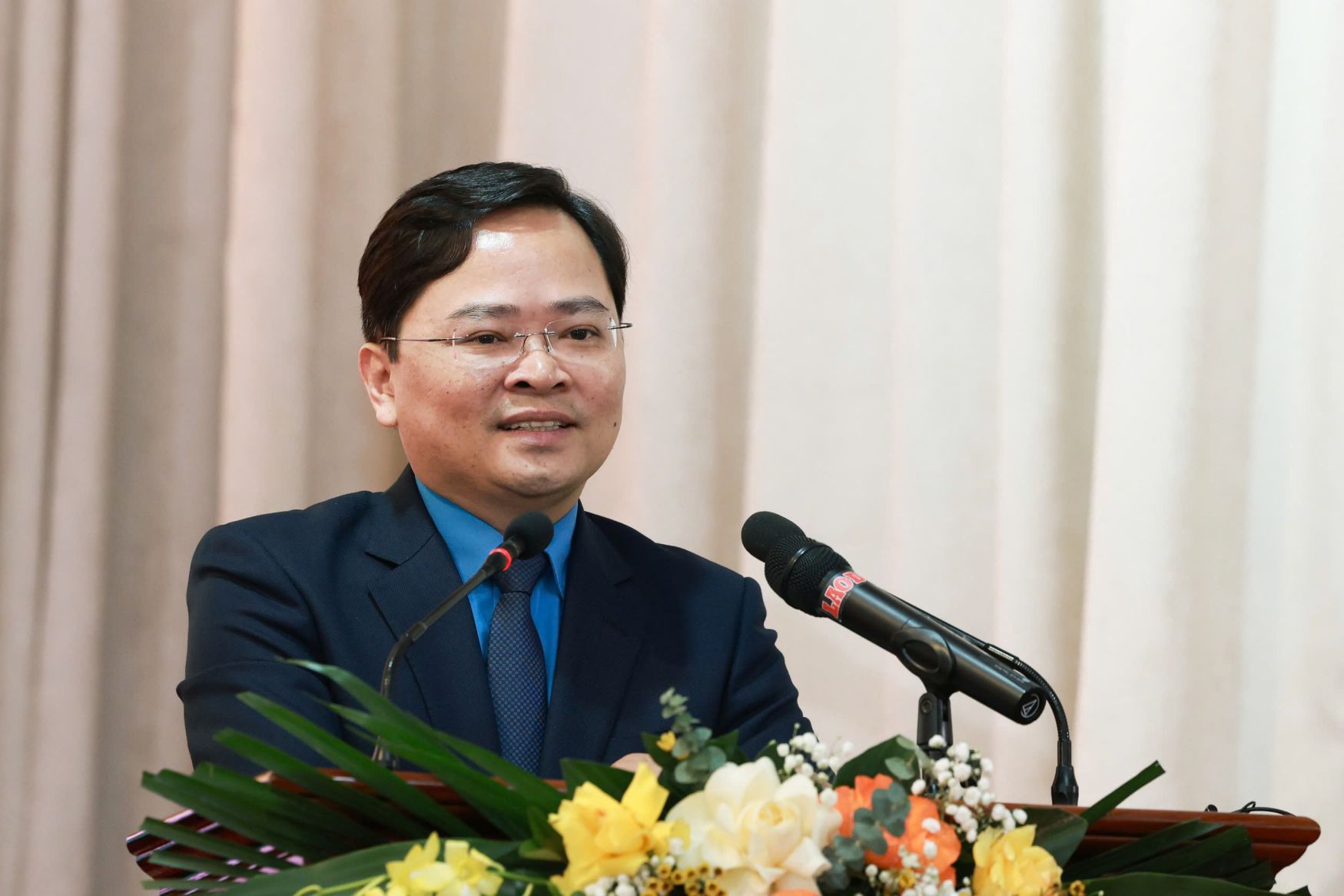
Or in Da Nang, in the constituencies with Mr. Nguyen Anh Tuan - Member of the Party Central Committee, Member of the Standing Committee of the Party Committee of the Fatherland Front, central mass organizations, Secretary of the Party Committee of the Vietnam General Confederation of Labour, Chairman of the Vietnam General Confederation of Labour for the 2023 - 2028 term as a candidate for the 16th National Assembly, voters expressed their confidence in the qualifications, bravery and action program of the candidates for the 16th National Assembly, and at the same time expected delegates to pay attention to people's livelihoods and perform well the function of supervision and criticism.
Mr. Dang Viet Bao, a voter in Chien Dan commune, shared that after learning about the biographies and action programs of the candidates, voters have more basis to place their trust. "What voters want is that no matter what the result, the candidates will continue to contribute to the community and the common development of the country," Mr. Bao said.
Many voters also expressed their wish that National Assembly deputies, after being elected, will maintain regular contact with voters, promptly grasp and monitor the resolution of recommendations related to rural infrastructure, creating livelihoods for people and improving the quality of grassroots education and health services.
The country is in big festival days, the day when the whole people go to vote. Each ballot is an entrustment of faith and responsibility. Because as poet Chinh Huu wrote:
Our country holds the ballot today
Take us to grow up day by day”.


