
One autumn morning, I was sitting at a coffee shop opposite the Hanoi Cathedral when I accidentally met NSND Xuan Hinh. It has been a long time since I interviewed him a few times, so it can be said that I have a little acquaintance. Unlike Xuan Hinh, who is clever and sharp on stage, when sitting slowly beside a cup of coffee, he is quieter. When I asked, he boasted that he was about to perform in Russia, and then moved on to the profession and the lives of artists.
Artist Xuan Hinh confided a lot, but I will always remember this sentence: "We artists are known by many people for the shimmering stage lights, but life is still very hard. People who want to stick with the profession accept poverty, or work extra. Young people now set up channels on social networks, also called having extra income when being hired by brands to advertise, but in general it is still difficult. Only when the lives of artists are guaranteed, living enough with income from their talents, I think the theater can develop strongly".
From the saying of People's Artist Xuan Hinh, I remember when I was a child, I often had the opportunity to visit my classmates' houses to play in the collective area of the artists of the old Ha Tay Cultural House. My friend's father was a famous drummer, and the surrounding houses were all Cheo, Tuong or spoken drama artists. At that time, I realized that the lives of the artists were not much different from the lives of my family, a worker family. I also had to do extra jobs such as sawing toothpicks, making boxes, or separating the kitchen to raise pigs and chickens.
The real life of artists is indeed sometimes very different from when they are on stage. In 2024, the Vietnam Drama Theater was chosen as a collective to be named in the program "Vinh quang Viet Nam", themed "20 years of unleashing the power of Vietnam", Deputy Director of the Vietnam Drama Theater - Kieu Minh Hieu shared very honestly about the life of artists of the theater. He said: "The role of artists of the Vietnam Drama Theater is shown in many aspects, many factors. Artists of the Vietnam Drama Theater not only do their profession well, perform well on performance nights. We believe that artists must have a spreading power, must contribute to social activities, must accumulate knowledge". At the same time, artist Kieu Minh Hieu also hopes that levels and sectors will pay more attention to the lives of artists in general: "Only when life is guaranteed, can we artists wholeheartedly dedicate ourselves to art".
From mid-2025, Deputy Director Kieu Minh Hieu officially replaced NSND Xuan Bac in the role of Director of the Vietnam Drama Theater. The new position will also be a new responsibility, including the task of ensuring income for the brothers.
**
Among the 500 National Assembly deputies just elected to the 16th National Assembly, there are 2 artists. They are People's Artist Trinh Thuy Mui and artist Thanh Quy. People's Artist Trinh Thuy Mui - Vice Chairman of the Vietnam Union of Literary and Art Associations, Chairman of the Vietnam Stage Artists Association.
Sharing after being elected, People's Artist Trinh Thuy Mui expressed her honor and happiness at receiving the trust of voters in Dong Thap province. She affirmed that she will try her best to fulfill the responsibility of a National Assembly deputy, worthy of the expectations of voters as well as artists nationwide. She affirmed that, with many years of working in the field of culture and in-depth knowledge of law, the female artist emphasized that she will actively participate in policy making, especially issues directly related to the material and spiritual life of the people.
Artist Thanh Quy - Deputy Director of Bac Ninh Quan Ho Folk Song Theater - is a typical representative of traditional art, she said that she will focus on preserving and developing Quan Ho clubs in the locality, and at the same time pay attention to social security issues such as employment, health, environment and cultural and spiritual life of the people.
The fact that many writers and artists are elected as National Assembly deputies of the 16th term is expected to bring a multi-dimensional voice from the field of culture and arts, contributing to building practical policies, towards the sustainable development of the country.
In fact, the viewpoint of investing in cultural development, investing in the arts and culture force has become the viewpoint and goal of many recent policies.
In August last year, on the occasion of the 80th anniversary of the successful August Revolution and the National Day of the Socialist Republic of Vietnam, General Secretary To Lam attended a meeting with 80 intellectuals, scientists, and artists nationwide. At the conference, the General Secretary affirmed: In the history of the Vietnamese revolution, the team of intellectuals, scientists, and artists has always been a pioneer force in enlightening people's knowledge, building revolutionary theory and applying science and technology to practice. Typical intellectuals, scientists, and artists have spread patriotic, progressive, and revolutionary ideas, scientific spirit, creating an important premise for the movement to fight for national independence.
Our Party and State always recognize and uphold the role of intellectuals and artists, always consider intellectuals, scientists, and artists as the source of the country's longevity, the national vitality" - the General Secretary emphasized - "Therefore, more than ever, the role of scientists, intellectuals, and artists, those who light the torch of knowledge and creativity, becomes even more crucial. You are not only "soul engineers", "architects of the future", those who express the "potential of Vietnamese people", but also those who keep the fire, spread Vietnamese values, Vietnamese spirit, and Vietnamese identity in a world full of competition and movement.
Affirming that the Party and State always care for and create conditions for intellectuals, scientists, and artists to promote their talents, creativity, and contribute to the country, the General Secretary believes that the Vietnamese intellectuals, scientists, and artists will continue to be the pioneering force, the fire that paves the way for our nation to move forward strongly, steadily, and confidently into the future.
On January 7, 2026, on behalf of the Politburo, General Secretary To Lam signed and promulgated Resolution No. 80-NQ/TW of the Politburo on the development of Vietnamese culture, which is considered a specific step to concretize the General Secretary's directions as well as long-term orientations for Vietnamese culture.
Resolution 80 gives a very clear guiding viewpoint: "Cultural development is the cause of the entire people led by the Party and managed by the State, the People are the creative and beneficiary subjects, intellectuals, artists, cultural cadres, and entrepreneurs play an important role, and at the same time promote the pioneering and exemplary nature of cadres and party members. The cause of cultural development is both of strategic and long-term significance, and also an urgent requirement, which needs to be carried out proactively, actively, creatively, persistently, regularly and in accordance with objective real conditions.
Investing in culture is investing in the sustainable development of the country, for the future of the nation. Fundamentally and comprehensively innovate thinking about mobilizing all resources to develop culture, in which State resources play a leading role, social resources, and the private sector is an important driving force; institutions play a key role, especially breakthrough mechanisms and policies to mobilize and effectively use investment resources for culture, attract and value talents. Develop science, technology, innovation, and digital transformation to create new space and new impetus for cultural development.
In particular, Resolution 80 sets out orientations for investment in the art force: "Have policies to treat artisans (folk), artists appropriately; create conditions to promote and support artists to participate and win major awards at prestigious and prestigious art competitions and exhibitions in the world. Have effective mechanisms to bring top art works, cultural heritage of Vietnam that meet the criteria of national treasures, precious artifacts of value that are abroad back to the country. Have mechanisms to order creative and disseminate cultural, literary, and artistic works with high ideological, content and artistic value, worthy of Vietnamese culture in the new era".
This is a very basic direction to improve the lives of Vietnamese artists. Right at the first session of the 16th National Assembly, the issue of urgently completing cultural development policies was raised. The draft Resolution concretizing Resolution 80 on cultural development has been commented on by the National Assembly's Committee for Culture and Social Affairs.
According to a report by the Ministry of Culture, Sports and Tourism: The Ministry has conducted reviews and studies to develop specific regulations on the viewpoints, objectives, tasks, and solutions identified in Resolution No. 80; and at the same time established a drafting group, drafting committee, editorial board and organized to collect opinions from relevant ministries and sectors, and posted the project dossier of the Resolution on the Ministry's Electronic Information Portal for widespread opinions.
Based on the comments, the Ministry has received and completed the draft, and at the same time received the appraisal opinions of the Ministry of Justice to complete the dossier to submit to the Government. After 2 rounds of taking opinions from Government members, the draft Resolution dossier continued to be completed. Based on Resolution No. 90/NQ-CP dated April 5, 2026, the Minister of Culture, Sports and Tourism, authorized by the Prime Minister, signed Official Dispatch No. 162/TTr-CP dated April 5, 2026, submitting the Resolution project to the National Assembly.
In which, noteworthy are the mechanisms and policies related to attracting and preferential investment in the cultural field; mobilizing resources for cultural development; policies on remuneration and development of cultural and sports talents; mechanisms for contracting expenditures for cultural creative activities using the State budget.
This is an important step to complete the policy framework, creating a foundation to promote the development of Vietnamese culture and people, meeting the requirements of rapid and sustainable development in the new period.
Article 8 of the draft Resolution mentions policies on preferential treatment and development of cultural and sports talents, the draft has a number of contents such as:
The State invests in and develops the system of cultural, artistic, and sports training institutions in a synchronous and modern direction, associated with cultural and cultural industry development; prioritizes investment in facilities, training equipment, performances, practice, and research for key training institutions, talent training centers - innovation towards meeting regional and international standards.
The State has a policy of prioritizing the development of high-quality human resources in the fields of culture, arts, physical education, and sports through advanced training and in-depth professional development at home and abroad.
Allowing the application of flexible mechanisms in attracting domestic experts, artists, coaches, overseas Vietnamese and international experts to participate in training, fostering and vocational training activities; applying a mechanism of agreement on salaries, income and working conditions suitable to the specific nature of training, performance, and competition activities in the fields of culture, art, and sports; having special policies on salaries, income, training, fostering and use for teachers and lecturers teaching specialized subjects and a team of PhDs, associate professors, professors, leading scientists. Applying a non-competitive recruitment mechanism to the State apparatus for top athletes, talented artists who have won many medals and regional and international awards.
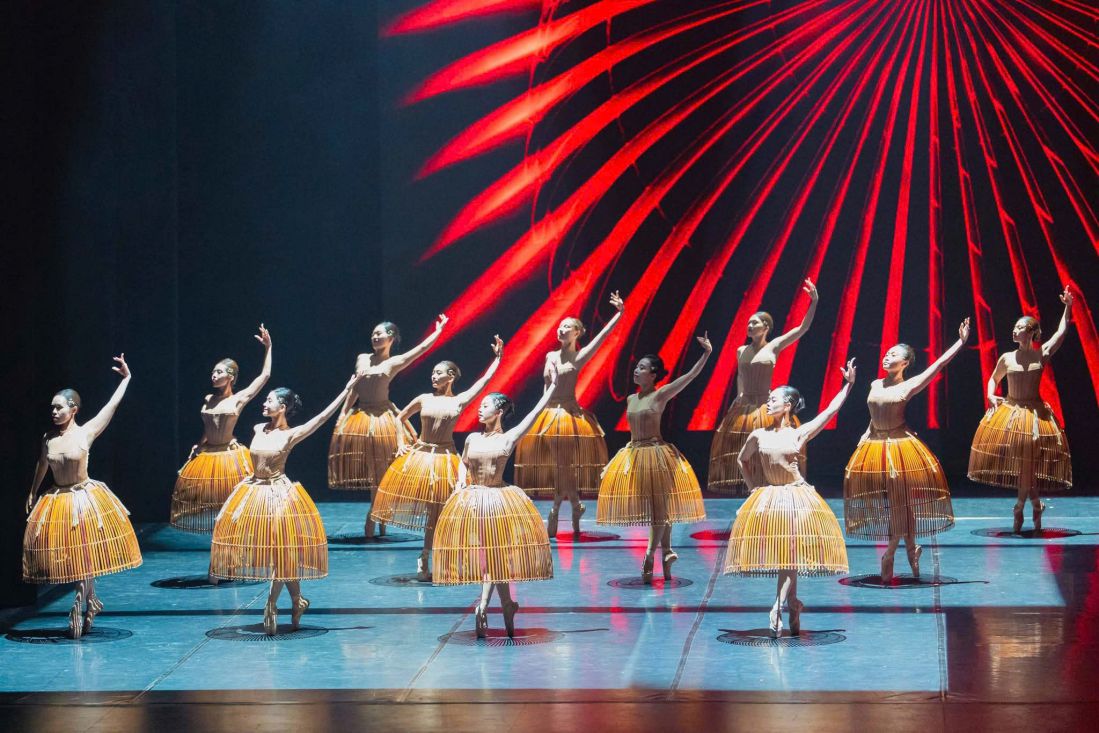
Artists working professionally at public performing arts units, performing arts units under the armed forces are entitled to professional preferential allowances, training and performance allowance regimes according to the roadmap until there are new regulations on salaries: The level of 70% calculated on salary for artists operating in the field of traditional stage art, circus, puppetry, Opera, musical, ballet, symphony, performing arts specialized public employees working in border areas, islands, ethnic minority and mountainous areas, areas with particularly difficult socio-economic conditions; Minimum 40% for performing arts specialized public employees not belonging to the types specified in point a of this clause; Be entitled to training allowance and performance allowance regime based on the role and level of participation in activities in works, programs, and performances to determine: training allowance regime from 8% to 15% of the base salary/practice session, performance allowance regime from at least 30% to 50% of the base salary/practice session.
This is good news for a large number of artists, especially artists in the field of performing arts. According to the Strategy for Development of Vietnam's Cultural Industries to 2030, vision to 2045, performing arts are one of the 10 key cultural industries prioritized for development.
The strategy also clearly states that the goal by 2030 is for cultural industries to achieve an average growth rate of about 10%/year and contribute 7% to the country's GDP; the labor force in cultural industries increases by an average of 10%/year, accounting for 6% of the total labor force of the economy; the growth rate of the number of economic establishments operating in cultural industries reaches an average of 10%/year; striving for the average export value growth rate of cultural industries to reach 7%/year.
Strive for the majority of cultural industrial centers, creative spaces, cultural industrial parks, centers, complexes, and creative space complexes to be synchronously planned, modernly invested, exploiting unique and distinctive values, associated with building product brands of localities and countries.
By 2045, strive for sustainable development of Vietnam's cultural industries, in which revenue contributes 9% of the country's GDP, labor accounts for 8% of the total labor force of the economy. The scale of digital cultural industrial products accounts for over 80% of cultural industrial products, the growth in export value of cultural industries reaches 9%/year and becomes a developed country in cultural industry and entertainment industry in Asia, affirming Vietnam's position on the world cultural industrial map.
The path has been opened for culture, especially performing arts. This is a "golden" time to invest in people, specifically performing artists, so that culture truly becomes a spearhead economy, while maintaining its role as a torch guiding the nation.


