
At an altitude of 2,000 - 2,500m above sea level, considered the highest H'Mong village in Vietnam, more than 1,260 hectares of Son Tra are simultaneously blooming, opening up a majestic natural picture and a vibrant tourist season amidst the clouds.
White sea of flowers blooming on the top of the sky
The winding road from the center of Ngoc Chien commune to Nam Nghep is more than 10km long, every spring it seems to lead to a different space. When the temperature is still chilly, thin mist is lingering on the mountainside, patches of ancient Son Tra trees have begun to bloom, signaling a new flower season.
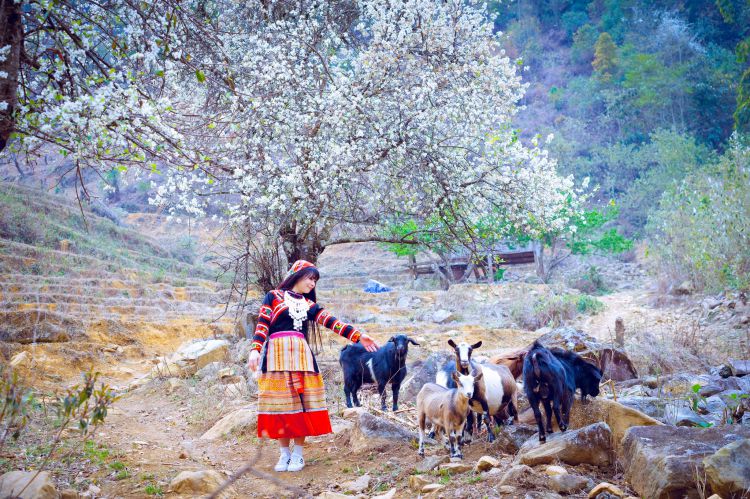
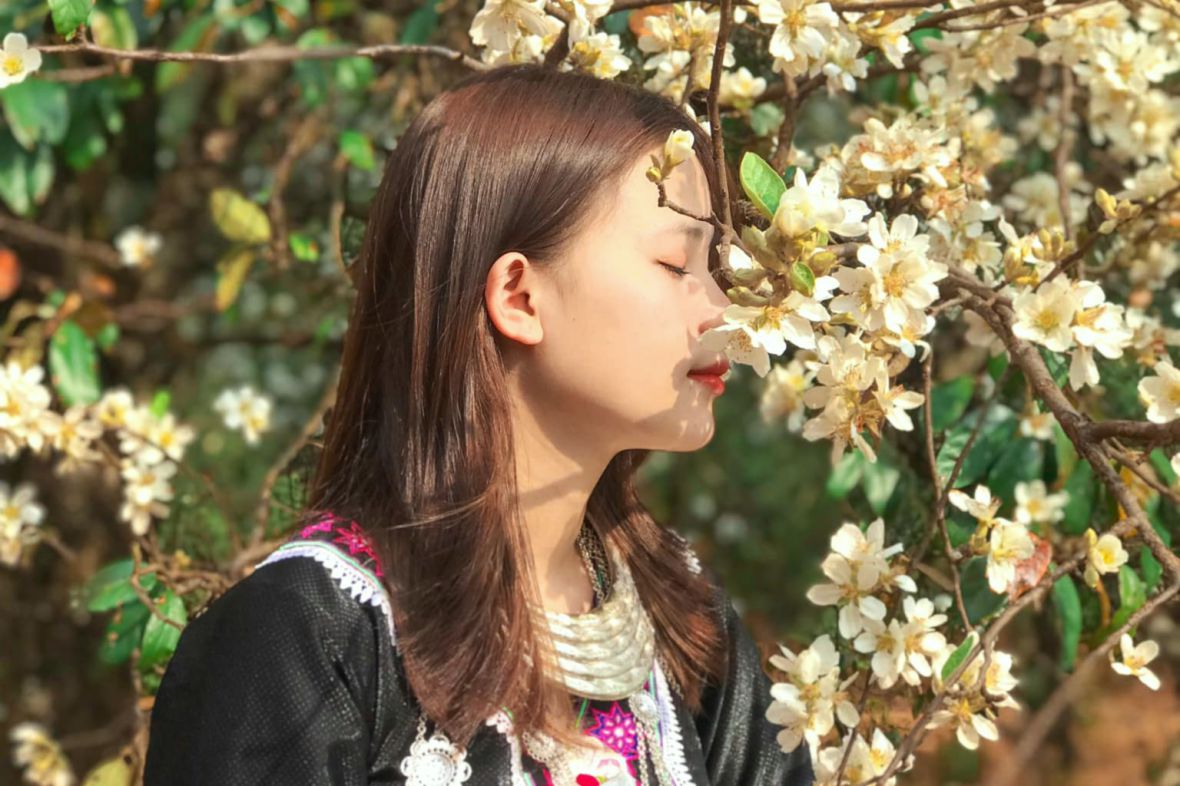
The trees are rough, as tall as roofs, reaching branches in the mountain wind. Five-petaled flowers are ivory white, with golden pistils, densely packed on each small cluster. Looking back from afar, the entire hillside seems to be covered with a layer of pure white clouds; getting closer, the gentle flower scent blends with the smell of young grass and kitchen smoke, creating a feeling of purity and peace.
The whole village currently has more than 1,260ha of Son Tra - the largest Son Tra growing area in the country. Many trees are hundreds of years old, associated with the life of the H'Mong people through generations. Previously, Son Tra mainly yielded fruit for soaking in wine, making syrup or apple cider vinegar; now, the flower season has become a separate "brand", opening up a direction for tourism development for the people of Nam Nghep village.
Flowers usually bloom profusely from the end of February to the end of March of the solar calendar, depending on weather conditions each year. This is the time when tourists from all over come to admire the "white sea of flowers amidst thousands of clouds and mountain winds". The hillsides, valleys and simple wooden houses are covered in white, creating a scene that is both poetic and majestic.
Mr. Khang A Say - Secretary of the Party cell, Head of Nam Nghep village, said: "This year the weather is warmer than every year, and it is also a leap year, so flowers bloom earlier. However, every tree has thicker buds, and flowers will last longer. Right after the Lunar New Year, tourists have come to the village to admire flowers. It is expected that this year the number of visitors will be much larger than in previous seasons.
Ms. Le Dieu Chau (Hanoi), one of the tourists present from the early days of blooming flowers, shared that she knew about Nam Nghep through social network channels.
“I accidentally saw images of a white flower forest amidst a sea of clouds, so I decided to come here for a spring trip. In fact, it is even more beautiful than in the photos, the air is fresh, the scenery is very pristine. Going through the flower forest, taking photos and experiencing the festival with the people is a memorable memory for my family,” Ms. Chau said.
Unique festival in the forest of Son Tra flowers
The annual Son Tra flower season is organized by Ngoc Chien commune in association with community cultural activities, attracting a large number of tourists. In the wide yard of the village, the sound of H'Mong khen echoes loudly; traditional dances are bustling in colorful brocade dresses, creating a joyful atmosphere in the mountains and forests.
Visitors can participate in pounding banh day, throwing pao, pushing sticks; enjoy local cuisine such as smoked meat, forest vegetables, Son Tra wine. Small stalls selling typical local agricultural products create a highland market atmosphere right in the middle of the white flower forest.
The festival space is not noisy, not elaborately staged but rustic and authentic. Visitors can both admire flowers and experience the cultural life of the H'Mong people. Many people choose to stay overnight to fully feel the beauty of the flower forest in the sunset and early morning mist.
After many years of pursuing photography in Nam Nghep, photographer Do Vinh (Son La) said that every Son Tra Flower Festival is a time for him to return with new emotions. According to him, the pristine beauty of the flower forest blends with the bustling atmosphere of khen sounds, dances and the colors of traditional costumes, creating deep frames.
Flowers blooming in festivals make photos not only with scenery, but also with rhythm of life and culture. That is what makes me always want to come back every flower season," Mr. Vinh shared.
Attracting tourists, opening up livelihoods amidst the flower season
In recent years, Nam Nghep has become a sought-after destination during the flower season. Many homestays and wooden bungalows have been renovated and built spaciously but still retain traditional architecture. Tourists can camp under the pine tree canopy, hunt for clouds at dawn, and trek through vast white flower hills.
The flower season brings significant income to people. In addition to accommodation services, people also sell agricultural products, rent ethnic costumes, experience motorbike taxis; organize banh day pounding, tell stories about Son Tra trees. Young people in the village participate in leading visitors to climb mountains, supporting photography; women prepare meals, sell local products.
Mr. Khang A Nha, a resident of Nam Nghep village, said that in recent years, doing tourism during the Son Tra flower season has become an important source of income for his family and many households in the village. "Previously, we mainly sold Son Tra fruit, with unstable income. Now, in the flower season, it is expected that many customers will come; the family also makes extra homestays, sets up tents, cooks and takes guests to see flowers and hunt clouds. Income is more stable. People are also aware of keeping the forest, keeping the landscape clean and beautiful to welcome long-term guests," he said.
However, along with the rapid increase in the number of visitors is the requirement to preserve the Son Tra forest. People are mobilized to maintain environmental sanitation, not to cut down trees, not to let tourists break branches or litter. Because for Nam Nghep, if there is still forest, there are still flowers; if there are still flowers, tourism will be sustainable.
The flower season only lasts for more than a month but is enough to leave a strong impression. Amidst the sea of clouds and pure white, Nam Nghep is no longer a remote village that few people know, but has become a spring rendezvous for those who love pristine nature, love the blooming flower season and cherish the culture of the Northwest highlands.


