
People listen to the people by setting an example
In the mountainous villages of Da Nang, where the terrain is rugged and life is still difficult, the voices of village elders, village chiefs, and prestigious people still play a particularly important role. For ethnic minorities, they are not only people who understand customs and practices but also spiritual support, people who are trusted whenever there are big or small things in the village.
Over the years, in addition to being a model for developing the family economy, the Party members who are village elders and prestigious people in the highlands have also clearly promoted their role as the "extended arm" of the grassroots government. They directly propagate and mobilize people to implement the policies and guidelines of the Party and State; participate in mediating conflicts, mobilizing land donations for road construction, and building civil works; and at the same time instruct people to apply appropriate business models to improve their lives.

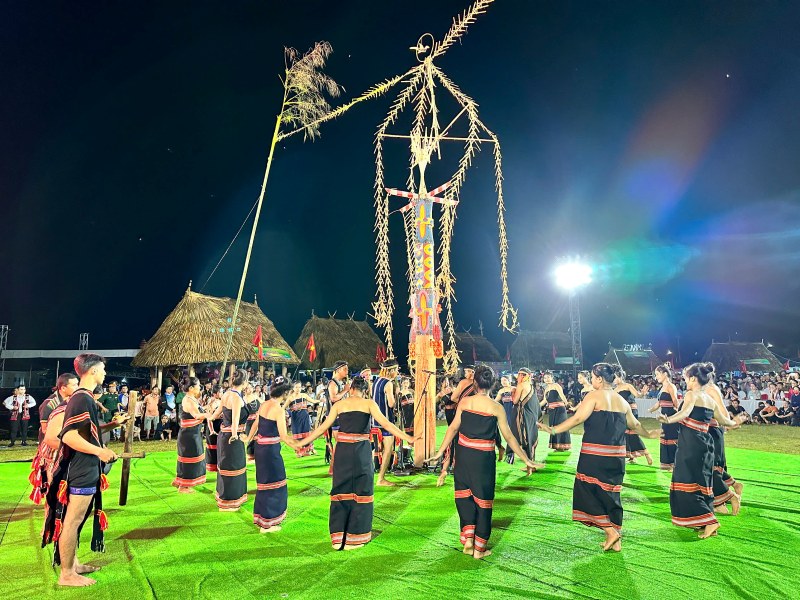
To do that, according to many Party members in the highlands, first of all, they must be pioneers, saying what they do.
In Tong Cooi village, Song Vang commune, when mentioning Mr. Mac Van Min (70 years old, Co Tu), the people have special respect for him. As a Party member and a prestigious person in the community, Mr. Min almost hanks a day off whenever conflicts and disputes arise in the village.
Regardless of age, whenever there is a family dispute, a couple conflict or land dispute, Mr. Min promptly goes to the place to mobilize and reconcile. "Many cases have been successfully resolved. I have to analyze to make people see right and wrong, but I also have to say the true and the true. Only when people understand do we follow, Mr. Min shared.
Not only mediating conflicts, Mr. Min is also a leader in mobilizing people to implement the State's policies. Recently, when there was a project to build a residential road passing through Tong Cooi village, Mr. Min was the one who mobilized people to donate land to speed up the progress.
To create consensus, Mr. Min's family voluntarily donated a sao of land in advance. After that, he went to each household to explain the meaning of the road for long-term life and production. As a result, after two campaigns, more than 30 households in the village have voluntarily donated hundreds of square meters of land, helping the inter-village road to be completed soon.
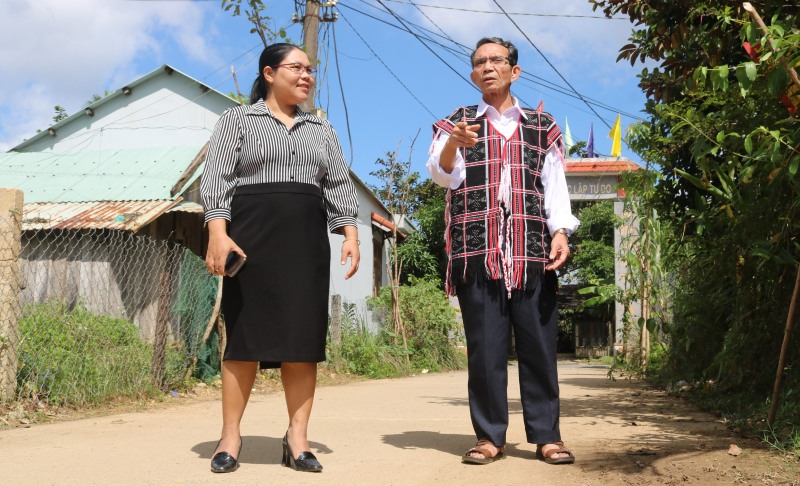
"To mobilize people, we must first set an example. I have done it, only then will people believe and listen, said Mr. Min.
According to Mr. Min, to play the role of a Party member and a prestigious person in ethnic minority areas, in addition to having a firm grasp of policies and guidelines, one must also regularly learn and update knowledge, especially a deep understanding of the culture and customs of one's own community. "If I understand, then let the people understand, if the people understand, then they will comply well," Mr. Min added.
Linking propaganda with preserving identity
Also a typical Party member in the highlands, Mr. Briu Thien, Secretary of the Party Cell of Bo Hong village (Song Kon commune), has for many years associated propaganda work with preserving the good customs and practices of the Co Tu people.
In addition to disseminating laws and mobilizing people to comply with the State's policies, Mr. Thien also directly mobilized people to donate land to build four village cultural houses. These works not only serve community activities but are also places to preserve and teach traditional cultural values.
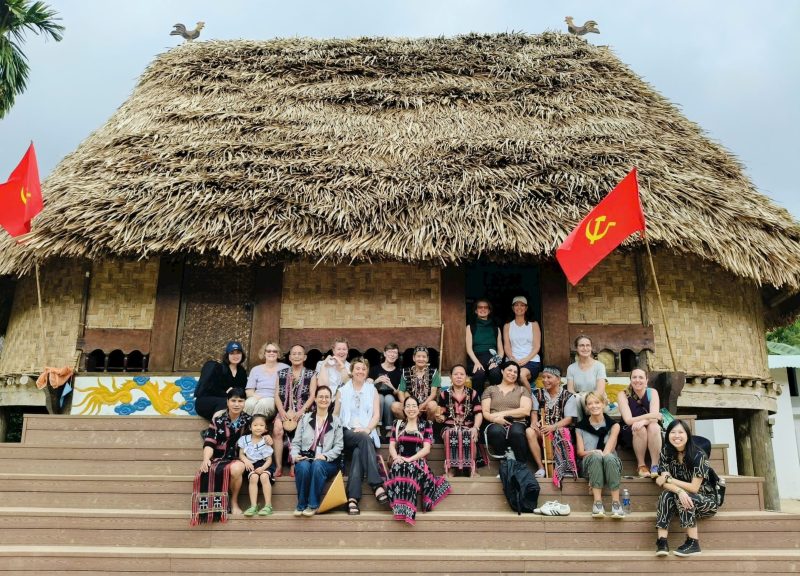

Notably, Mr. Briu Thien is also one of the few people who are trying to preserve the traditional weaving craft of the Co Tu people. Up to now, he has organized many vocational training classes for people in the commune, helping people to both earn more income and keep the profession of their ancestors.
According to Mr. Do Huu Tung, Chairman of the People's Committee of Song Kon commune, the whole commune currently has more than 30 prestigious people, most of whom are party members. In recent years, the prestigious forces have promoted the role of party members at the grassroots level very well. They are a reliable "extended arm" of Party committees and authorities in propaganda and mobilization work for the people," said Mr. Tung.
Not only stopping at propaganda, many mountainous localities also specifically assign party members in charge, along with each household.
"In addition to law propaganda, party members are also assigned to monitor and support households to raise legal awareness and improve livelihoods. These are exemplary and enthusiastic people, playing a core role in reconciling conflicts, mobilizing land donations for road construction and guiding people to apply effective business models, said Mr. Do Huu Tung, Chairman of Song Kon Commune People's Committee.
Sharing the same view, Chairman of the People's Committee of A Vuong Briu Quan border commune said that most of the village cadres and prestigious people in the locality are party members and are trusted by the people. "Party members are assigned to take charge of households in the Party cell, both to propagate, mobilize, monitor, and pair up to raise awareness for people," said Mr. Quan.
Assigning party members in charge of each household
One of the outstanding party members in Tay Giang commune is Mr. Nguyen Van Sao, Head of the Agrong Village Front Work Committee. Over the years, Mr. Sao has directly supported and helped many households to mediate family conflicts, marital disagreements, and land disputes between adjacent households.
"After receiving training, I applied many appropriate propaganda methods to make people understand. Only when they understand, do they feel the meaning and do it together. In addition, I also research and update effective business models elsewhere to introduce them to the people for application, Mr. Sao shared.
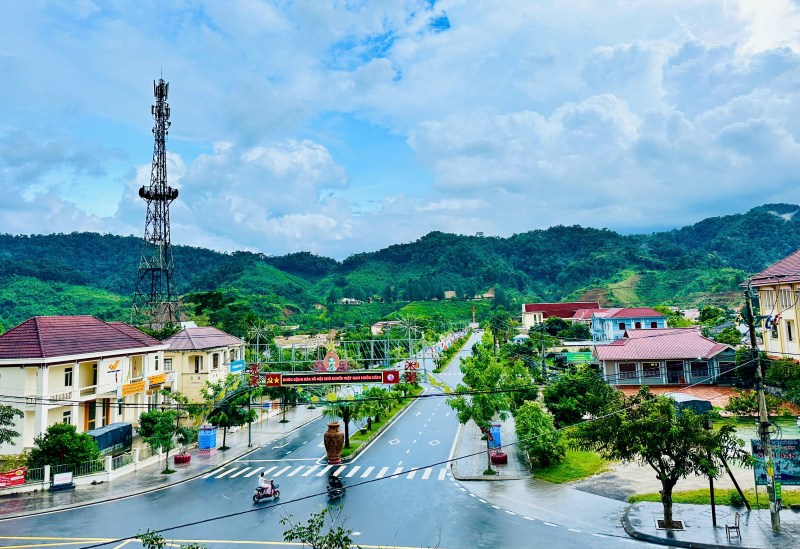
Not only the older party members, many young party members in the highlands are also trying to affirm their role by developing the family economy, creating a spreading force in the community.
Realizing the development potential of the orange garden and the increasingly favorable traffic benefits, Mr. Riah Dung - Secretary of Hung Son Commune Youth Union decided to start a business right in his homeland. Since 2020, he has planted nearly 10 hectares of oranges, combined with livestock farming, initially bringing economic efficiency.
To date, Mr. Riah Dung's model of "Eco-tourism linked with local oranges" is the first collective economic model chosen by young people, aiming to encourage youth union members to boldly start businesses, initially bring economic efficiency and create jobs for nearly 40 local youth workers.
In addition to being an economist, Mr. Riah Dung also connected businesses and philanthropists to invest in welfare and social security projects including: 3 economic development models; deploying forestry roads in the commune with a length of 10km; building 2 suspension bridges for people; lighting up the highland village with 300 solar lights, giving livelihoods and many other valuable gifts to the people with a total value of more than 19 billion VND.
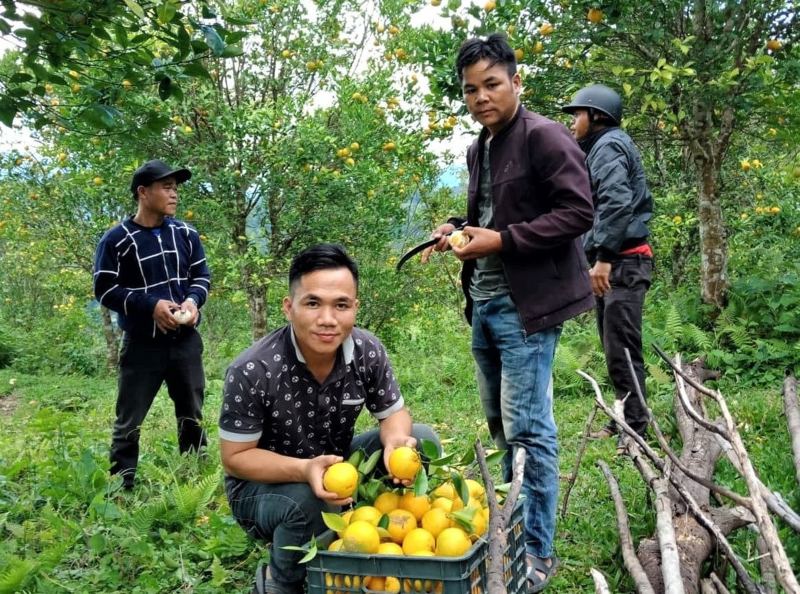
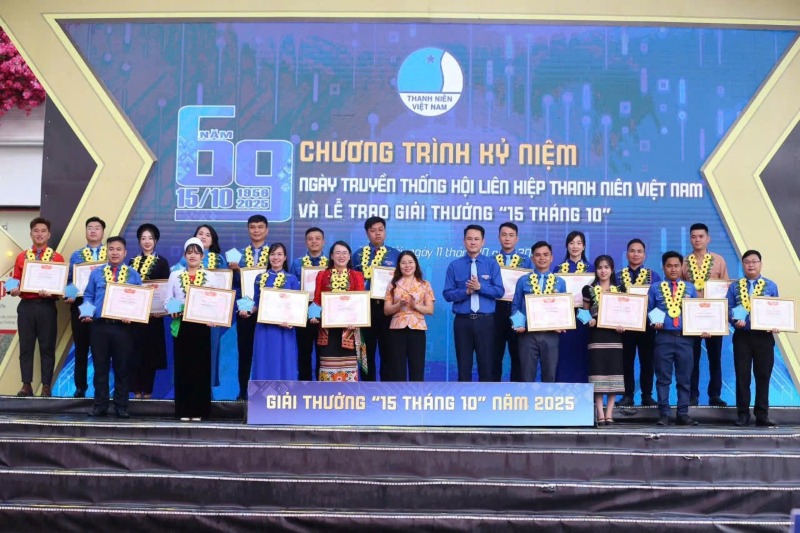
Mr. Zoram Buon, Chairman of Hung Son Commune People's Committee, said that Mr. Riah Dung always has a spirit of self-sacrifice for the community, pioneering in work. In particular, there are outstanding qualities in the activities of the Youth Union and the youth movement, worthy of being a shining example for the younger generation to follow.
Not only Mr. Sao or Mr. Riah Dung, in the mountainous areas of Da Nang, many other Party members are actively promoting their role in socio-economic development and building movements at the grassroots level. These include Bhing Phat (Head of por'ning village, Tay Giang commune), Alang Toi (Head of Arang village, Hung Son commune), Alang Thi Alap (Head of the Front Work Committee of Z'ring village, Tay Giang commune), Riah Thi Qua (Head of the Department of Urban Development of Dam 1 village, Hung Son commune) ...
They are the core force contributing to the effective implementation of policies and guidelines, especially policies for socio-economic development in ethnic minority areas. From specific and persistent actions, those "extended arms" are contributing to changing the face of the highlands of Da Nang, gradually improving people's lives.


