
According to the Department of Irrigation Works Management and Construction, although rain has appeared, the capacity of some irrigation reservoirs still tends to decrease. In the North, the average capacity of reservoirs reached 65.4% of the designed capacity, a slight increase of 0.4% compared to the previous week.
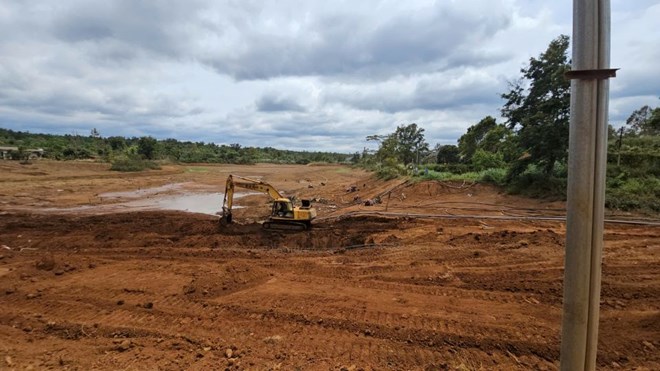
Meanwhile, the North Central region achieved an average of 57.5% of designed capacity, down 2.5% compared to the previous week. The South Central Coast - Central Highlands region reached about 55%, down 3%. Notably, there are currently 6 shallow lakes in the region, including Ta Mon, Dak Dr'rong, Dak Long Thuong in Lam Dong; C19, Dak Trang in Quang Ngai and Vu Bon in Dak Lak.
In the Southeast region, the average capacity of irrigation reservoirs reached 49.8% of the designed capacity, 0.4% lower than last week. In which, Ho Chi Minh City only reached 33%, Tay Ninh 50%, Dong Nai 65%.
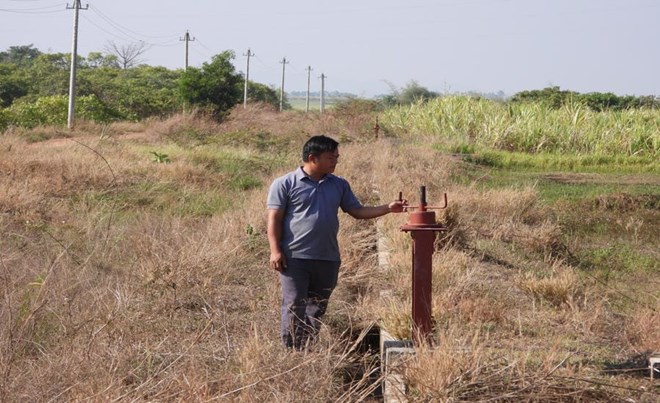
The Department of Irrigation Works Management and Construction assessed that if prolonged hot weather during the Summer-Autumn crop, the North Central region will have about 5,200-8,200 hectares of cultivated land at risk of being affected by drought and water shortage. In which, mainly concentrated in Thanh Hoa, Nghe An and Quang Tri.
The South Central Coast and Central Highlands regions are forecast to need to adjust production plans at some projects at risk of water shortage in the provinces of the region with a total affected cultivated area of about 2,707 hectares; including: Quang Ngai 1,000 hectares, Dak Lak 50 hectares, Khanh Hoa 450 hectares and Da Nang City 1,207 hectares (due to saltwater intrusion on the Vinh Dien River).
Faced with complicated weather developments, the Department of Management and Construction of Irrigation Works said that it is coordinating with specialized units to strengthen monitoring of information upstream of the Mekong River, update water source developments and saltwater intrusion, and continue to implement solutions to respond to drought and water shortages, ensuring water sources for agricultural production and people's livelihoods.


