
This content is stated in Conclusion No. 26-KL/TW (Conclusion 26) of the Politburo on preventing and combating subsidence, landslides, flooding, drought, and saltwater intrusion in the Mekong Delta (Mekong Delta) region in the period 2026 - 2035.
According to Conclusion 26, the Politburo requests Party committees, Party organizations, authorities, state management agencies, the Vietnam Fatherland Front, socio-political organizations, and mass organizations at all levels to focus on leading and directing the good implementation of a number of key tasks.
In which, strengthen the dissemination of the viewpoint of "proactively adapting" to climate change, respecting the laws of nature, correctly identifying the nature and causes of subsidence, landslides, flooding, drought, and saltwater intrusion in the Mekong Delta region to have solutions from the root with a specific roadmap, ensuring comprehensiveness, inter-regional, multi-objective, harmoniously combining engineering and non-engineering solutions; taking people's lives as the most important measure, taking production and socio-economic development as the focus, taking maintaining the environment, ensuring national defense and security in the Mekong Delta region as the foundational principle.
In the second quarter of 2026, complete the review and supplementation of contents on subsidence, landslides, flooding, drought, saltwater intrusion, and sea encroachment in the Mekong Delta region into the national master plan, regional plan, sectoral plan, and local plan to make appropriate adjustments.
In 2027, complete the review and fundamental institutionalization of the Party's guidelines and orientations into a legal system and guiding documents for implementation in the fields of: Water resources, irrigation, disaster prevention and control, land, forestry, construction, mineral resources, meteorology and hydrology.
Build mechanisms and policies to support and encourage the conversion of crop and crop structures suitable to natural conditions; apply agricultural and aquatic models adapting to climate change, changing varieties and farming methods for aquaculture, water-less crops, suitable for ecological zones, improving production efficiency; protect and improve the quality of mangrove forests associated with the management and exploitation of carbon credits and forest resources.
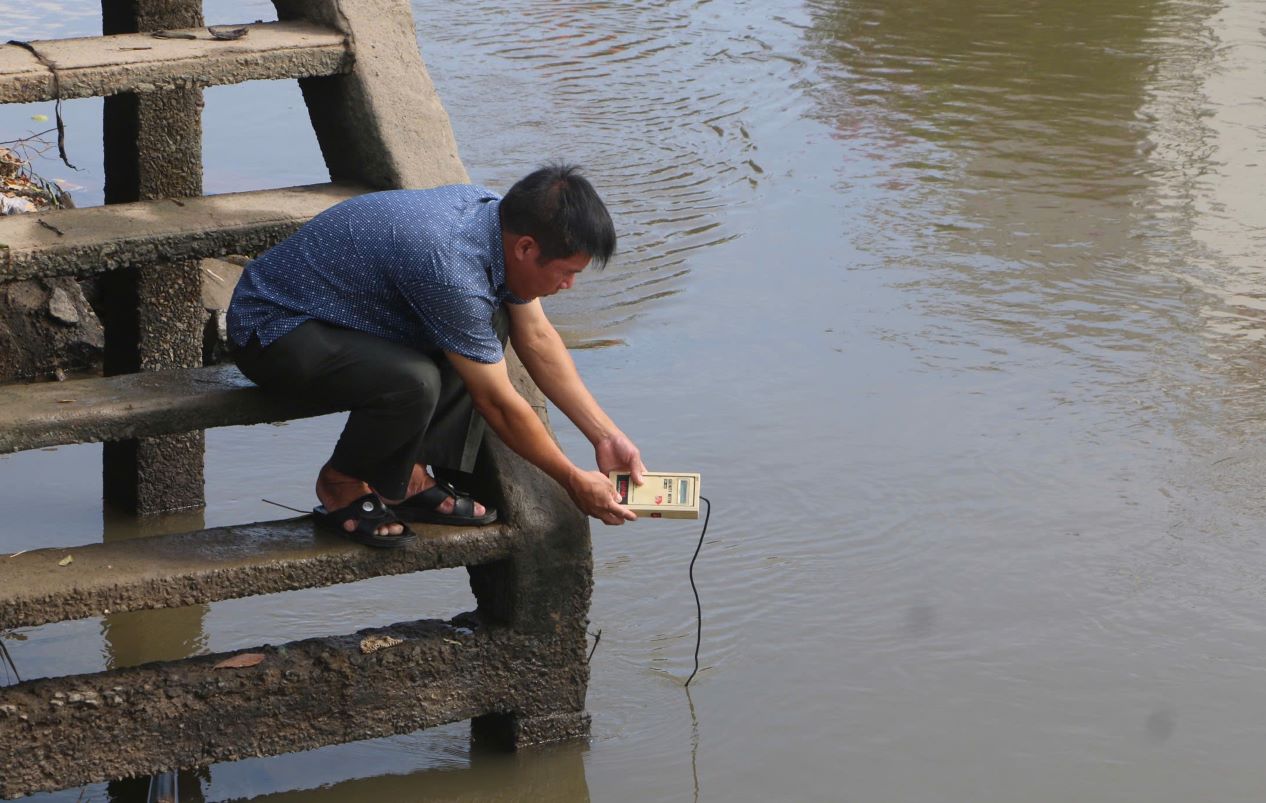
The conclusion also clearly states the consolidation of the organizational system and state management apparatus for water resources, irrigation and dyke works, disaster prevention and control, ensuring centralized, unified, streamlined, effective, and efficient focal points. Training to improve the quality of human resources; attracting and forming a team of specialized experts.
Prioritize allocating resources from the state budget (including loans and foreign aid) for tasks of preventing and combating subsidence, landslides, flooding, drought, and saltwater intrusion. Strengthen inspection, examination, and supervision, absolutely preventing waste and negativity.
Have appropriate policies to encourage and attract non-budget investment projects, investment in the form of public-private partnerships (PPP) in building works to prevent and combat riverbank and coastal erosion; planting and restoring coastal mangrove forests; building and renovating water supply systems for living and production; effectively exploiting additional resources such as carbon credit sales and other legal resources.


