
Bananas are a nutritious fruit, bringing many benefits to the cardiovascular and digestive systems thanks to containing a large amount of potassium. However, according to nutritionist Imashi Fernando (USA), this fruit also contains natural sugar, which can quickly increase blood sugar if we eat it in the wrong way or at the wrong time without many people realizing it.
The link between banana ripening and blood sugar
The level of blood sugar increase in bananas depends greatly on the diet and especially the ripeness of the fruit.
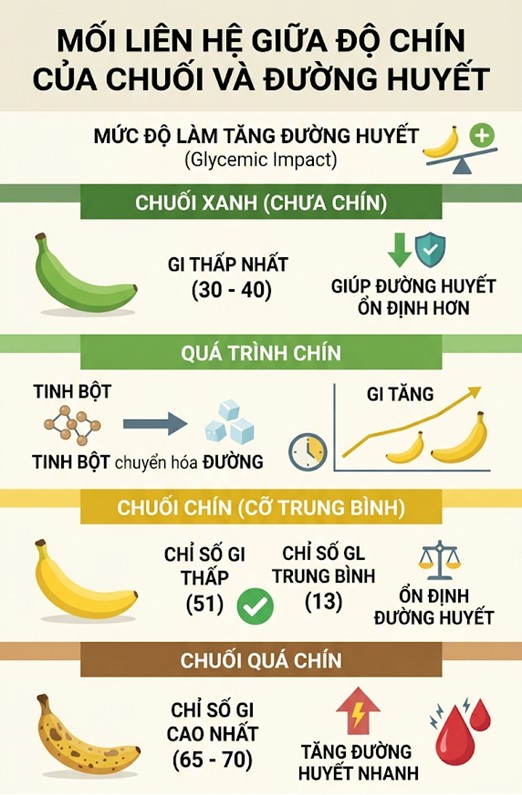
In fact, a medium-sized ripe banana has a low glycemic index (GI) (about 51), but the glycemic load index (GL) is at an average level (about 13).
As the bananas ripen, the amount of starch inside will convert into sugar, increasing the GI index. Specifically:
Green bananas (unripe): Have the lowest GI index (from 30 - 40), helping blood sugar to be more stable.
Bananas that are too ripe: Have the highest GI index (from 65 - 70), causing blood sugar to rise much faster.
4 ways to eat bananas without sudden blood sugar spikes
To be able to comfortably enjoy this fruit without worrying about causing blood sugar spikes, expert Aviv Joshua has given 4 simple, easy-to-apply tips:
Choose green or undercooked bananas: The very high resistant starch content in green bananas will help slow down the digestion process, thereby keeping the GI level low, protecting the stability of blood sugar.
Note to control portion size: You should choose to buy smaller bananas. If they are large, divide the banana into smaller portions to eat scattered throughout the day instead of eating them all at once.
Table of comparison: Effect of banana ripening on blood sugar
| Banana state | Blood sugar index (GI) | Metabolism characteristics | Effects on blood sugar |
|---|---|---|---|
| Contains high levels of resistant starch, slow digestion. | |||
| Starch begins to convert into natural sugar. | |||
| Starch has been maximally converted into sugar. |
Combine smart foods: Eat bananas with food sources rich in protein, fiber or healthy fats (such as: nuts, yogurt, oats). This combination helps delay blood sugar spikes effectively.
Store bananas in the refrigerator: Keeping bananas in a cold environment will slow down the ripening process of the fruit, and at the same time delay the conversion of starch into sugar, helping to keep the GI index always low.

The role of bananas in exercisers and people with diabetes
For those who exercise regularly, bananas are always a popular top choice. The carbohydrate source in bananas provides fast energy for the body, while potassium effectively supports muscle function.
In particular, according to information from the health page Verywell Health, the American Diabetes Association has affirmed: For most people, including diabetics, bananas can completely become a part of a balanced and healthy diet. The prerequisite is that you must pay attention to the ripeness of the fruit, control the portion well and know how to combine it with accompanying foods.
Quick Q&A about eating bananas for blood sugar disease
Can diabetics eat bananas?
Possible. According to the American Diabetes Association, bananas can be part of a balanced diet if you pay attention to choosing undercooked fruits, control your portion size and combine the right foods.
How to eat bananas to avoid sudden blood sugar spikes?
Prioritize choosing green/ripe bananas; eat small fruits or divide them into smaller portions to eat scattered; combine with healthy protein/fats (yogurt, nuts); store in the refrigerator to slow down the ripening process.
Why is eating overripe bananas dangerous for blood sugar?
When bananas are ripe, the starch content inside has been converted almost completely into natural sugar, pushing the glycemic index (GI) to the highest level (65-70), causing blood sugar to spike after eating.


