
In addition to taking medication, people with high blood pressure need to pay attention to diet and lifestyle.In fact, some blood pressure lowering drugs (such as diuretics) used for a long time can increase the excretion of micronutrients, causing fatigue.Supplementing vitamins correctly through food can support maintaining health.
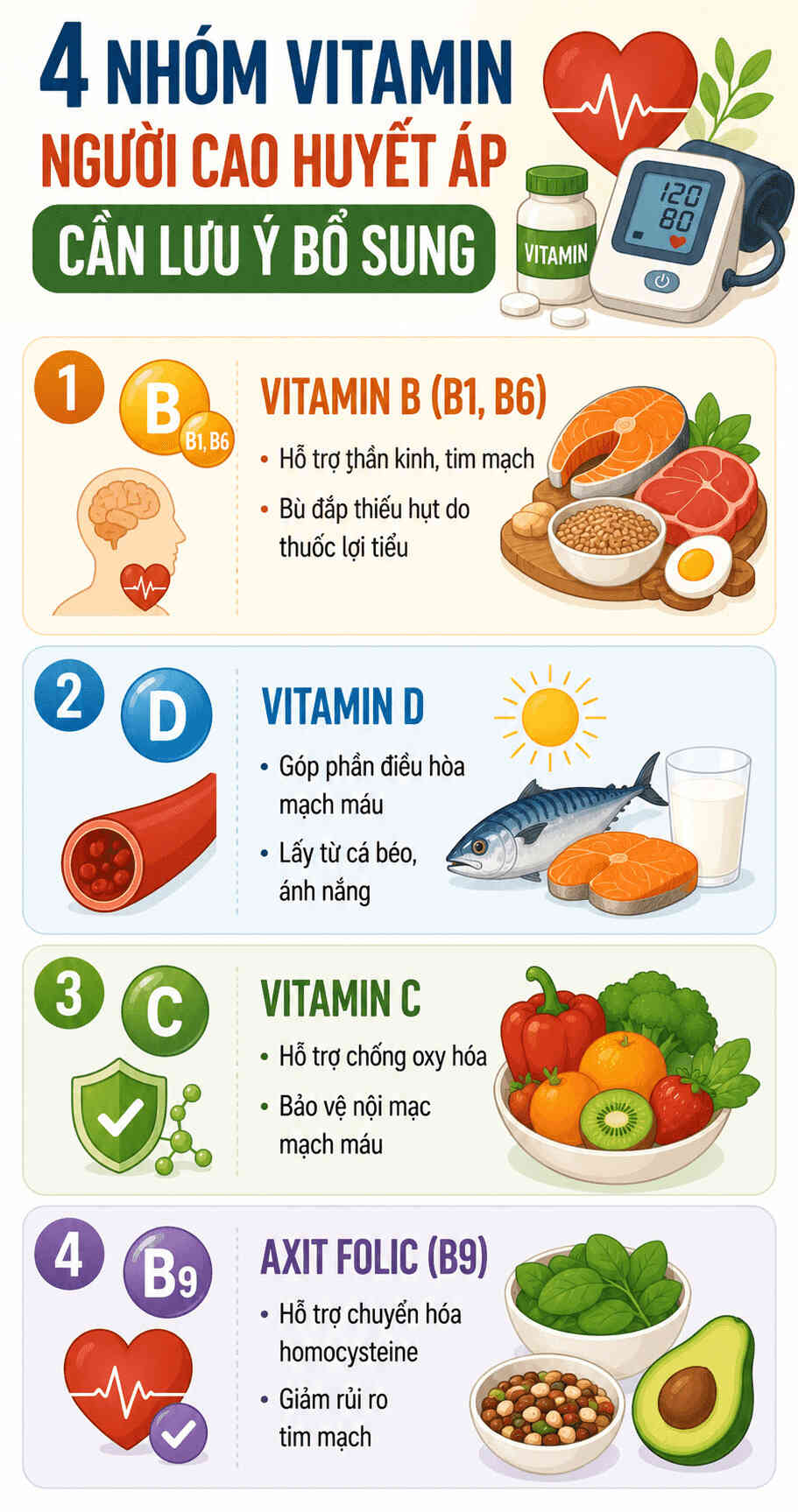
4 vitamin groups people with high blood pressure need to pay attention to. People with high blood pressure should prioritize vitamins from food in a diverse diet, reduce salt.
Supplements should only be used when there is a risk of deficiency or prescribed by a doctor.Vitamins do not replace treatment drugs and blood pressure control measures.
| Vitamins | Role | Food sources | Notes for people with high blood pressure |
|---|---|---|---|
| Participate in the metabolism of energy and nerve system activity. | Whole grains, beans, meat, fish, potatoes. | Furosemide can increase vitamin B1 loss, but not everyone taking diuretics needs supplementation. Do not self-medicate with prolonged high doses of vitamin B6. | |
| Essential for bone and muscle health. | Fatty fish, egg yolks, milk and vitamin D-fortified foods. | There is no consistent evidence that taking vitamin D helps lower blood pressure. Only supplement when indicated. | |
| Participate in antioxidants and collagen synthesis. | Guava, orange, grapefruit, kiwi, tomato, bell pepper. | People with high blood pressure should prioritize whole vegetables and fruits, not use high doses of vitamin C to replace blood pressure medication. | |
| Participates in cell formation and homocysteine metabolism. | Green leafy vegetables, beans, nuts and fruits. | Reduced homocysteine does not necessarily mean a reduced risk of stroke in people with high blood pressure. |
However, vitamins are not blood pressure medications and cannot replace medications or blood pressure control measures prescribed by a doctor.
Below are 4 vitamin groups that people with high blood pressure need to pay attention to in their diet.
B vitamins
Vitamins B1 and B6 participate in energy metabolism and maintain the normal functioning of the nervous system. These vitamins are found in whole grains, beans, meat, fish, potatoes and some vegetables.
Some medications, such as furosemide, which belong to the banded diuretic group, can increase vitamin B1 loss through urine. However, this does not mean that all diuretics users are deficient in vitamin B1 or B6 and need to take supplements.
Symptoms such as fatigue, muscle weakness, or cramps are not specific to vitamin deficiency. Patients need to be further assessed on the medication they are taking, electrolytes, kidney function, and diet. Do not self-medicate with high doses of vitamin B6 for long periods as it can cause neurological damage.
Vitamin D
Vitamin D is necessary for bone and muscle health and many bodily functions. Some studies observed that low vitamin D levels are often accompanied by increased blood pressure. However, this link has not been proven to be a direct cause of blood pressure increase or difficulty controlling.
Clinical trials have not shown that taking vitamin D helps lower blood pressure stably. Therefore, vitamin D is not considered a treatment for high blood pressure.
Food sources containing vitamin D include fatty fish, egg yolks, milk and some fortified foods. Vitamin D pills should only be used when there is a risk of deficiency or as directed by medical staff.
Vitamin C
Vitamin C plays an antioxidant role, participates in collagen synthesis and maintains normal tissue function. Vitamin C is abundant in guava, oranges, grapefruits, kiwis, bell peppers, tomatoes and cauliflower.
Some short-term studies have noted that vitamin C may be associated with hypotension levels. However, current evidence is not sufficient to recommend taking vitamin C tablets to treat hypertension or prevent cardiovascular events.
People with high blood pressure should prioritize whole vegetables and fruits. The benefits of this food group come not only from vitamin C but also from fiber, potassium and many other nutrient compounds.
Folate – vitamin B9
Folate is a natural form of vitamin B9 in food; folic acid is often found in supplements or supplements.
Folate participates in cell formation and homocysteine metabolism. Although folic acid can reduce homocysteine levels, this does not mean a reduced risk of heart attack or stroke in all hypertensive people.
Green leafy vegetables, beans, nuts and some fruits are natural sources of folate. Patients should use these foods in a balanced diet instead of self-medicating with folic acid to prevent cardiovascular complications.
Do people with high blood pressure need to take vitamins?
There is no vitamin suitable for people with high blood pressure. Supplementation depends on the diet, age, underlying disease, medication being taken, and test results.
Patients should prioritize vitamins from food. Supplements should only be considered when there is an unbalanced diet, absorption disorder, vitamin deficiency test results, or a doctor's prescription.
To control blood pressure, patients need to use medicine according to instructions, limit salt, eat more vegetables and fruits, maintain exercise, control weight, limit alcohol and smoke.
Information in the article is for reference only, not for medical diagnosis or treatment. Hypertensive patients should absolutely not arbitrarily use functional foods to avoid drug interactions, only supplement when prescribed by a doctor.
Quick quiz on nutrition for people with high blood pressure
What vitamins should high blood pressure people supplement with?
People with high blood pressure should prioritize vitamins B, C, D and folate from natural foods such as green vegetables, fruits, fish, eggs, whole grains and beans. However, vitamins do not replace blood pressure medication. Patients should only take supplements when there is a risk of deficiency or as prescribed by a doctor.


