
Magnesium is a mineral necessary for many bodily functions. When using magnesium supplements, some types of drinks may need to be noted, especially when used in large quantities or in people at risk of magnesium deficiency.
Magnesium participates in many biochemical reactions of the body, contributing to maintaining nerve function, muscle function and many metabolic processes.
The impact on magnesium status also depends on the amount used, diet, kidney function, pathology and medications being used.
| Type of drink | Potential effects on Magnesium |
|---|---|
Using a lot of alcohol for a long time may be related to magnesium deficiency. | |
| Some soft drinks contain phosphate, so limit their frequent use in your diet. | |
| High-dose calcium supplement tablets or drinks may need to be noted when using with magnesium. The use of regular milk does not necessarily have to be avoided. |
Beverages that can hinder magnesium absorption
Coffee and tea: Some studies show that caffeine can increase magnesium secretion through urine in a short time. However, there is not enough basis to assert that drinking coffee at the same time as magnesium supplements will significantly reduce the effectiveness of supplementation in healthy people.
Therefore, people who use coffee at a normal level do not necessarily have to abstain completely when supplementing with magnesium. People who drink a lot of caffeine or are in magnesium deficiency should talk to their doctor if they are concerned.
Tea contains caffeine and many plant compounds. However, current evidence is not sufficient to confirm that drinking regular tea will cause reduced magnesium absorption at a clinically significant level.
Drinking a lot of alcohol for a long time may be related to magnesium deficiency. Causes may include inadequate nutrition, digestive disorders, and increased magnesium loss through urine. Therefore, people at risk of magnesium deficiency should limit alcohol.
Carbonated soft drinks: Phosphoric acid in soft drinks has the ability to create compounds that are difficult to absorb when encountered with magnesium.
Milk and calcium supplements: Calcium and magnesium may interact during absorption when used in high doses, but there is no basis to recommend that everyone should avoid drinking milk when supplementing with magnesium.
Milk and some dairy products themselves also contain magnesium. If a person has to take both high-dose calcium tablets and magnesium tablets, they can talk to their doctor or pharmacist about the appropriate time of use for each product.
Suggested drinks suitable for use with magnesium
Filtered water is always the safest choice because it does not hinder absorption. Besides, coconut water, orange juice or mineral water are also drinks that can help provide more natural magnesium to the body.
The information in the article is for reference only, not for medical diagnosis or treatment. You should talk directly to your doctor for accurate and appropriate advice to your health condition.
Quick Q&A on how to supplement magnesium properly
Should I self-supplement magnesium daily?
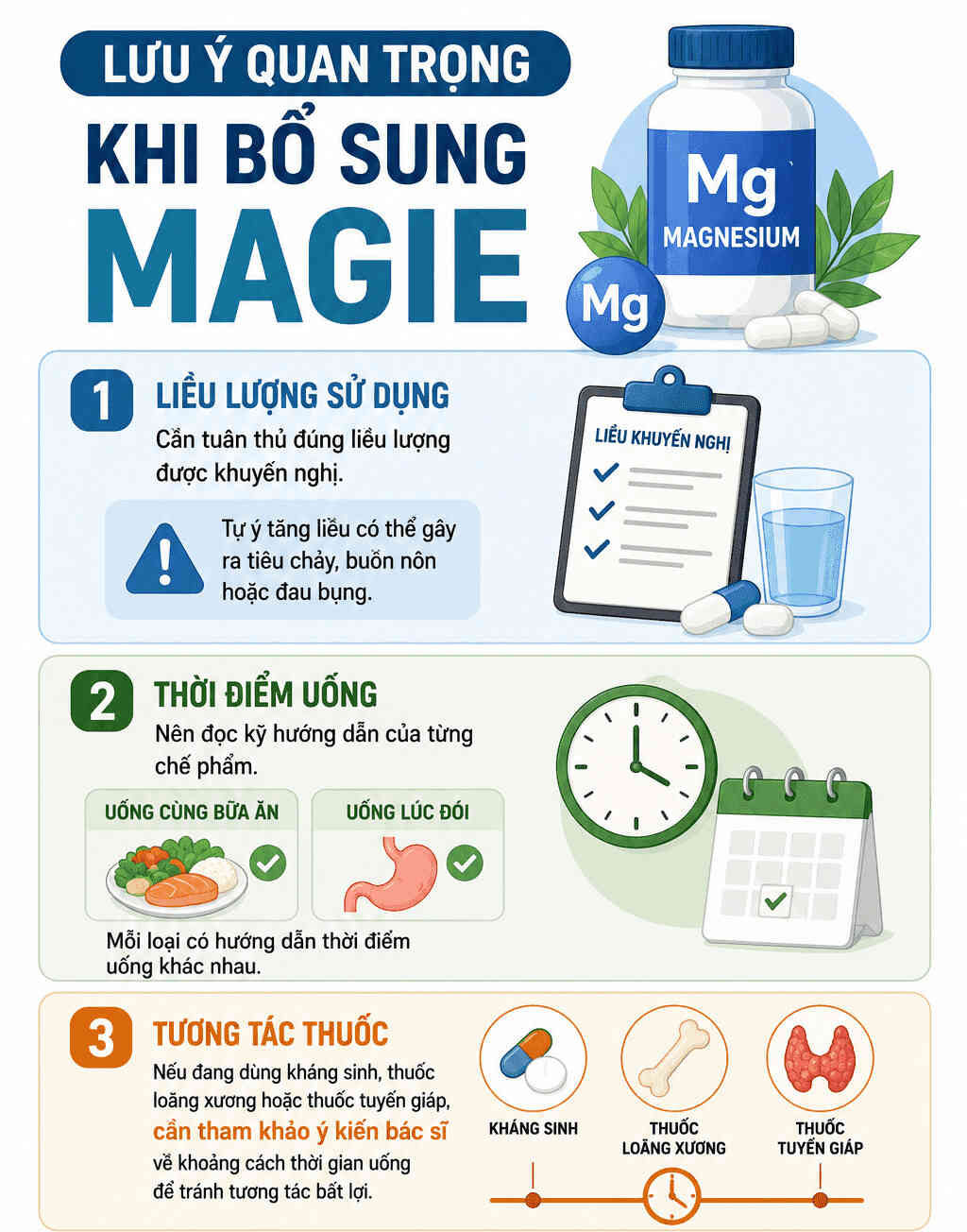
Not everyone needs magnesium supplementation with pills. Most magnesium needs can be met from the diet. People with kidney disease, who are taking medication regularly or suspect magnesium deficiency should talk to a doctor or pharmacist before use to choose the appropriate dosage and use method. Magnesium can interact with some medications, including some antibiotics and medications for osteoporosis.


