
Many people with high blood uric acid levels often have a psychology of hesitation, minimizing consumption of meat and seafood because they are afraid that the disease will become more severe.
However, excessive abstinence can lead to nutritional deficiencies. In fact, if you pay attention to controlling purine levels, patients can still add some types of seafood to their daily menu.
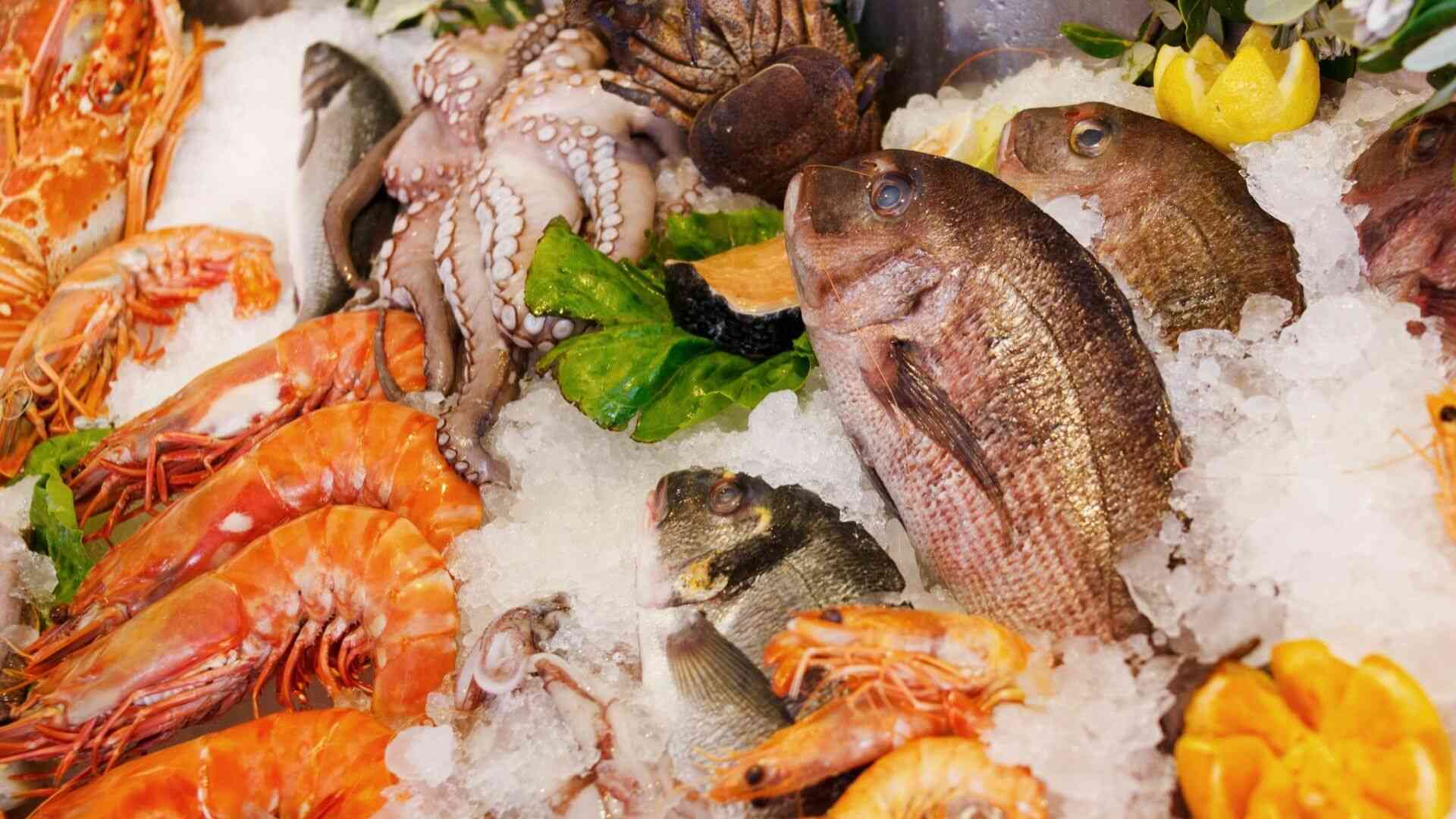
Listing 5 types of seafood to support people with high uric acid
According to nutritional analysis from WebMD and Healthline, not every seafood is rich in purines. Here are more safe suggestions that you can consider:
Comparison table of seafood for people with high uric acid
| Seafood | Purine content (100g) | Safety level | Benefits & Special Notes |
|---|---|---|---|
| 8mg - 9mg | Extremely low purine, rich in Calcium. Good support for bones and joints and people with blood fat. | ||
| ~9mg | Low purines but high cholesterol. People with blood fat or cardiovascular disease should limit it. | ||
| 30mg - 75mg | Average content. Provides Omega-3 and zinc, supports anti-inflammatory and immune. | ||
| >150mg |
This is a precious food with high nutritional value. Analysis shows that dried abalone has the lowest purine content, only about 9mg/100g, much lower than fresh abalone (102mg) and instant abalone (110mg). Therefore, people with high uric acid can rest assured to use it. However, because this food contains a fairly high amount of cholesterol (242mg/100g), Healthline experts advise people with dyslipidemia to limit consumption to support cardiovascular protection.
Jellyfish: Jellyfish have extremely low purine content, only about 9mg/100g, which is considered a choice with low purine content. In addition, jellyfish contains less fat and cholesterol, and also provides a prominent amount of calcium (about 150mg/100g, meeting 19% of daily needs). Supplementing jellyfish can contribute to supporting bone and joint health and can reduce metabolic pressure compared to some other purine-rich foods.
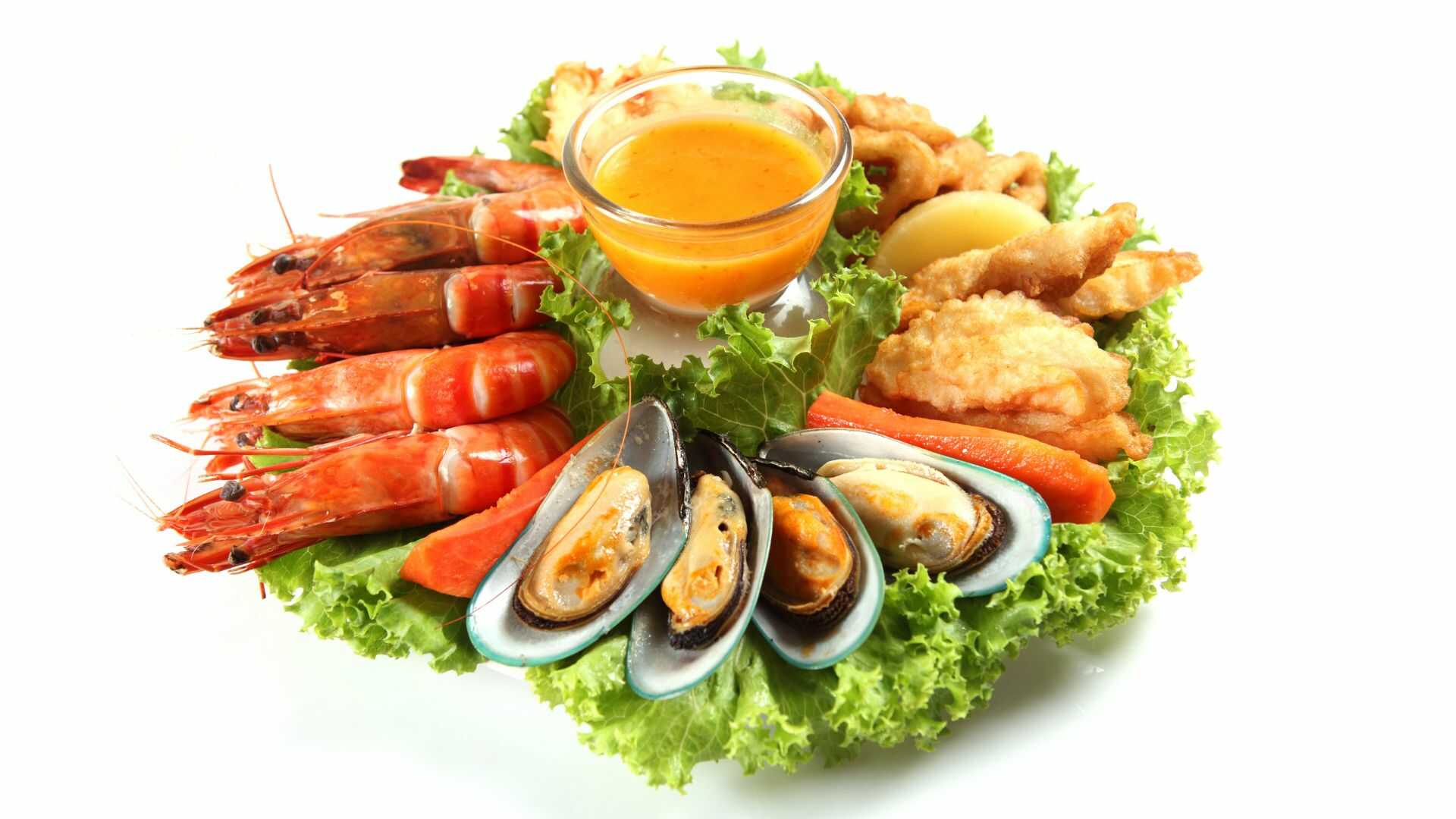
Fresh sea cucumber only contains about 8mg of purine/100g. Even when using dried sea cucumber soaked in water, the amount of purine is only at 18mg/100g. According to reference data, this impressive figure helps sea cucumber become a food to support safe protein supplementation without worrying about increasing blood uric acid. Sea cucumber is also rich in calcium (285mg/100g, meeting 36% of adult needs), contributing to maintaining a balanced physical foundation.
Salmon and Lobster: These 2 types of seafood have a medium purine content, ranging from 30 - 75mg/100g. Experts from Mayo Clinic say that people with high uric acid levels can still consume these two types of seafood with a strictly controlled diet. Salmon is rich in Omega-3 and Vitamin D, while lobster provides zinc and Vitamin B12, contributing to overall health support and minimizing risk factors of arthritis.
Seafood consumption principles help support uric acid control
To prevent the process of purification and excretion of uric acid from being affected, nutrition experts recommend that patients adhere to the following 7 principles of processing and use:
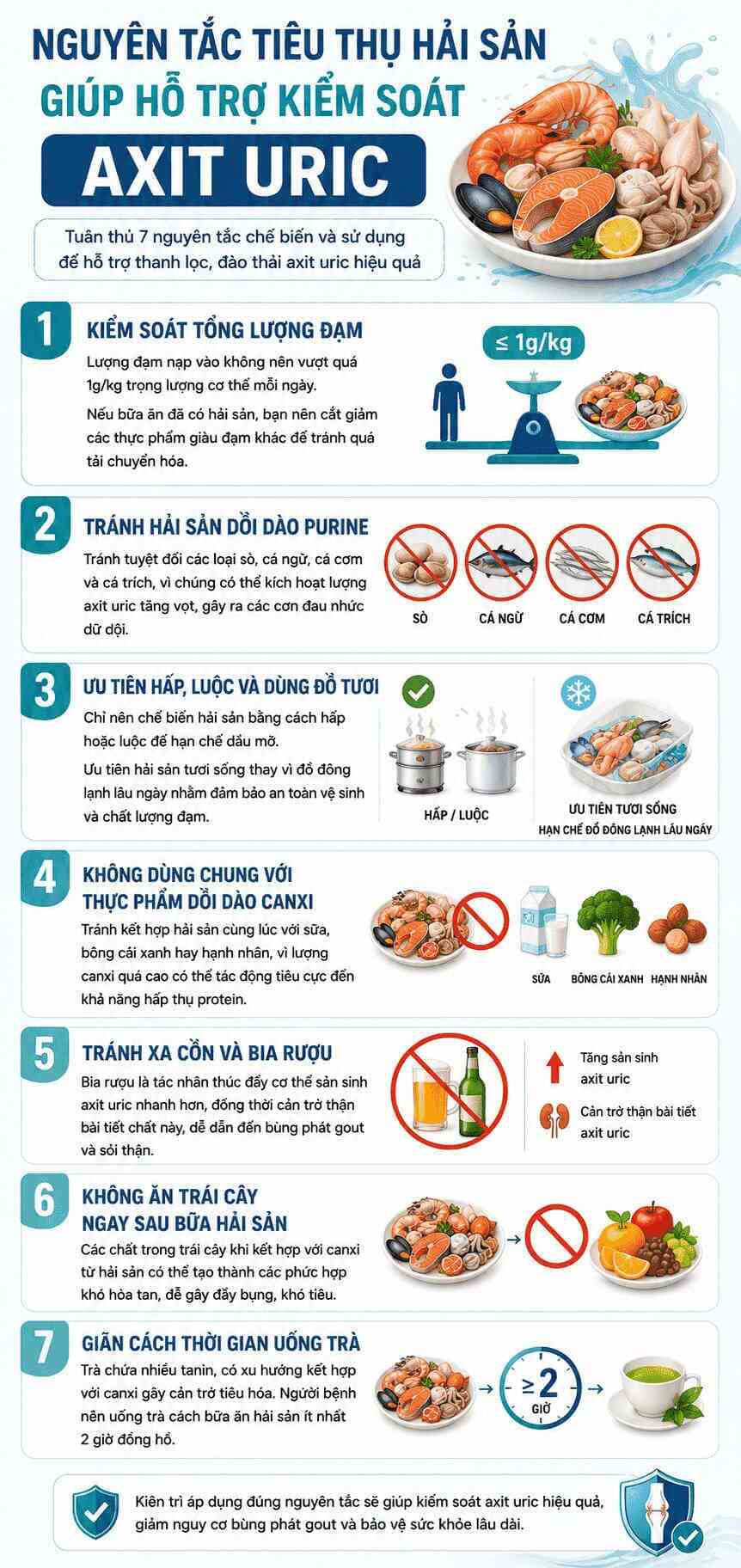
Control total protein intake: The amount of protein intake should not exceed 1g/kg of body weight per day. If the meal already includes seafood, you should cut down on other protein-rich foods to avoid metabolic overload.
Avoid purine-rich seafood: You should limit clams, tuna, anchovies and herring, as they can trigger spikes in uric acid, causing severe pain.
Prioritize steaming, boiling and using fresh food: Seafood should only be processed by steaming or boiling to limit grease. Prioritize fresh seafood instead of long-term frozen food to ensure hygiene and protein quality.
Do not share with calcium-rich foods: Avoid combining seafood with milk, broccoli or almonds at the same time, as too high calcium levels can negatively affect protein absorption.
Stay away from alcohol and beer: Beer and alcohol are factors that promote the body to produce uric acid faster, while hindering the kidneys from secreting this substance, easily leading to gout attacks and kidney stones.
Do not eat fruits immediately after seafood meals: The substances in fruits when combined with calcium from seafood can form insoluble complexes, easily causing bloating and indigestion.
Relax the time to drink tea: Tea contains a lot of tannins, which tend to combine with calcium, causing digestive disorders. Patients should drink tea at least 2 hours before seafood meals.
The information in the article is for reference only, not for medical diagnosis or treatment. You should talk directly to your doctor for accurate and appropriate advice to your health condition.
Questions and answers about seafood for people with high uric acid levels
Why shouldn't you drink beer when eating seafood?
Beer contains a lot of purines and alcohol. Alcohol increases the rate of uric acid synthesis in the liver and hinders the kidneys from excreting this substance, easily leading to gout and kidney stones.
What are the harms of eating fruits immediately after eating seafood?
The components in fruits combined with Calcium in seafood can form an insoluble complex, causing bloating, indigestion and hindering nutrient absorption.
How long after drinking tea is it safe after eating seafood?
You should drink tea at least 2 hours before seafood meals. Tanin in tea can combine with abundant calcium in seafood to form an indigestible substance.


