Effects of omega-3 supplementation on blood pressure
Omega 3 is a group of polyunsaturated fatty acids that are abundant in fatty fish and products such as fish oil. The two most widely studied forms for cardiovascular health are EPA (eicosapentaenoic acid) and DHA (docosahexaenoic acid).
EPA and DHA can affect mechanisms related to blood vessel function. Clinical studies have shown that supplementing with omega-3 containing these two fatty acids is associated with a moderate decrease in blood pressure (although relatively small).
According to a meta-analysis from randomized trials, using about 2-3 g of EPA+DHA per day yielded a noticeable decrease in blood pressure compared to not using it. This effect tended to be greater in the group of patients already suffering from hypertension. However, the average reduction only stopped at a few mmHg. Therefore, the dose of 2-3 g in the study did not mean the recommended dose applied generally to all individuals.
| Medical aspect | Detailed uses and recommendations |
|---|---|
| Promotes blood vessel dilation, anti-inflammatory, and reduces oxidative stress. | |
| Do not arbitrarily use fish oil to replace or reduce the dose of specialized medication. |
Omega 3 dosage: Absolutely do not arbitrarily increase the dose
Many people mistakenly believe that increasing the dose of omega 3 supplements to lower blood pressure will bring faster results. However, this poses many risks.
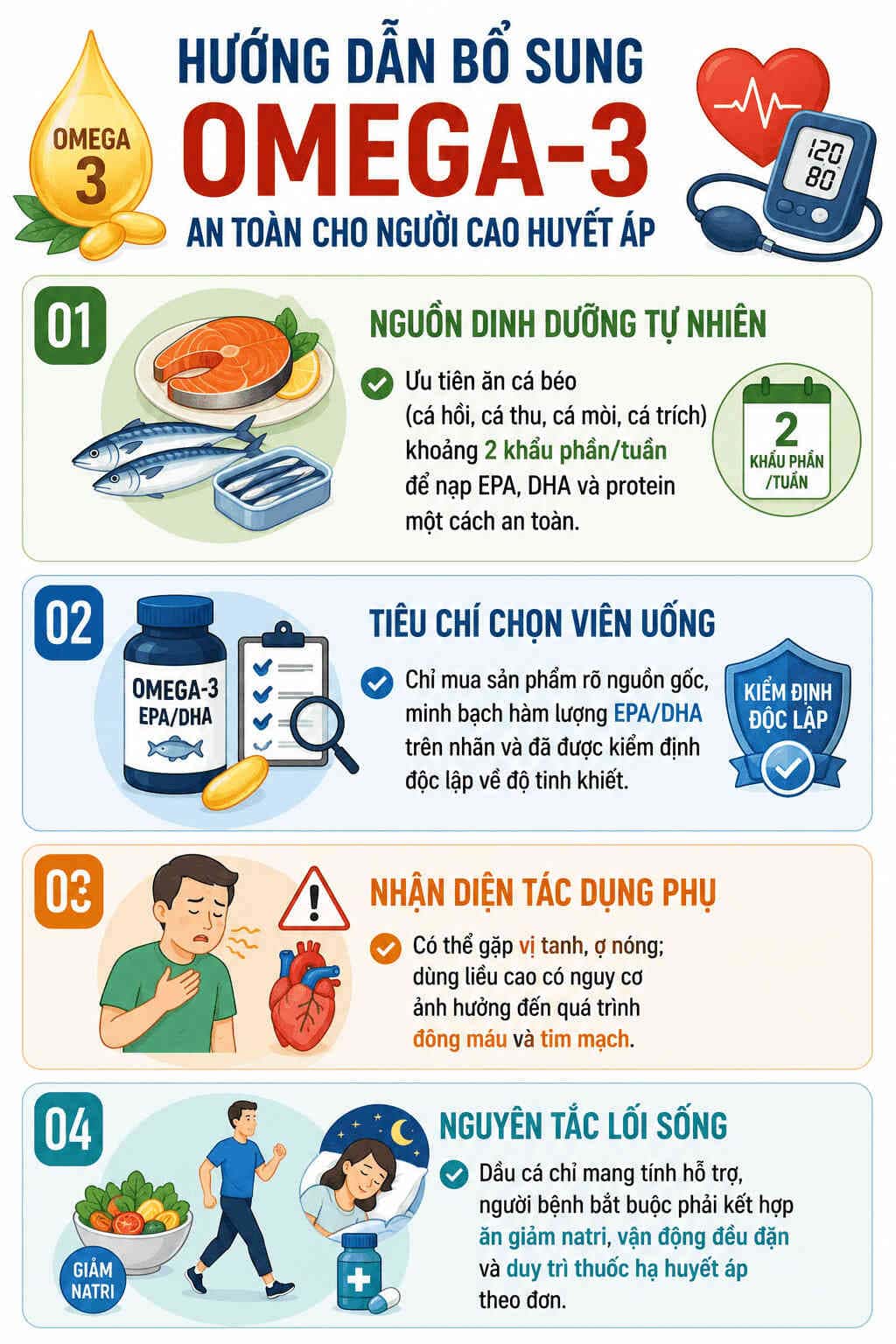
When buying fish oil, you need to clearly distinguish between "fish oil capsule weight" and "EPA+DHA content". For example, a 1,000 mg fish oil capsule does not mean it contains enough 1,000 mg of EPA+DHA. Check the actual ingredient list on the label carefully.
The US Food and Drug Administration (FDA) assesses that products providing no more than 5 g of EPA+DHA per day are generally safe if used in accordance with instructions. This is only the maximum safety limit, not the general recommended level. Notably, trials using 4 g of omega 3/day for a long time recorded a slight increase in the risk of atrial fibrillation in people with medical conditions or high cardiovascular risk. Self-augmentation of the dose to rapidly lower blood pressure is completely inappropriate.
Be careful with drug interactions when using omega-3
Omega 3 supplements have the ability to interact with some medications. Specifically, using high doses of omega-3 can alter platelet function, especially dangerous for patients taking anticoagulants such as warfarin.
If you are treating high blood pressure, cardiovascular disease, or blood clotting disorders, talk directly to your specialist doctor before deciding to use high-dose preparations.
Some mild side effects that may occur include: heartburn, nausea, digestive disorders, diarrhea or a strange taste in the mouth.
Prioritize omega-3 sources from natural foods
With a healthy body, a diverse diet, rich in fatty fish, is always prioritized over the abuse of functional foods.
For patients, omega-3 supplementation is only a small part of the regimen.Blood pressure control requires a comprehensive combination: a diet that reduces sodium, regular physical activity, maintains an ideal weight and strictly adheres to the prescription of the treating doctor.
Medical notes: The information in the article is for reference only, and does not replace diagnostics and medical treatment regimens.Cardiovascular patients need to consult a doctor before using supplements.
Question and answer corner: Omega 3 and blood pressure
Is it safe to supplement omega 3 at the same time as blood pressure medication?
Supplementing high doses of omega-3 has the effect of reducing mild blood pressure. Therefore, if you use it in combination with prescription blood pressure medications, this combination may combine to lower blood pressure to a very low level (positional hypotension). In addition, omega 3 can also increase the risk of bleeding when used in combination with anticoagulants. Patients should absolutely not combine it arbitrarily but need a specialist doctor to assess the safe dose of omega-3 to avoid adverse drug interactions.