
Ms. Sung Thi Lien (Lung Cu commune, Tuyen Quang) has had bronchial asthma for many years, every time the weather changes, this chronic disease makes Ms. Lien almost unable to do any work.
Grasping information about people's medical history, officials of Lung Cu Commune Health Station regularly examine and advise on Ms. Lien's health status to make timely adjustments. Thanks to that, recently, Ms. Lien no longer has to be hospitalized for treatment.
Health officials sometimes come to my house for examination, sometimes I ask my children and grandchildren to take me to the station, the distance is not too far. Thanks to regular examinations, I can prevent it, so that if I get seriously ill, I will have to go to the hospital," Ms. Lien said.
The number of people coming for examination and initial health check-ups at grassroots health stations has increased compared to the previous period, but the number of people who can be treated right at the facility is still not high.
Many diseases require high expertise and modern machinery for diagnosis and treatment, but grassroots health stations cannot meet them. For in-depth examination and treatment, many people still have to travel hundreds of kilometers to go to large medical facilities.
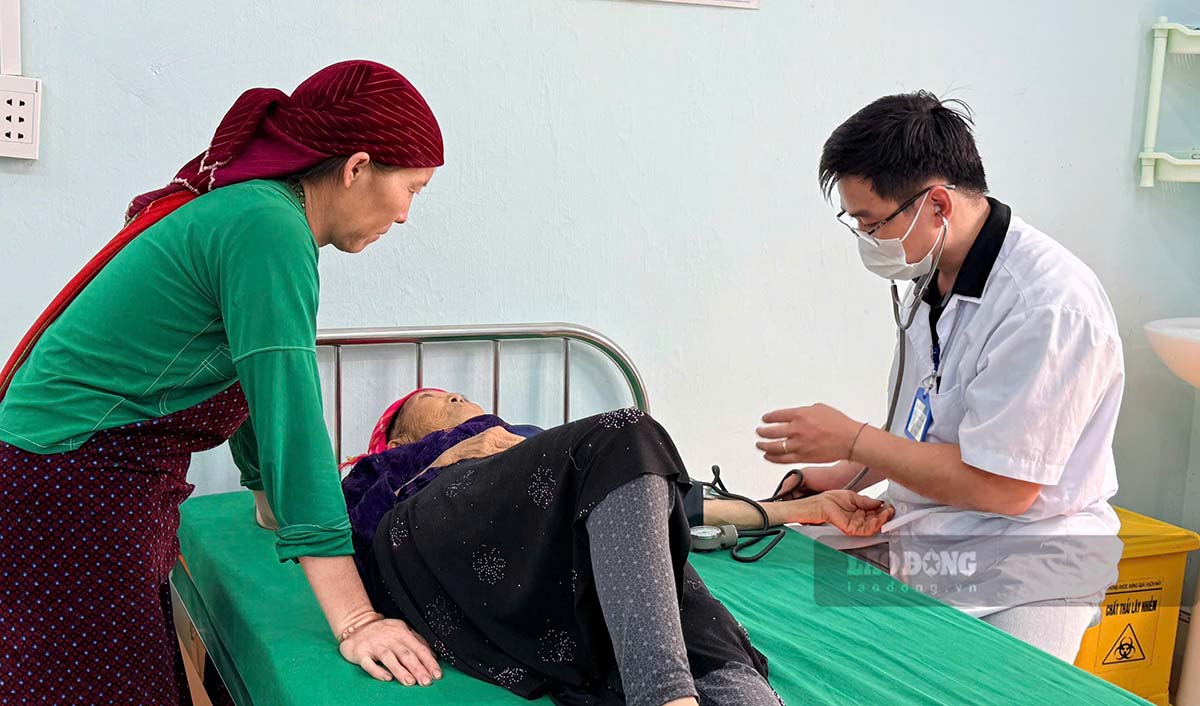
After the administrative boundary merger, Lung Cu Commune Health Station has 15 staff members but only 2 doctors. On average, this health station examines more than 30 people per day, not to mention mobile activities in villages and hamlets to perform other tasks.
Ms. Luong Thi Luan - Director of Lung Cu Commune Health Station - said that although it is a remote and isolated commune, with fragmented terrain and difficult travel conditions, the Commune Health Station is always ready to effectively take care of people's health.
To truly reassure people and place complete trust in grassroots healthcare, it is very necessary to continue to improve the quality and professional qualifications of the team of doctors and medical staff, equipping modern machinery that meets the conditions for diagnosing and treating diseases right at the grassroots level," Ms. Luan said.
In fact, in the communes after the merger, some health stations that were previously regional general clinics must now adjust their functions according to the norms of commune health stations. Therefore, some modern machinery such as ultrasound and X-rays must be recalled or not allowed to operate, causing infrastructure waste.
In addition, the management and exploitation of facilities after the merger requires commune-level authorities to ensure funding and professional human resources to operate and upgrade the main stations and health station points.
After rearranging the organization, Tuyen Quang province has 101 commune and ward health stations and 26 regional general clinics and stations directly under the regional health center. Lack of human resources and modern medical equipment are grassroots health issues that are being looked for solutions.
Talking to PV, Mr. Nguyen Thanh Hung - Director of Tuyen Quang Provincial Department of Health - said that in the long term, it is to continue to improve professional capacity and facilities for grassroots health levels, ensuring sufficient conditions for medical examination and treatment.
Functional agencies are reviewing the needs of each locality to have investment and allocate resources appropriately. In the immediate future, the rotation and assignment of doctors from general hospitals and regional health centers to commune health stations will help ensure that health services at the grassroots level are not interrupted, and people have access to quality health services," Mr. Nguyen Thanh Hung informed.


